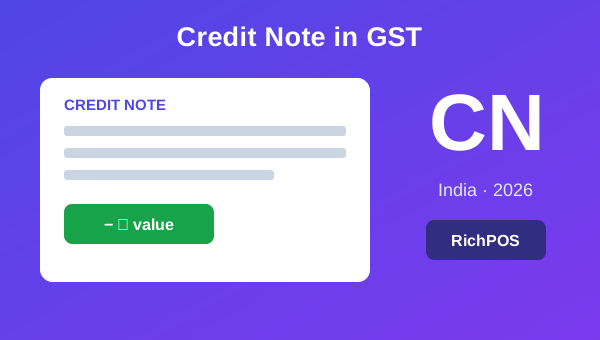
A credit note in GST is the document a seller issues to reduce the value of a tax invoice already raised — for a return, an overcharge, or a post-sale discount. It is not optional paperwork: it is how you legally lower the GST you already charged so your books and GST return stay correct. This guide explains what a credit note means in GST, when a retailer must issue one, the mandatory format, and how it differs from a debit note.
What is a credit note in GST?
Under GST, a seller issues a credit note when a tax invoice was raised for more than the amount actually due. The credit note records the reduction and lets the seller cut the output GST on that sale. Common triggers:
- Goods returned by the customer.
- Goods found deficient or rejected.
- The invoice value or tax charged was too high.
- A discount agreed after the invoice (subject to GST conditions).
When should a retailer issue a credit note?
Issue a credit note whenever the taxable value or tax on an original invoice needs to come down. Key points:
- A credit note must reference the original tax invoice number and date.
- It reduces your output GST liability only if declared in your GST return within the time limit allowed under GST law.
- If the reduction is not reported in time, you may not be able to claim the lower tax.
Credit note format: mandatory fields
A GST credit note should carry, at minimum:
| Field | What it shows |
|---|---|
| Heading | The words “Credit Note” |
| Supplier details | Name, address and GSTIN of the seller |
| Serial number & date | Unique running number and date of the credit note |
| Original invoice | Number and date of the invoice being adjusted |
| Recipient details | Name, address, and GSTIN (if registered) |
| Value & tax reduced | Taxable value and GST amount being credited |
| Signature | Signature or digital signature of the supplier |
Credit note example
You sold goods for ₹10,000 + 18% GST (₹1,800) = ₹11,800. The customer returns a fifth of the order. You issue a credit note for ₹2,000 + ₹360 GST = ₹2,360, referencing the original invoice. Your output GST for that sale drops by ₹360 when you report the credit note in your return.
Credit note vs debit note
They are mirror images. A credit note reduces an invoice value (the buyer owes less); a debit note increases it (the buyer owes more). See the full breakdown in our debit note in GST guide.
How software keeps credit notes clean
Hand-written credit notes go wrong on the details GST cares about — the original invoice reference, the tax split, and the running serial. A POS links the credit note to the original bill, restocks the returned item, and carries the tax reduction into your GST summary automatically. RichPOS does this alongside your normal GST invoices, so returns and your GST return agree. Start a free trial to see it.
FAQ
What is a credit note in GST?
A credit note is a document a seller issues to reduce the value of a tax invoice already raised — for a return, an overcharge, or a post-sale discount. It lets the seller lower the output GST charged on that sale, provided it is reported in the GST return in time.
When should a credit note be issued under GST?
Issue a credit note when goods are returned, found deficient, or when the invoice value or tax was charged too high. It must reference the original invoice number and date and be declared in your GST return within the time limit to reduce your tax.
What is the difference between a credit note and a debit note?
A credit note reduces the value of an invoice, so the buyer owes less. A debit note increases the value of an invoice, so the buyer owes more. Both reference the original tax invoice.
Does a credit note reduce my GST liability?
Yes, a credit note reduces your output GST on the original sale, but only if you declare it in your GST return within the time limit allowed under GST law. Reported late, the reduction may not be allowed.
Bottom line
A credit note is how you lower a GST invoice you already raised — for returns, overcharges or agreed discounts — with the original invoice referenced and the tax reduction reported in time. Software that links notes to bills keeps it clean. See how RichPOS works or start a free trial.