On this page · 8 sections
- How many HSN digits do you need?
- What the digits actually mean
- How to find the right HSN code in 2026
- Why a wrong HSN code costs you money
- Quick checklist before you bill
- GST rates by product
- FAQ
- Bottom line
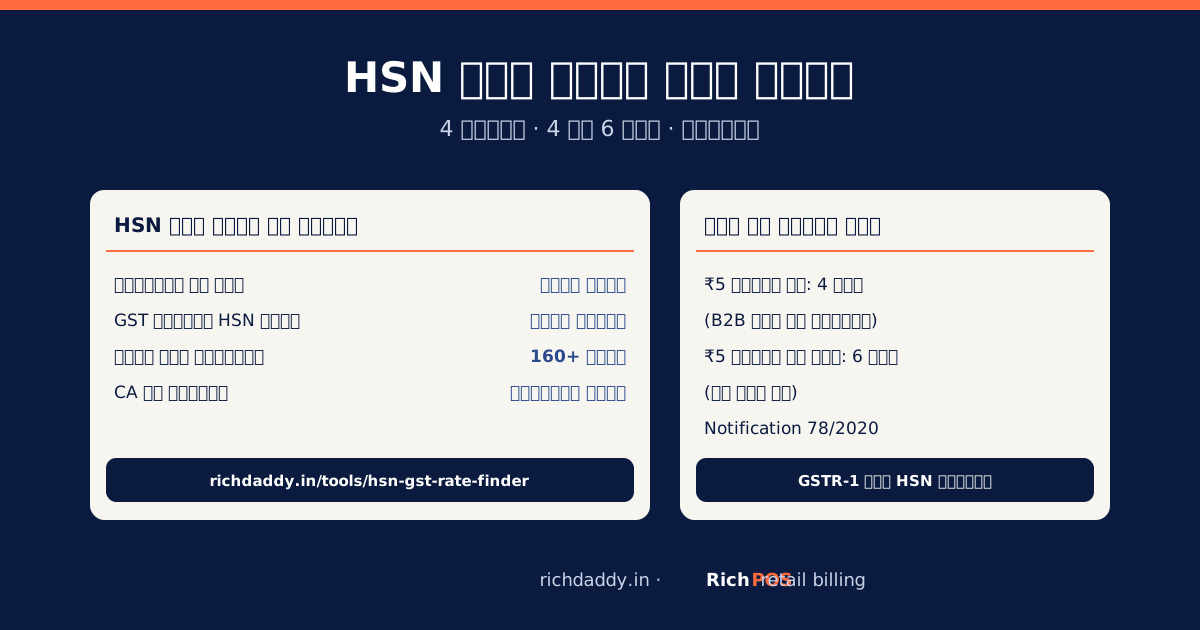
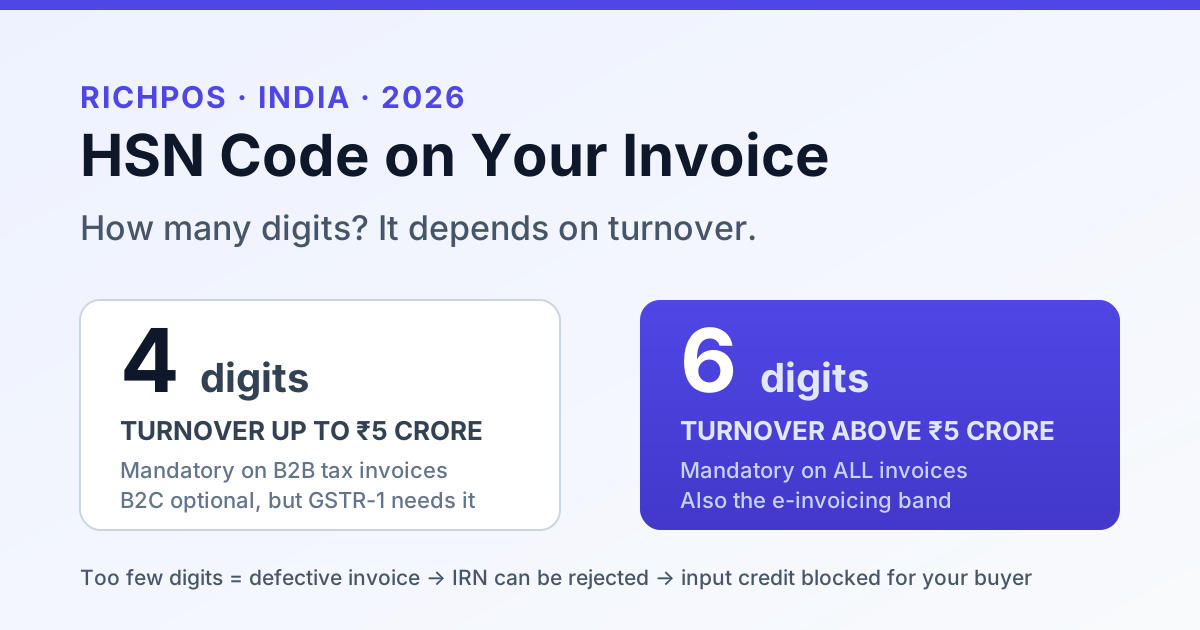
How many HSN digits you must print depends on your turnover. If your aggregate annual turnover is up to ₹5 crore, a 4-digit HSN is mandatory on B2B tax invoices. Above ₹5 crore, a 6-digit HSN is mandatory on every invoice — B2B and B2C. Print fewer digits than your band requires and the invoice is legally defective; inside the e-invoicing threshold, a wrong or missing HSN can get your IRN rejected outright, which blocks your buyer’s input tax credit until you fix and re-report it.
HSN stands for Harmonised System of Nomenclature — a global product-classification system the GST regime uses to tag every good with a standard code and rate. Get it right once per product and your billing software fills it in forever. Get it wrong and it quietly poisons your returns. Here is exactly how to find the correct code and how many digits you owe in 2026.
How many HSN digits do you need?
The rule is set by CBIC Notification 78/2020 (Central Tax), effective 1 April 2021, and is unchanged for FY 2025–26. It keys off your aggregate annual turnover (AATO) in the previous financial year.
| Your turnover (AATO) | B2B invoices | B2C invoices | GSTR-1 HSN summary |
|---|
| Up to ₹5 crore | 4-digit HSN mandatory | HSN optional | Required (Table 12) |
| Above ₹5 crore | 6-digit HSN mandatory | 6-digit HSN mandatory | Required (Table 12) |
Two traps hide in that table. First, even a small B2C-only shop that skips HSN on the printed bill still has to file the HSN summary in GSTR-1 Table 12 — so you need the codes regardless. Second, 4 and 6 are minimums; you can always print more digits, never fewer. Importers and exporters use the full 8-digit tariff item.
What the digits actually mean
An HSN code is a nested ladder, not a random number. Reading left to right narrows the product:
- First 2 digits — the chapter (e.g. 61 = knitted apparel)
- Next 2 (4-digit) — the heading (61 09 = T-shirts and vests)
- Next 2 (6-digit) — the global subheading (6109 10 = of cotton)
- Last 2 (8-digit) — the India-specific tariff item
Because the first six digits are the same worldwide, a supplier bill from an importer is usually trustworthy down to 6 digits — but verify the rate, not just the number.
How to find the right HSN code in 2026
Do not copy a code off a random supplier bill and hope. Use the source that is legally defensible:
- Official GST portal (free, authoritative). Go to gst.gov.in → Services → User Services → Search HSN Code. Search by product description or by a partial code; the portal returns matching headings with descriptions and the linked GST rate.
- Search by description, not guesswork. Type the plain product name (“cotton t-shirt”, “mobile charger”). The portal and free finders map the words to the nearest heading.
- Work down the ladder when unsure. Start at the 2-digit chapter for your category, then narrow heading → subheading until the description truly matches your product. A close-but-wrong heading is still wrong.
- Verify the rate against the latest notification. The code and the rate move together; after the 2026 rate revisions, re-check anything you set up years ago. See our 2026 GST rates guide for retailers.
Why a wrong HSN code costs you money
This is the part shop owners underestimate. A defective HSN doesn’t just look untidy — it has teeth:
- IRN rejection. If you are in the e-invoicing band, an invalid HSN can make the invoice registration fail, so the invoice is legally invalid until corrected.
- Blocked input credit. Your B2B buyer may be unable to claim ITC on a defective invoice — which makes you the vendor they stop buying from.
- Wrong tax collected. A wrong code often carries a wrong rate, so you either under-charge (and eat the shortfall) or over-charge (and annoy customers).
- GSTR-1 mismatches. Table 12 HSN summaries that don’t reconcile invite notices.
The fix is structural: set the correct HSN once per product in your catalogue, inside billing software that carries it onto every invoice and into the GSTR-1 summary automatically. Manual entry per bill is where the errors breed. That is exactly what to look for when choosing billing software for your shop, and why the GST invoice format must carry the code in the right spot.
Quick checklist before you bill
- Know your turnover band → 4 digits (≤₹5cr) or 6 digits (>₹5cr).
- Pull each product’s HSN from gst.gov.in, by description.
- Store it once per product in your POS / billing software, not per bill.
- Confirm the code’s GST rate matches the current notification.
- Check your GSTR-1 Table 12 HSN summary reconciles before filing.
GST rates by product
Related guides: GST on Grocery Items in India 2026: Kirana Rate List; Packing and Freight Charges in GST Invoice: Rate and HSN; HSN कोड कैसे पता करें? 4 आसान तरीके; HSN code for discount on sales.
Bottom line
HSN is not paperwork theatre — it is the key that makes your GST returns reconcile. Match the digits to your turnover, pull each code from the official portal by description, store it once per product in your billing software, and let the software carry it everywhere. Do that and HSN stops being a source of notices. See how RichPOS handles HSN, GST and invoicing for Indian shops.
Sources: CBIC Notification 78/2020 – Central Tax; GST portal HSN search (gst.gov.in); ClearTax and GST practitioner guides, 2026.
FAQ
Frequently asked questions
Is a 4-digit HSN code enough for a small shop?
Yes, if your aggregate annual turnover is up to ₹5 crore: 4 digits is mandatory on B2B tax invoices. For B2C bills HSN on the invoice is optional at that level, but you still need the codes for the GSTR-1 Table 12 summary.
Is HSN compulsory for B2C retail invoices?
On the printed invoice it is optional if your turnover is up to ₹5 crore. Above ₹5 crore a 6-digit HSN is compulsory on B2C invoices too. Either way the HSN summary in GSTR-1 is required.
Where do I officially look up an HSN code?
On the GST portal: gst.gov.in → Services → User Services → Search HSN Code. Search by product description or partial code — it returns the heading and the linked GST rate.
What happens if I put the wrong HSN code on an invoice?
The invoice is treated as defective. Inside the e-invoicing threshold the IRN can be rejected, making the invoice invalid until corrected; your buyer’s input tax credit can be blocked; and a wrong code often means a wrong rate.
Is the HSN digit rule changing in 2026?
No. The mandatory digit rule comes from CBIC Notification 78/2020 effective 1 April 2021 and is unchanged for FY 2025–26. What does change over time are the rates attached to codes, so re-verify rates after each revision.
Need a quick figure? Use the free GST calculator to add or remove GST.
ASWritten by Ashok SachdevFounder, RichPOS Software, Ahmedabad. We build RichPOS for Indian shops and write these guides from what shop owners ask us every day. Facts on tax rates and prices are dated; confirm GST matters with your CA. Questions? WhatsApp us.
Make GST bills in seconds with RichPOS
Billing, stock, WhatsApp bills and GST reports in one app. Free 30-day trial with no card, then ₹99/month for 3 months and ₹199/month after.