Dead stock is inventory that has not sold for a long time and is unlikely to sell at full price — and for most Indian retailers it quietly locks up 20–30% of the money sitting on their shelves. The fix is not a fire sale. It is knowing which items are dead, why they died, and having a simple monthly routine to catch slow movers before they become dead.
This guide shows you how to identify dead stock, the exact numbers to track, and a practical clearing plan for a kirana store, garment shop, or electronics counter — without guesswork.
What counts as dead stock?
Dead stock (also called dead inventory or obsolete stock) is any item that has had zero or near-zero sales over a set period — usually 90 to 180 days — and has no clear reason to sell soon. It is different from slow-moving stock, which still sells, just not fast. The danger is that slow movers turn into dead stock if you do not act.
Category
Rough rule
Action
Fast mover
Sells within 30 days
Reorder, keep stocked
Slow mover
Sells in 30–90 days
Watch, stop over-ordering
Dead stock
No sale in 90–180+ days
Clear, discount, or return
Why dead stock quietly kills retail profit
An unsold item is not a neutral zero — it is an active loss. The cash you paid for it is frozen, it eats shelf and storeroom space a fast mover could use, and its value keeps dropping as newer models, sizes, or expiry dates arrive.
Locked cash. Money in dead stock cannot buy inventory that actually sells. A shop with ₹2 lakh in dead stock is running ₹2 lakh short on working capital.
Carrying cost. Storage, electricity, insurance, and the risk of damage or expiry all add up — typically 20–30% of the item value per year.
Opportunity cost. The shelf space and the cash could have earned margin on a product people want.
How to identify dead stock in your shop
You cannot fix what you cannot see. The single most useful number is days since last sale for every SKU. If your billing software records each sale against an item, you already have this data — you just need to sort by it.
Pull a stock report that lists each item, quantity on hand, and the date it last sold.
Sort by last-sold date, oldest first. Anything with no sale in 90+ days is your review list.
Flag high-value dead stock first — clearing one ₹5,000 item beats clearing fifty ₹20 items.
Doing this by hand in a register is slow and error-prone. A barcode-based system makes it a two-minute job — see our guide to barcode inventory management for Indian retail for how scanning keeps last-sold data accurate automatically.
The two numbers that predict dead stock
Track these monthly and you will catch dead stock forming before it is too late to clear at a decent price.
Metric
What it tells you
Healthy sign
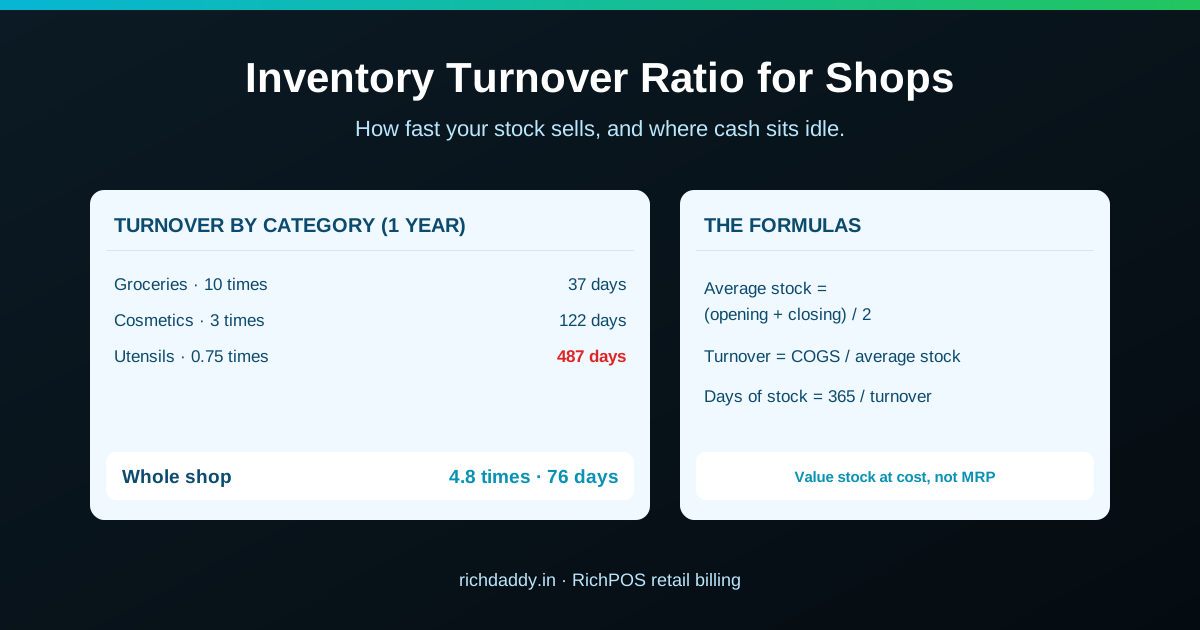
Inventory turnover
How many times you sell through and restock in a year
Higher is better; a low number means stock is sitting
Days of inventory
Average days an item stays on the shelf before selling
Lower is better; a rising number is an early warning
You do not need accounting software for this. If your POS tracks sales per item, both numbers fall out of a single report. A shop selling through its stock 6 times a year is far healthier than one turning it 2 times — same shelf, three times the cash flow.
How to clear dead stock you already have
Once an item is dead, the goal shifts from "sell at full margin" to "get the cash back and free the shelf." In order of preference:
Bundle it. Pair a dead item with a fast mover as a combo — the fast mover pulls it out the door.
Discount in tiers. Start at 10–20% off; if it still does not move in two weeks, go deeper. A recovered ₹300 beats a ₹500 item gathering dust forever.
Return or exchange with the supplier. Many distributors take back unsold stock or swap it — always ask before you discount.
Use it as a free add-on above a bill value to drive larger baskets.
Whatever the route, ring every clearance sale through your billing system so the stock count and last-sold data stay correct. If you are still choosing a system that can do this, our billing software checklist for retail shops covers the inventory features to look for.
How to stop dead stock coming back
Clearing dead stock once is a chore; the real win is not creating it again. Three habits do most of the work:
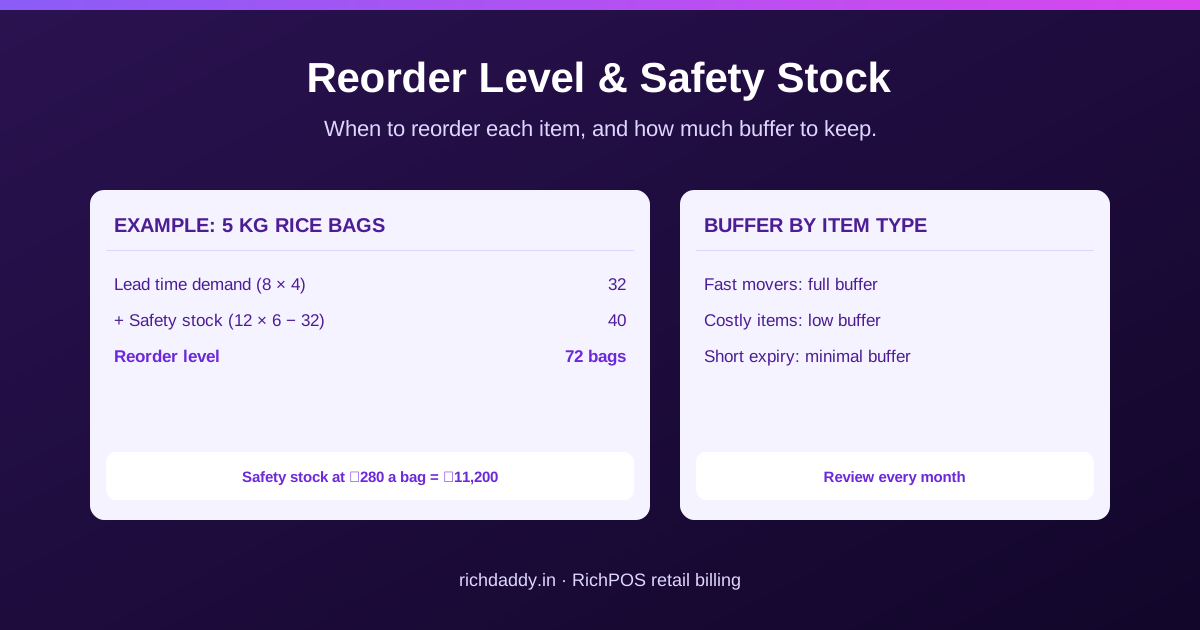
Set reorder points from real sales, not gut feel — order more of what sells, less of what limps.
Review slow movers every month, not once a year. A slow mover caught at 60 days is easy to clear; the same item at 200 days is dead.
Track stock across all counters if you run more than one location, so a dead item in one shop can shift to where it sells. Our guide to multi-store inventory management explains how.
Good billing software does this in the background: it records every sale, flags items that have not moved, and suggests what to reorder. That is the difference between reacting to dead stock and preventing it. If you are weighing options, our RichPOS vs Vyapar comparison looks at how billing tools handle inventory.
Dead stock is inventory that has not sold for a long time — usually 90 to 180 days or more — and is unlikely to sell at full price. It ties up cash and shelf space and loses value over time, which is why it hurts profit even though it is not a direct expense.
How do I calculate dead stock?
List every item with its quantity on hand and the date it last sold, then flag anything with no sale in 90+ days. Multiply the flagged quantity by its cost price to see how much cash is locked. A billing system that records sales per item gives you this from a single stock report.
How much dead stock is normal for a shop?
There is no fixed rule, but many Indian retailers find 20–30% of their inventory value is slow-moving or dead when they first measure it. Anything above that is a strong signal to tighten reorder points and review slow movers monthly.
What is the fastest way to clear dead stock?
Bundle dead items with fast movers, or discount in tiers starting at 10–20% off and going deeper if it does not move in two weeks. Also ask your supplier about returns or exchanges before discounting — many distributors take back unsold stock.
How do I prevent dead stock in future?
Set reorder points from actual sales data, review slow-moving items every month instead of once a year, and track stock across all your counters so items can move to where they sell. Billing software that flags non-moving items makes this automatic.
Free tool: use the Excel templates for a stock register, udhaar khata, cash book or GST purchase register. Free; enter your WhatsApp number to download.
Founder, RichPOS Software, Ahmedabad. We build RichPOS for Indian shops and write these guides from what shop owners ask us every day. Facts on tax rates and prices are dated; confirm GST matters with your CA. Questions? WhatsApp us.
Make GST bills in seconds with RichPOS
Billing, stock, WhatsApp bills and GST reports in one app. Free 30-day trial with no card, then ₹99/month for 3 months and ₹199/month after.
Inventory Management for Retail Shops in IndiaRetail inventory management in India, 2026: turnover ratio, reorder point, safety stock and dead-stock formulas, with rupee examples and a weekly routine.
Retail Shop Licenses & Registrations in India (2026)Opening a retail shop in India in 2026? You need Shop & Establishment registration, a trade licence, GST above ₹40 lakh, and FSSAI for food. Full checklist.