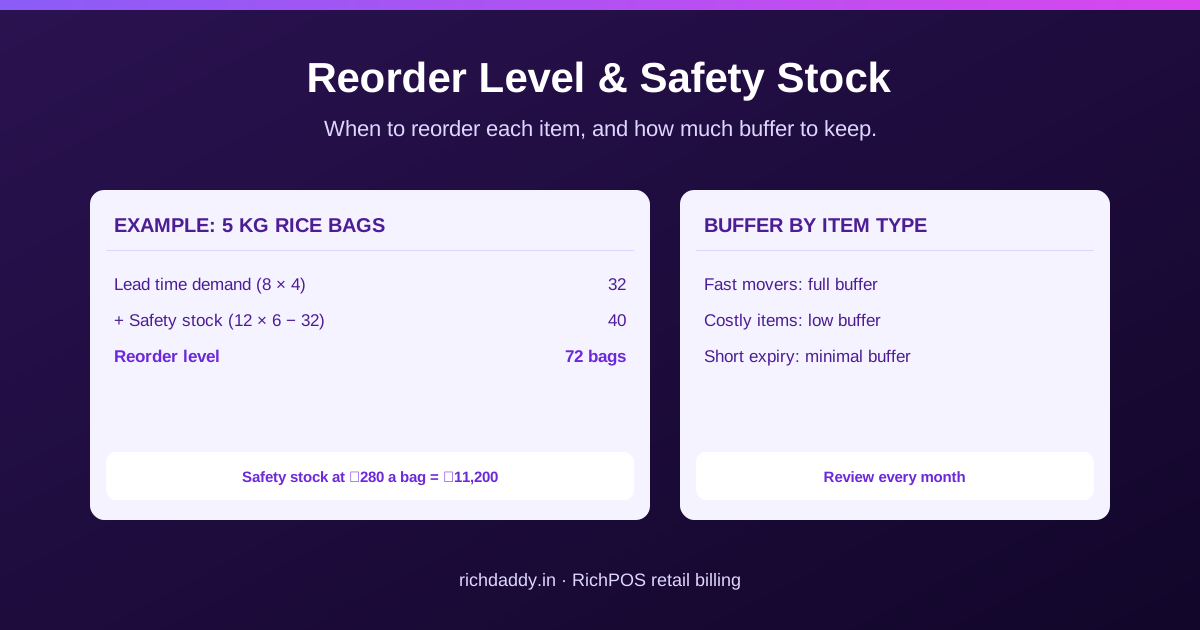
Short answer: Reorder level = average daily sales × lead time + safety stock. Safety stock = (highest daily sales × longest lead time) − (average daily sales × average lead time). If you sell 8 bags of rice a day, the supplier takes 4 days, and your worst case is 12 bags a day with a 6-day delay, safety stock is 40 bags and you reorder when stock falls to 72 bags.
This guide is for kirana, general, pharmacy, garment, footwear, mobile, electronics, hardware and other retail shops in India that run out of fast movers on busy days but still have cash stuck in stock.
Three numbers you need for each item
| Number | How to find it |
|---|---|
| Average daily sales | Units sold in the last 30 days ÷ 30. Use days the shop was open. |
| Highest daily sales | The most units sold on a single normal busy day in that period. Leave out one-off bulk orders. |
| Lead time (average and longest) | Days from placing the order to goods on the shelf. Check your last five or six orders from that supplier. |
Your billing records already hold the sales figures. Purchase dates against order dates give you lead time if you raise purchase orders for each order.
The formulas
| Term | Formula | What it means |
|---|---|---|
| Lead time demand | Average daily sales × average lead time | What you normally sell while waiting for the order |
| Safety stock | (Highest daily sales × longest lead time) − lead time demand | Buffer for a busy spell or a late supplier |
| Reorder level | Lead time demand + safety stock | The stock count at which you place the next order |
| Maximum stock level | Reorder level + order quantity − (lowest daily sales × shortest lead time) | A ceiling, so you do not overbuy |
Worked example: 5 kg rice bags in a general store
| Item | Figure | Working | Result |
|---|---|---|---|
| Average daily sales | 8 bags | 240 bags in 30 days ÷ 30 | |
| Highest daily sales | 12 bags | ||
| Average / longest lead time | 4 / 6 days | ||
| Lead time demand | 8 × 4 | 32 bags | |
| Safety stock | (12 × 6) − 32 | 40 bags | |
| Reorder level | 32 + 40 | 72 bags |
If each bag costs ₹280 without GST, the safety stock locks up 40 × ₹280 = ₹11,200. That is the price of never saying "rice is finished" on a busy Sunday. If you order 120 bags each time, and the slowest pattern is 5 bags a day with a 3-day lead time, the maximum stock level is 72 + 120 − 15 = 177 bags. Stock above that means you bought too much.
Not every item needs the same buffer
| Type of item | Safety stock approach |
|---|---|
| Daily fast movers (rice, oil, milk products, popular medicines) | Full formula. Running out sends customers to the next shop. |
| Steady but slower items | Half the formula, or a few days of average sales. |
| Costly items (phones, appliances, branded footwear) | Low buffer. Order against demand to keep cash free. |
| Short-expiry items | Minimal buffer. Pick and sell first-expiry stock first. |
| Seasonal items | Set a separate festival-period level and drop it after the season. |
Too much buffer on slow items is how dead stock builds up. Too little on fast movers costs sales you never see in any report.
How to put it to work
- Start with your top 50 items by sales. They cover most of your turnover.
- Work out the reorder level for each and enter it against the item in your billing software.
- Turn on low-stock alerts so the system tells you when an item reaches its reorder level, instead of you checking shelves.
- Place one combined order per supplier for all items that hit their level that week.
- Review monthly. If an item often hits zero, raise its safety stock. If it never drops near the reorder level, lower it.
Signs your reorder levels are wrong
- Fast movers run out before the supplier's van arrives.
- The same items sit untouched for months while you keep reordering them.
- Your inventory turnover is falling even though sales are steady.
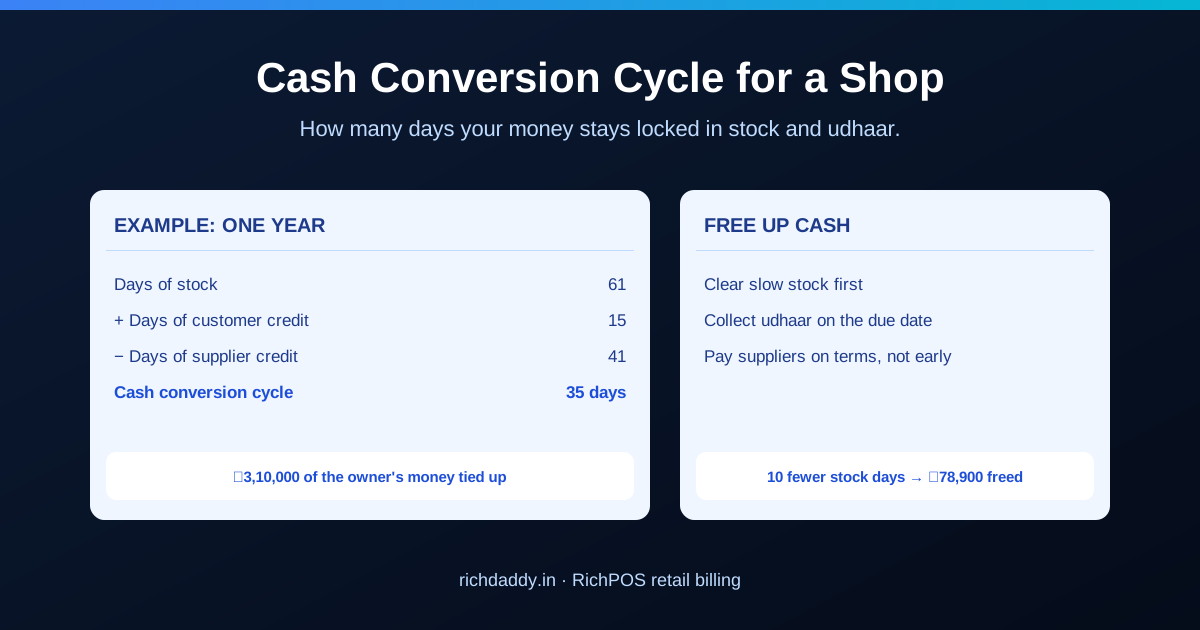
- Cash is always short at the end of the month. See the cash conversion cycle to measure how long stock holds your money.
Frequently asked questions
- What is the reorder level formula?
- Reorder level = average daily sales × average lead time in days + safety stock. When stock of an item falls to this number, you place the next order, so new goods arrive before the shelf runs empty.
- What is the safety stock formula for a small shop?
- The simple method is: safety stock = (highest daily sales × longest lead time) − (average daily sales × average lead time). It covers a busy day and a late supplier at the same time. For example, (12 × 6) − (8 × 4) = 40 units.
- What is lead time?
- Lead time is the number of days between placing an order with your supplier and the goods being ready to sell on your shelf. Count the days it takes to check, price and put stock out, not only the delivery days.
- How often should I recalculate reorder levels?
- Once a month for fast movers and every quarter for the rest. Recalculate early before festivals, wedding season or school reopening, when daily sales jump, and when a supplier's delivery time changes.
- Should every item have the same safety stock?
- No. Keep more buffer for fast-moving items customers expect you to always have, and for items with unreliable suppliers. Keep little or none for slow, costly or short-expiry items, where extra stock turns into dead stock or expired goods.
- Does GST affect reorder level?
- No. Reorder level and safety stock are counted in units. Use cost without GST only when you work out how much money the safety stock locks up, because the GST paid on purchases comes back as input tax credit.
Bottom line: Reorder level = average daily sales × lead time + safety stock. Set it for your top items first, review it monthly, and let low-stock alerts do the checking. RichPOS keeps item-wise sales, stock and supplier orders in one place, so the numbers are ready when you need them. Call +91 90333 31255, or start the 30-day free trial from the pricing page.