Short answer: Inventory turnover ratio = cost of goods sold ÷ average inventory at cost. It tells you how many times in a year your shop sells through its stock. Divide 365 by the ratio to get days of stock. Work it out category by category, because a healthy shop-wide figure can hide a category where cash sits idle for over a year.
This guide is for kirana, general, cosmetics, garment, hardware and other retail shops in India that want to know where their money is stuck.
The three formulas
| Measure | Formula |
|---|---|
| Cost of goods sold (COGS) | Opening stock + purchases − closing stock |
| Average inventory | (Opening stock + closing stock) ÷ 2 |
| Inventory turnover ratio | COGS ÷ average inventory |
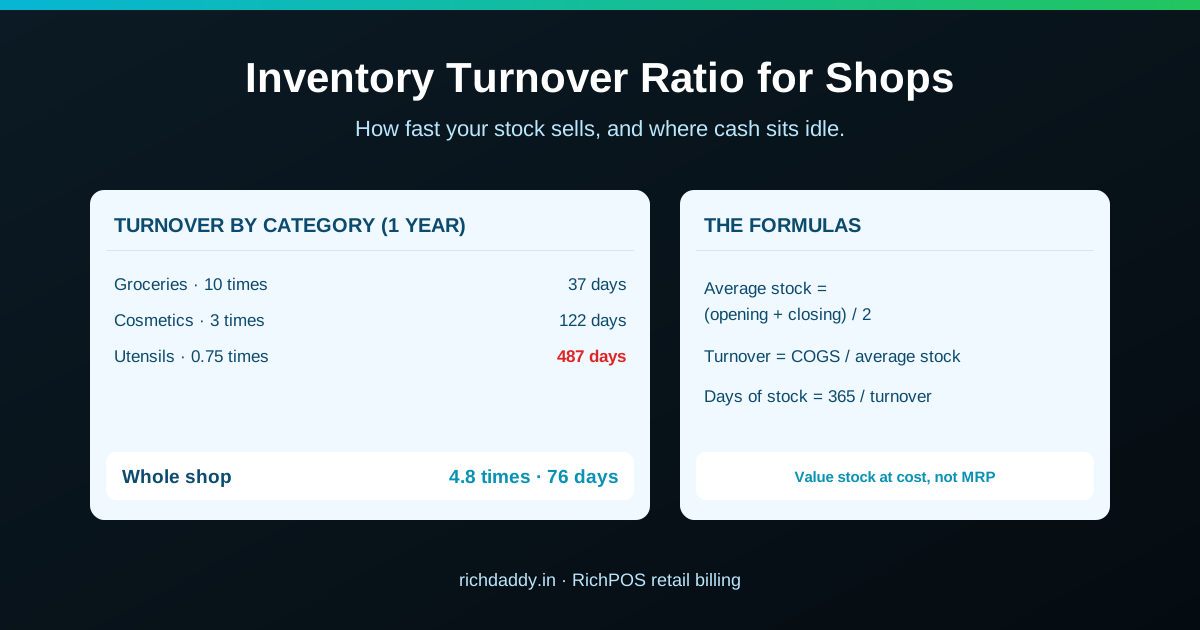
| Days of inventory | 365 ÷ inventory turnover ratio |
Value every figure at purchase cost, not at MRP or selling price. Our guide on closing stock valuation explains how to arrive at the closing figure.
Worked example: a general store for one year
| Item | Amount (at cost) |
|---|---|
| Opening stock on 1 April | ₹3,00,000 |
| Purchases during the year | ₹11,00,000 |
| Closing stock on 31 March | ₹2,00,000 |
| COGS (3,00,000 + 11,00,000 − 2,00,000) | ₹12,00,000 |
| Average inventory ((3,00,000 + 2,00,000) ÷ 2) | ₹2,50,000 |
| Inventory turnover (12,00,000 ÷ 2,50,000) | 4.8 times |
| Days of inventory (365 ÷ 4.8) | about 76 days |
On average, an item in this shop sits for about 76 days before it sells. That number alone does not say much. The useful part comes when you split it by category.
Split it by category
The same ₹2,50,000 of average stock, broken down by category:
| Category | COGS | Average inventory | Turnover | Days of stock |
|---|---|---|---|---|
| Groceries | ₹9,00,000 | ₹90,000 | 10 times | about 37 days |
| Cosmetics | ₹2,40,000 | ₹80,000 | 3 times | about 122 days |
| Utensils | ₹60,000 | ₹80,000 | 0.75 times | about 487 days |
| Whole shop | ₹12,00,000 | ₹2,50,000 | 4.8 times | about 76 days |
Utensils hold almost a third of the stock value but bring in only 5% of the cost of goods sold. That ₹80,000 is sitting on the shelf for well over a year. Cutting utensil stock to ₹30,000, while still selling the same amount, would free about ₹50,000 for fast-moving groceries or for paying suppliers on time.
Why sales-based turnover misleads
Some people divide sales by average inventory. If the store above sold goods worth ₹15,00,000, that gives 15,00,000 ÷ 2,50,000 = 6 times, which looks better than the true 4.8. The gap comes from your margin, not from faster stock movement. Use cost on both sides. Our markup vs margin guide explains why mixing cost and selling price causes errors.
Go one step further: GMROI
Turnover tells you speed, not profit. Gross margin return on inventory (GMROI) adds profit to the picture: gross margin ÷ average inventory at cost. In the example, sales of ₹15,00,000 minus COGS of ₹12,00,000 is a gross margin of ₹3,00,000. GMROI is 3,00,000 ÷ 2,50,000 = 1.2, so every rupee held in stock earned ₹1.20 of gross margin in the year. A slow category with a high margin can still earn its place; a slow category with a thin margin usually cannot.
How to improve turnover
- Buy smaller, more often: for items your distributor supplies weekly, there is no need to hold a month of stock. A purchase order routine helps.
- Set reorder levels by item: low-stock alerts stop over-ordering as well as stock-outs.
- Clear slow movers early: bundle, discount or return them before they become dead stock.
- Narrow the range: if five brands of the same item sell and two do not, drop the two.
- Count stock regularly: a physical stock count makes sure the turnover figure is built on real numbers.
Common mistakes
- Valuing closing stock at MRP, which inflates average inventory and hides how fast stock really moves.
- Looking only at the shop-wide figure and missing the slow category.
- Comparing a festival-season month with an ordinary month without adjusting.
- Pushing turnover so high that popular items run out and customers walk to the next shop.
Frequently asked questions
- What is inventory turnover ratio?
- Inventory turnover ratio shows how many times a shop sells and replaces its average stock in a period, usually a year. It is calculated as cost of goods sold divided by average inventory at cost. A higher number means stock moves faster and less cash is tied up on the shelves.
- How do I calculate inventory turnover for my shop?
- First find cost of goods sold: opening stock + purchases − closing stock, all at cost. Then find average inventory: (opening stock + closing stock) ÷ 2. Divide cost of goods sold by average inventory. For example, ₹12,00,000 ÷ ₹2,50,000 = 4.8 times a year.
- What is days of inventory?
- Days of inventory tells you how many days, on average, an item sits in the shop before it is sold. It is 365 divided by the yearly turnover ratio. A turnover of 4.8 means about 76 days of stock.
- What is a good inventory turnover ratio for a retail shop?
- There is no single good number. Grocery and daily-use items turn many times a year, while jewellery, furniture and utensils turn slowly. Compare each category with its own figure from last year and with similar shops, and look for categories where turnover is falling.
- Should I use sales or cost of goods sold in the formula?
- Use cost of goods sold, because inventory is valued at cost. Dividing sales at selling price by inventory at cost mixes two different values and makes turnover look higher than it really is.
- Should GST be included in stock value?
- If you are registered under GST and claim input tax credit, value stock and purchases at cost excluding the GST you can claim back. Under the composition scheme, where input tax credit is not available, the GST paid on purchases is part of your cost. Ask your CA if you are unsure which applies.
Bottom line: Turnover = COGS ÷ average stock at cost; days of stock = 365 ÷ turnover. Work it out per category once a quarter, and move cash out of the slowest shelves first. RichPOS records purchases, sales and stock by item and category, so the numbers are ready when you need them. Read the profit and loss guide next, call +91 90333 31255, or start the 30-day free trial from the pricing page.