Your billing software says 48 packets of a biscuit brand are in stock. The shelf has 41. Where did seven go? A stock audit answers that question. Whether you run a kirana in Nagpur, a footwear shop in Agra or a cosmetics store in Kochi, a regular physical count is the only way to know your stock figures are real. This guide covers when to count, how to run the count, and what to do with the differences.
Quick answer
Pick a quiet time, freeze billing or note the cut-off, count every item by location, compare the count with system stock, recount the mismatches, find the cause, then record each adjustment with a reason. Do a full count yearly and smaller cycle counts of fast or costly items every week or month.
Why a stock audit matters
- Accurate profit. Closing stock feeds directly into your profit. Wrong stock means a wrong profit & loss report.
- Catch shrinkage early. Small daily losses from theft, damage or billing mistakes add up over a year.
- Better reordering. Low-stock alerts only work if the stock number behind them is correct.
- GST records. Registered businesses must keep accounts of stock received, supplied and in hand. A count backs those records up.
Full count vs cycle count
| Type | What you count | How often |
|---|---|---|
| Full physical count | Every item in the shop and godown | At least once a year, usually before 31 March |
| Cycle count | One category, shelf or set of high-value items | Weekly or monthly, on rotation |
| Spot check | A few items picked at random | Any time, without notice |
Cycle counts spread the work out, so you never need to shut the shop for a whole day. A mobile accessories store might count chargers and earphones every week, and slow-moving cases once a month.
How to run a stock audit, step by step
1. Choose the time and cut-off
Count before opening, after closing, or on a holiday. Note the last bill number and the last purchase entry before the count starts. Anything billed or received after that belongs to the next period.
2. Finish pending entries first
Enter all purchase bills, sales returns and supplier returns that are sitting on the counter. Unentered paperwork is the biggest source of false mismatches.
3. Count by location, in pairs
Split the shop into zones: shelf rows, display, backroom, godown. One person counts, the other writes or scans. Count loose units and full cartons separately, and keep damaged or expired items aside in their own list.
4. Compare the count with system stock
Put the counted quantity next to the system quantity for every item. Work out the difference in units and in rupees at cost price. Sort by rupee value so you look at the costly gaps first.
5. Recount the mismatches
Before you conclude anything, recount every item with a difference. Check whether it is stored in a second place, whether a similar product was billed by mistake, or whether a delivery was short.
6. Find the cause and adjust
Once the gap is confirmed, record a stock adjustment with the reason: damaged, expired, theft, billing error, supplier short. Reasons turn a one-off count into a pattern you can act on.
A worked example
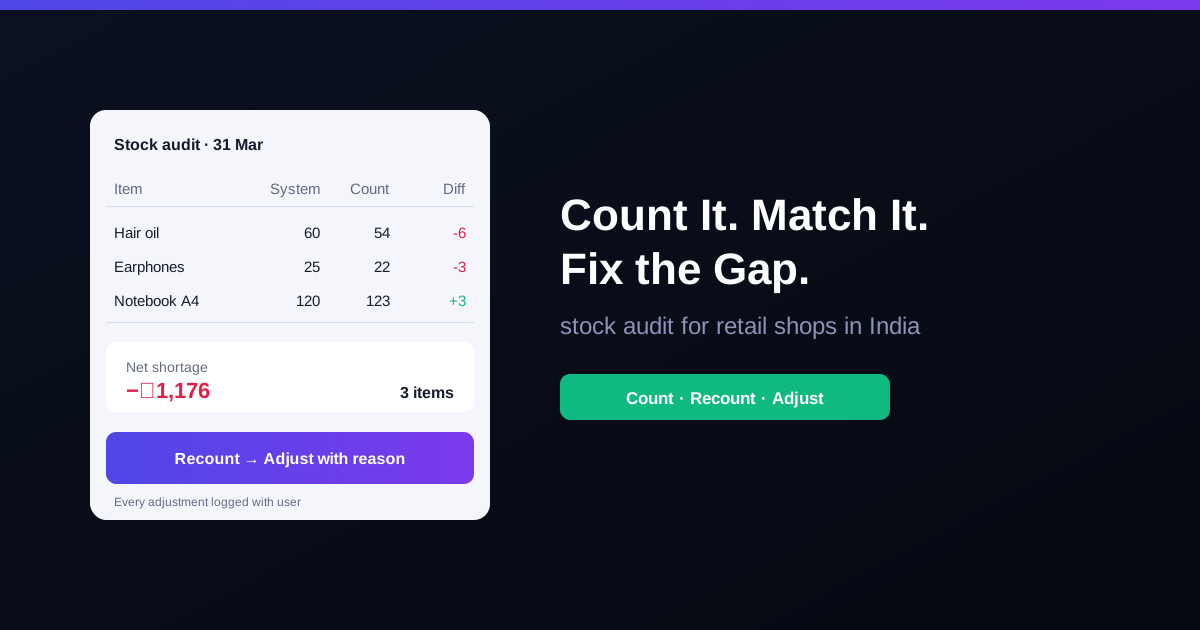
| Item | System | Counted | Difference | Cost/unit | Value |
|---|---|---|---|---|---|
| Hair oil 200 ml | 60 | 54 | -6 | ₹95 | -₹570 |
| Earphones | 25 | 22 | -3 | ₹240 | -₹720 |
| Notebook A4 | 120 | 123 | +3 | ₹38 | +₹114 |
Net shortage: ₹1,176. The notebook excess is usually a billing mistake, where a customer bought a different notebook but the cashier billed this one. The earphones, a small high-value item, point to theft near the counter. Moving them behind the counter is the real fix, not just the adjustment.
GST on lost, stolen or damaged stock
Input tax credit is not available on goods that are lost, stolen, destroyed or written off. If you already claimed ITC when you bought those goods, it generally has to be reversed. Keep your audit sheet and adjustment reasons as supporting records. For your specific filing, ask your CA. Our GST reporting guide covers the regular returns.
Common mistakes to avoid
- Counting while billing continues, without a cut-off.
- Adjusting system stock on the first count, without a recount.
- Letting the same person who handles the stock do the audit alone.
- Writing adjustments with no reason, so the pattern is never seen.
- Skipping the godown because "nothing moves there".
How RichPOS helps with stock audits
In RichPOS inventory & barcode, every stock adjustment is logged with a reason and the user who made it, so you can see which items keep going short. Barcode scanning speeds up billing accuracy, which cuts the "wrong item billed" mismatches. The stock valuation report gives your stock value from live data, and users & roles lets you decide who is allowed to adjust stock. Purchase returns correct stock automatically, so supplier shortages do not linger in your numbers.
Frequently asked questions
- How often should a retail shop do a stock audit?
- Do a full physical count at least once a year, ideally before 31 March so your closing stock is accurate for the books. In between, count fast-moving and high-value items weekly or monthly in small batches, called cycle counting.
- What is stock shrinkage?
- Shrinkage is the gap between the stock your records say you have and what is actually on the shelf. Common causes are theft, damage, expiry, billing errors, wrong supplier deliveries and stock given away without a bill.
- Do I have to reverse GST input tax credit on stolen or damaged stock?
- Generally yes. Input tax credit is not allowed on goods lost, stolen, destroyed or written off, so the credit already claimed on those goods should be reversed. Confirm the amount and timing with your CA.
- Should I adjust system stock immediately after the count?
- Only after you recount the items with a mismatch and check recent bills, purchases and returns. Many gaps turn out to be entry mistakes. Record each final adjustment with a reason so there is a trail.
Bottom line: a stock audit is a few hours of counting that protects a year of profit. Count on a schedule, recount before you adjust, and always record the reason. RichPOS gives you GST billing with a stock adjustment trail from ₹199/month, with a 30-day free trial. See pricing or call +91 90333 31255.
General guidance for Indian retailers as of 2026; confirm stock records and ITC reversal requirements for your business with your CA.