Short answer: A shop that buys used mobile phones and resells them can pay GST only on its margin, not on the full selling price. Under Rule 32(5) of the CGST Rules, the taxable value is the selling price minus the purchase price, as long as no input tax credit was claimed on that phone. The GST rate is 18%, the same as for new phones.
This guide covers who can use the margin scheme, a worked example, what happens on a loss, and the records a second-hand phone shop should keep.
What the margin scheme says
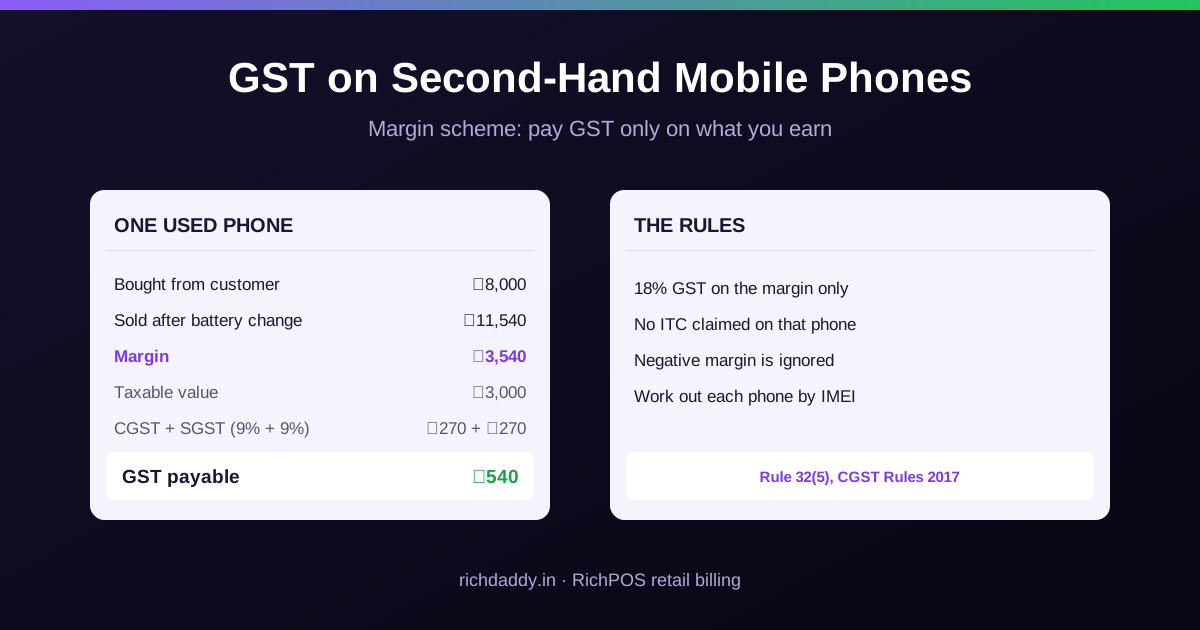
Rule 32(5) of the CGST Rules, 2017 applies to a registered person dealing in buying and selling second-hand goods, where the goods are sold as they are or after minor processing that does not change their nature. For such a sale, the value of supply is the difference between the selling price and the purchase price. If that difference is negative, it is ignored.
There is one condition that matters most: no input tax credit should be claimed on the purchase of that phone. Phones bought from customers who are not registered under GST carry no ITC anyway, which is why the scheme fits most used phone shops.
Worked example: one used phone
| Step | Amount |
|---|---|
| Bought from a customer | ₹8,000 |
| Sold after a battery change | ₹11,540 |
| Margin (includes GST) | ₹3,540 |
| Taxable value (₹3,540 × 100 / 118) | ₹3,000 |
| CGST at 9% | ₹270 |
| SGST at 9% | ₹270 |
Total GST on this sale is ₹540. Paying GST on the full ₹11,540 sale price instead (₹11,540 × 18 / 118) would have meant about ₹1,760 of tax. The margin is usually treated as including GST, so the tax is worked backwards from it. See our reverse GST calculation formula for the method.
When the margin is zero or negative
If you buy a phone for ₹9,000 and can only sell it for ₹8,500, the margin is −₹500. It is ignored, and no GST is payable on that sale. The loss cannot be carried to the next phone or set off against profit on other sales. Each phone is worked out on its own.
Margin scheme or full GST?
| Situation | How GST works |
|---|---|
| Phone bought from an individual customer | Margin scheme can be used |
| Phone bought from a registered dealer, no ITC taken | Margin scheme can be used |
| Phone bought from a registered dealer, ITC taken | GST on the full selling price |
| New phone or new accessory | GST on the full selling price |
Many shops sell both new and used stock. Keep the two separate in your billing, because new phones follow the normal rules covered in GST on mobile phones, and ITC on new stock works as explained in our input tax credit guide.
Repairs, refurbishing and repair income
Replacing a screen, battery or back panel before resale is usually seen as minor processing, so the phone stays a second-hand phone under the scheme. Repair work you do for customers on their own phones is a service, not a sale of used goods, and is taxed separately. See GST on mobile repair services.
Records to keep for every used phone
- IMEI number, model and condition at purchase
- Name, phone number and a copy of an ID of the person who sold it to you
- Purchase date and price, with a signed purchase slip
- Any repair or parts work done before resale
- Selling price, sale date and the bill number
These records support your margin calculation if the tax department asks. In many cities the local police also expect second-hand phone dealers to keep seller details, so the same register serves both purposes.
Common mistakes
- Claiming ITC on a phone bought from a dealer and then paying GST only on the margin.
- Adding up the margins of all phones for the month instead of working out each phone on its own.
- Setting off a loss on one phone against the margin on another.
- Not recording the purchase price per IMEI, so the margin cannot be proved later.
Rules on how the tax is shown on the invoice and reported in returns can depend on your case, so confirm the setup with your CA before you start billing under the margin scheme.
Frequently asked questions
- Is GST charged on second-hand mobile phones in India?
- Yes, when a GST-registered shop sells a used phone. But under the margin scheme in Rule 32(5) of the CGST Rules, GST can be paid only on the margin, which is the selling price minus the purchase price, instead of on the full selling price.
- What is the GST rate on used mobile phones?
- The rate is the same as for new mobile phones, 18%. Under the margin scheme the 18% applies only to the margin earned on each phone, not to the full price the customer pays.
- Who can use the margin scheme?
- A registered person who deals in buying and selling second-hand goods, selling them as they are or after minor processing that does not change their nature. The key condition is that no input tax credit has been claimed on the purchase of that phone.
- What if I sell a used phone for less than I bought it?
- If the margin is negative, it is ignored. No GST is payable on that sale, but the loss cannot be set off against the margin on other phones.
- Does replacing the screen or battery stop me from using the margin scheme?
- Generally no. A screen, battery or back panel replacement is usually treated as minor processing that does not change the phone into a different product. Keep a record of the repair work for each phone in case it is questioned.
- Can I use the margin scheme for phones bought from a GST-registered dealer?
- Only if you do not claim input tax credit on that purchase. If you take ITC on the purchase, you must charge GST on the full selling price instead of on the margin.
Bottom line: For used phones bought without ITC, pay 18% GST only on the margin, phone by phone, and ignore losses. Track every handset by IMEI so the margin is easy to prove. RichPOS handles IMEI-wise stock, repair job tracking and GST billing for mobile shops across India. See our pick of the best repair shop billing software, call +91 90333 31255, or start the 30-day free trial from the pricing page.