A repair counter earns from two things on the same bill: the spare part and the work. Both attract GST, and getting the rate, the code and the invoice right keeps your returns clean and your customers confident. This guide explains how GST works for mobile and gadget repair shops in India, with a worked example.
Quick answer
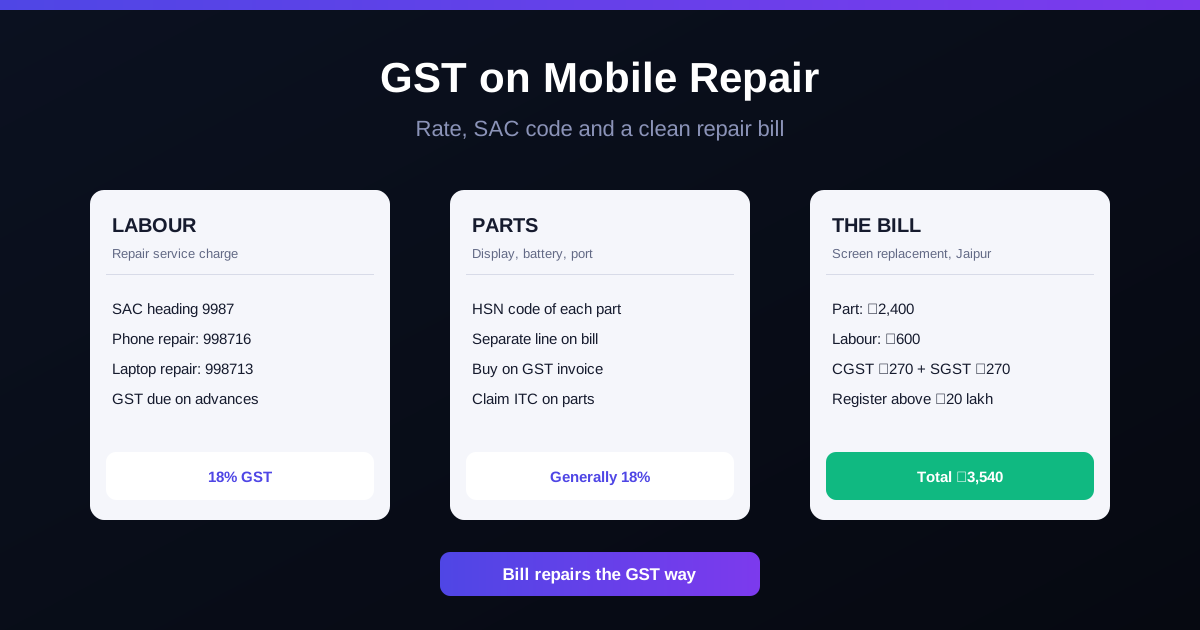
Mobile repair services attract 18% GST (9% CGST + 9% SGST within the state). Use SAC heading 9987 for the service, commonly 998716 for phone repair, and the HSN code of each spare part, which is usually also 18%. A repair shop needs GST registration above ₹20 lakh turnover in most states, and should show parts and labour as separate lines on a tax invoice.
GST rates at a glance
| Item on the bill | Code | GST |
|---|---|---|
| Phone repair labour / service charge | SAC 998716 (heading 9987) | 18% |
| Laptop or computer repair labour | SAC 998713 | 18% |
| Phone spare parts (display, battery, charging port) | HSN of the part | Generally 18% |
| New phones sold at the counter | HSN 8517 | 18% |
For phone and accessory rates, see GST on mobile phones. To look up codes, see how to find HSN codes.
Parts and labour on one bill
A screen replacement is part goods, part service. The simplest and clearest approach is to list them separately: the display with its HSN code and the fitting charge with its SAC code, each with GST. Because both are usually at 18% for phones, the tax works out the same either way, but separate lines help the customer understand the price and keep your sales reports split correctly between goods and services.
If you replace a part that has a different rate from 18%, the separate line shows it correctly. Check the rate on each part when you add it to your item list.
Do you need GST registration?
- ₹20 lakh turnover in a year is the limit for businesses that supply services, including repair (₹10 lakh in a few special-category states).
- The ₹40 lakh limit applies only to businesses that supply goods alone. A repair shop does not qualify for it.
- Turnover counts both repair charges and any phones or accessories you sell.
A small repair shop can also look at the composition options. Service providers with turnover up to ₹50 lakh can opt for a scheme at 6%, but they cannot claim input tax credit or charge GST on bills. See the composition scheme guide before choosing.
Advances, warranty jobs and invoices
- Advances: for services, GST is due on an advance when you receive it. If a customer pays ₹1,000 upfront for a repair, the GST inside that amount belongs to the month you received it.
- Warranty repairs: if the customer pays nothing under the brand's warranty, you do not charge them GST. Authorised service centres bill the brand or its partner under their agreement.
- Invoice timing: issue the tax invoice within 30 days of completing the service. In practice, bill when the customer collects the phone.
- Invoice contents: your GSTIN, invoice number and date, customer details where needed, description, HSN/SAC, taxable value, and CGST and SGST (or IGST). See GST invoice format.
Input tax credit on parts
A registered repair shop can claim the 18% GST it pays on spare parts, tools and shop rent as input tax credit, as long as the supplier's invoice shows up in your GSTR-2B. This is why buying parts on a proper GST bill matters: parts bought without a bill carry GST you can never claim back.
A worked example: a repair shop in Jaipur
A customer brings in a phone with a cracked display. The shop replaces it within Rajasthan:
| Line | Taxable value | CGST 9% | SGST 9% |
|---|---|---|---|
| Display assembly (HSN of part) | ₹2,400 | ₹216 | ₹216 |
| Fitting charge (SAC 998716) | ₹600 | ₹54 | ₹54 |
| Total | ₹3,000 | ₹270 | ₹270 |
The customer pays ₹3,540. Over a month, if the shop bills ₹3,00,000 of taxable repairs and parts, output GST is ₹54,000. If it bought ₹1,50,000 of parts on GST bills, it claims ₹27,000 as ITC and pays ₹27,000. The shop and figures are illustrative.
A simple GST routine for repair shops
- Set up each spare part with its HSN code and rate, and your repair services with their SAC code.
- Create a job card at intake with the device, the fault and any advance taken. See repair job tracking.
- Add the parts used and the labour to the final bill as separate lines.
- Buy parts on GST invoices and record them as purchases.
- At month end, give your CA sales and purchase reports split by HSN/SAC.
How RichPOS helps
- Repair job intake with device and issue templates, and status tracking from received to delivered. See the Mobile Repair Shop module.
- Parts used tied to inventory, so stock stays accurate as repairs consume parts.
- Custom reminders for pending repairs and handsets waiting for pickup.
- GST-ready sales and purchase reports by HSN/SAC, ready for your CA. See GST & reports.
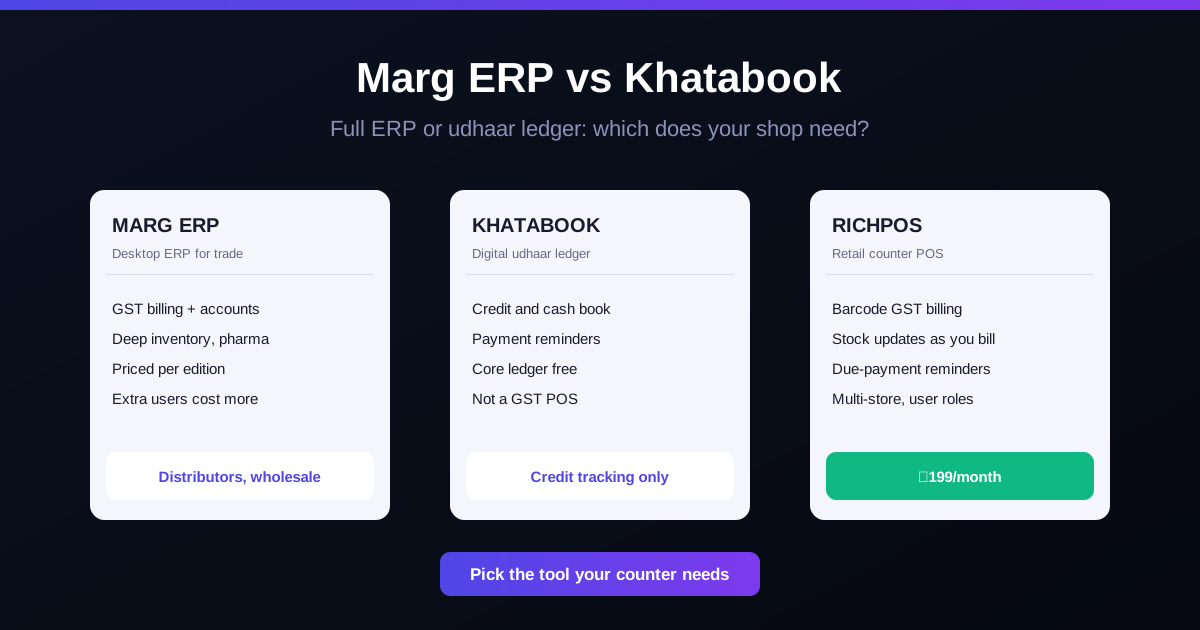
RichPOS costs ₹199/month (₹2,000/year) with a 30-day free trial. See pricing, or compare options in best repair shop billing software.
Frequently asked questions
- What is the GST rate on mobile repair services?
- Mobile phone repair services are taxed at 18% GST. Within your state this is split as 9% CGST and 9% SGST. Spare parts for phones, such as displays and batteries, are also generally at 18%, so both the labour and the parts on a repair bill usually carry 18%.
- Which SAC code is used for mobile repair?
- Repair services fall under SAC heading 9987 (maintenance, repair and installation services). Phone repair is commonly billed under 998716, repair of telecommunication equipment, and laptop or computer repair under 998713. Confirm the exact code with your CA.
- Do I need GST registration for a mobile repair shop?
- You need registration once your aggregate turnover crosses ₹20 lakh in a year (₹10 lakh in a few special-category states). The higher ₹40 lakh limit applies only to businesses that supply goods alone, so it does not apply to a repair shop.
- Should parts and labour be shown separately on a repair bill?
- Yes, it is good practice. Show each part with its HSN code and the labour with its SAC code, with GST on each line. It makes the bill clear to the customer and keeps your GST reports accurate.
- Do I charge GST on a repair done under warranty?
- If the repair is free to the customer under the brand's warranty, you do not charge the customer GST. If you are an authorised service centre, you bill the brand or its service partner for the work under your agreement, with GST as applicable.
Bottom line: charge 18% on repair labour and parts, use SAC 9987 codes for the service and HSN codes for parts, show them as separate lines, and register once you cross ₹20 lakh. Want repair jobs, parts stock and GST billing in one place? Call +91 90333 31255 for a demo, or start the 30-day free trial from the pricing page.
This is general guidance, not tax advice. GST rates, SAC codes and limits change by notification; confirm with your CA and the GST portal for your business.