Every rupee of GST you pay on stock, shop rent, or a new billing computer can reduce the GST you pay the government, if you claim it correctly. That credit is called input tax credit (ITC). Many small shops either miss credit they are owed or claim credit they are not allowed, and both cost money. This guide explains who can claim ITC, the conditions, what is blocked, and how to keep your credit safe.
Quick answer
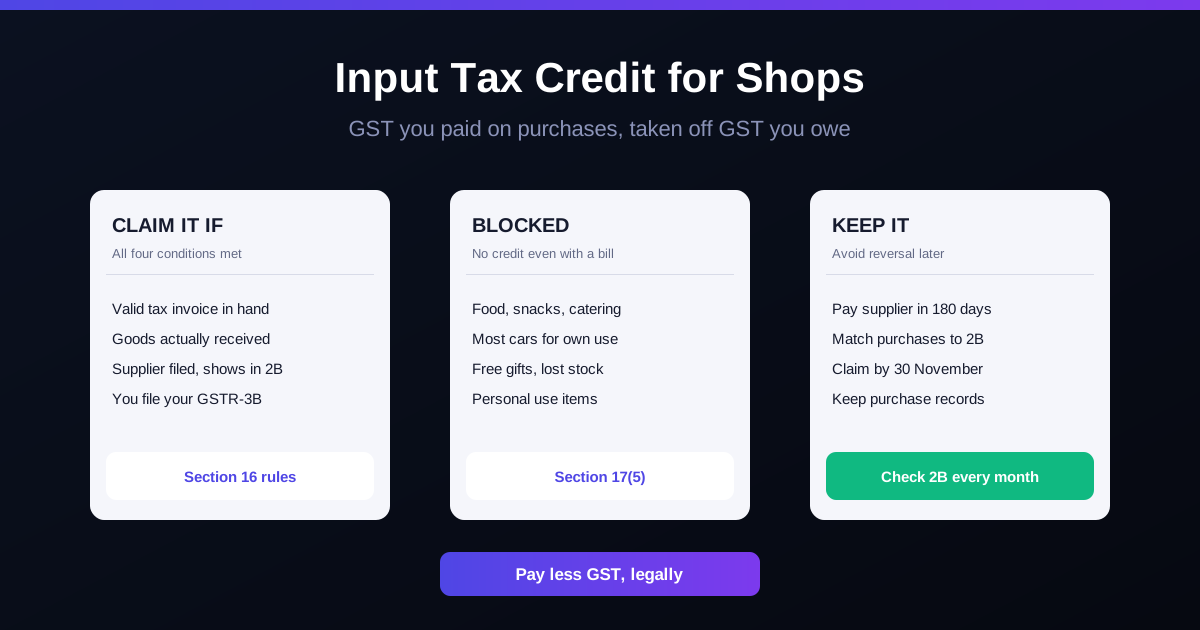
ITC is the GST you paid on business purchases, set off against the GST you collect on sales. A regular GST-registered shop can claim it when it has a valid tax invoice, has received the goods, the supplier has reported the invoice so it shows in GSTR-2B, and the shop files its GSTR-3B. Some items, such as food and most cars for own use, are blocked. Pay suppliers within 180 days, and claim by 30 November of the next financial year.
How ITC works
| Step | What happens |
|---|---|
| 1. You buy stock | Supplier charges GST on the tax invoice |
| 2. Supplier reports it | Invoice appears in your GSTR-2B for the month |
| 3. You sell | You collect GST from customers (output tax) |
| 4. You file GSTR-3B | Output tax minus eligible ITC = GST you pay |
For how the monthly returns fit together, see GSTR-1 vs GSTR-3B.
The four conditions to claim ITC
- You hold a valid tax invoice or debit note with your GSTIN on it. See GST invoice format and debit notes.
- You have received the goods or services. Goods sent to another location on your instruction count as received.
- The supplier has reported the invoice, so it appears in your GSTR-2B, and has paid the tax.
- You file your GSTR-3B for the period.
Only regular GST-registered businesses can claim ITC. Shops under the composition scheme cannot.
What a shop can usually claim
- Stock bought for resale.
- Packing material, carry bags and labels used in the business.
- Shop rent where the landlord charges GST.
- Business services such as your CA's fees, internet, phone and software subscriptions billed with GST.
- Capital goods such as a billing computer, barcode printer, racks or an AC for the shop, provided you do not also claim depreciation on the GST portion.
Blocked credits: no ITC even with a bill
Section 17(5) of the CGST Act lists items where ITC is not allowed. For a retail shop, the common ones are:
- Food and drinks, outdoor catering, and staff tea and snacks.
- Motor vehicles for carrying people with up to 13 seats, and their repair and insurance, unless you are in the business of selling or renting them.
- Beauty treatment, health services, club and gym memberships.
- Construction of the shop building itself (works contract for immovable property), beyond plant and machinery.
- Goods lost, stolen, destroyed, written off, or given away as free gifts or samples.
- Anything for personal use.
If stock is damaged or expires and you write it off, reverse the ITC you took on it. A regular stock audit helps you catch this.
Rules that take ITC back
- 180-day payment rule. If you do not pay the supplier, including the GST, within 180 days of the invoice date, you must reverse the credit with interest. You can reclaim it once you pay. Track dues in your supplier ledger.
- Time limit. ITC for a financial year must be claimed by 30 November of the next year or the annual return date, whichever is earlier.
- Returned goods. When you return stock and the supplier issues a credit note, reduce your ITC by the GST on it.
Using ITC: the set-off order
ITC is used head by head. IGST credit is used first against IGST, then against CGST and SGST. CGST credit is used against CGST, then IGST. SGST credit is used against SGST, then IGST. CGST credit can never pay SGST, and SGST credit can never pay CGST. The portal applies these rules when you file. For which tax applies where, see intra-state vs inter-state GST.
A worked example: an electronics accessories shop in Pune
A Pune shop selling chargers, cables and speakers at 18% GST, all within Maharashtra, has these figures for a month:
| Item | GST |
|---|---|
| Output GST on sales of ₹6,00,000 | ₹1,08,000 |
| Stock purchases of ₹4,00,000 shown in GSTR-2B | ₹72,000 (claim) |
| Stock purchase of ₹50,000 from a supplier who has not filed | ₹9,000 (wait; not in 2B) |
| Staff tea and snacks from a restaurant, ₹4,000 bill | ₹200 (blocked) |
| Shop rent of ₹30,000 with GST | ₹5,400 (claim) |
| Net GST to pay: ₹1,08,000 − ₹77,400 | ₹30,600 |
The owner follows up with the late supplier, and the ₹9,000 is claimed in the month it appears in GSTR-2B. The shop and figures are illustrative.
A monthly ITC routine
- Record every purchase bill with the supplier's GSTIN as soon as stock arrives. See purchase order management.
- When GSTR-2B is generated, match it against your purchase records.
- Chase suppliers whose invoices are missing.
- Leave out blocked items and anything unpaid for over 180 days.
- Give your CA a clean purchase report before GSTR-3B is filed.
How RichPOS helps
- Purchase entries with supplier details, so you have a record to match against GSTR-2B. See Purchase & Suppliers.
- GST-ready sales and purchase reports by HSN/SAC, exportable to Excel, CSV or PDF for your CA. See GST & reports.
- Supplier dues and cash in one ledger, to watch the 180-day rule. See Accounts & Cash.
RichPOS costs ₹199/month (₹2,000/year) with a 30-day free trial. See pricing.
Frequently asked questions
- What is input tax credit in GST?
- Input tax credit (ITC) is the GST you paid on business purchases, which you subtract from the GST you collect on sales. You pay only the difference to the government. For example, if you collected ₹50,000 GST on sales and paid ₹35,000 GST on eligible purchases, you pay ₹15,000.
- Can a retail shop claim ITC on stock it buys for resale?
- Yes. GST paid on goods bought for resale is the most common ITC for a shop, as long as you hold a valid tax invoice, have received the goods, the supplier has reported the invoice so it shows in your GSTR-2B, and you file your own GSTR-3B.
- Why is my ITC not showing in GSTR-2B?
- Usually because your supplier has not filed their GSTR-1 or IFF for that period, filed it late, or entered your GSTIN wrongly. Ask the supplier to correct or file it. You can claim the credit in the month it appears in GSTR-2B, within the time limit.
- Can composition dealers claim input tax credit?
- No. Shops under the composition scheme pay tax at a fixed rate on turnover and cannot claim ITC on purchases. They also cannot charge GST on their bills.
- What is the last date to claim ITC for a financial year?
- ITC for invoices of a financial year can be claimed up to 30 November of the next year, or the date you file the annual return, whichever is earlier. Credit not claimed by then is lost.
Bottom line: ITC is money back on GST you already paid, but only if the invoice is valid, the supplier has filed, the item is not blocked, and you pay on time. Record purchases properly and match them to GSTR-2B every month. Want purchase and GST reports straight from your billing? Call +91 90333 31255 for a demo, or start the 30-day free trial from the pricing page.
This is general guidance, not tax advice. GST rules, time limits and portal processes change; confirm with your CA and the GST portal before claiming.