Retail inventory management in India, 2026: turnover ratio, reorder point, safety stock and dead-stock formulas, with rupee examples and a weekly routine.
Inventory management for a retail shop means keeping the right stock, in the right quantity, at the right time, so you never lose a sale to a stockout or lock cash in dead stock. In practice it comes down to four numbers: your inventory turnover ratio (how fast stock sells), your reorder point (when to buy again), your safety stock (your buffer against delays), and your dead-stock share (what to clear). Get those four right and you free up cash, cut shrinkage, and stop guessing.
Why inventory control decides whether an Indian shop survives
For a shop owner, the money is rarely lost at the counter. It is lost on the shelf.
Shrinkage (stock lost to theft, damage, expiry and billing mistakes) disappears with no record of why unless every movement is logged.
Dead and slow-moving stock: cash frozen in goods nobody is buying.
On the other side, a customer who finds an empty shelf can buy from the shop next door instead of waiting. A stockout isn't a delayed sale; it's often a lost one.
So the job is a balance: enough stock to never turn a customer away, little enough that you're not sitting on frozen cash. Every method below serves that one balance.
The four numbers every retailer should track
Metric
What it tells you
Formula
Inventory turnover ratio
How many times you sell through and replace stock in a year
Cost of goods sold ÷ average inventory value
Days inventory outstanding
Average days a product sits before selling
365 ÷ inventory turnover ratio
Reorder point
The stock level that triggers a fresh order
(Avg daily sales × lead time in days) + safety stock
Safety stock
Buffer that covers demand spikes and supplier delays
(Max daily sales × max lead time) − (avg daily sales × avg lead time)
What is a good turnover ratio?
There is no single right number. A kirana counter selling daily staples turns stock far faster than a mobile or hardware shop, so compare yourself with your own past months, category by category, not with another trade. Turnover that rises while stockouts stay low is the healthy direction; very high turnover with frequent empty shelves means you are running too lean.
A worked example: when to reorder
Say you run a grocery counter and sell a popular atta brand at 30 bags a day. Your distributor takes 4 days to deliver after you order. On a festival week, demand can spike to 45 bags a day and delivery can slip to 6 days.
So the moment stock drops to 270 bags, you reorder — not when the shelf is empty. That single rule prevents both the panic buy and the empty shelf. A billing system that flags this level automatically removes the guesswork; doing it by memory across hundreds of SKUs is where shops slip.
Inventory methods that actually work in a small shop
1. ABC analysis — watch what matters
Not every SKU deserves equal attention. Sort stock by revenue contribution:
A items (the few items that bring most of your sales): count often, never let them stock out.
B items: moderate value, review monthly.
C items (the many items that bring little of your sales): low value, order in bulk, count rarely.
ABC analysis stops you spending equal effort on a ₹10 item and a ₹10,000 one.
2. FIFO / FEFO — sell the oldest first
For anything perishable or dated — groceries, cosmetics, medicines — move first-in, first-out (FIFO), or first-expiry, first-out (FEFO) for expiry-dated goods. Physically place new stock behind old. This is the single cheapest way to cut write-offs.
3. Barcode-driven stock counts
Manual registers are where shrinkage hides. Scanning every item in and out gives you a live, auditable stock figure and turns a full physical count from a shop-closing chore into a spot check. See our guide to barcode inventory management for Indian retail stores.
4. Clear dead stock on a schedule
Review slow movers every quarter. Bundle them, discount them, or return them to the supplier — anything to convert frozen cash back into working capital before it's a total write-off. Our detailed playbook: how to reduce dead stock in retail.
Stock guides for each number, in one place
This page is the overview. Each measure has its own guide with the formula and a worked shop example:
Inventory management isn't about counting for its own sake — it's about the four numbers that decide your cash flow: turnover, reorder point, safety stock, and dead-stock share. Track those, run the weekly routine, and let a system handle the alerts so you can run the shop. See how RichPOS handles live stock, reorder alerts and GST billing in one place.
FAQ
Frequently asked questions
What is a good inventory turnover ratio for a retail shop in India?
It depends on what you sell: fast-moving groceries turn over much faster than electronics or hardware. Track your own ratio month by month for each category. Rising turnover without more stockouts is the healthy direction. The inventory turnover guide shows the calculation with an example.
How do I calculate the reorder point?
Reorder point = (average daily sales × supplier lead time in days) + safety stock. Reorder the moment stock hits that number, so a fresh delivery arrives before you run out.
How much stock is too much?
If a large share of your stock hasn't moved in a quarter, or your turnover ratio is well below your category benchmark, you're overstocked — cash is frozen on the shelf. Clear slow movers and tighten reorder quantities.
Can a small kirana shop manage inventory without software?
You can with a disciplined register and FIFO placement, but manual methods are where most shrinkage hides. A basic POS with barcode scanning and reorder alerts pays for itself quickly once you're past a few dozen SKUs.
Free tool: use the Excel templates for a stock register, udhaar khata, cash book or GST purchase register. Free; enter your WhatsApp number to download.
Founder, RichPOS Software, Ahmedabad. We build RichPOS for Indian shops and write these guides from what shop owners ask us every day. Facts on tax rates and prices are dated; confirm GST matters with your CA. Questions? WhatsApp us.
Make GST bills in seconds with RichPOS
Billing, stock, WhatsApp bills and GST reports in one app. Free 30-day trial with no card, then ₹99/month for 3 months and ₹199/month after.
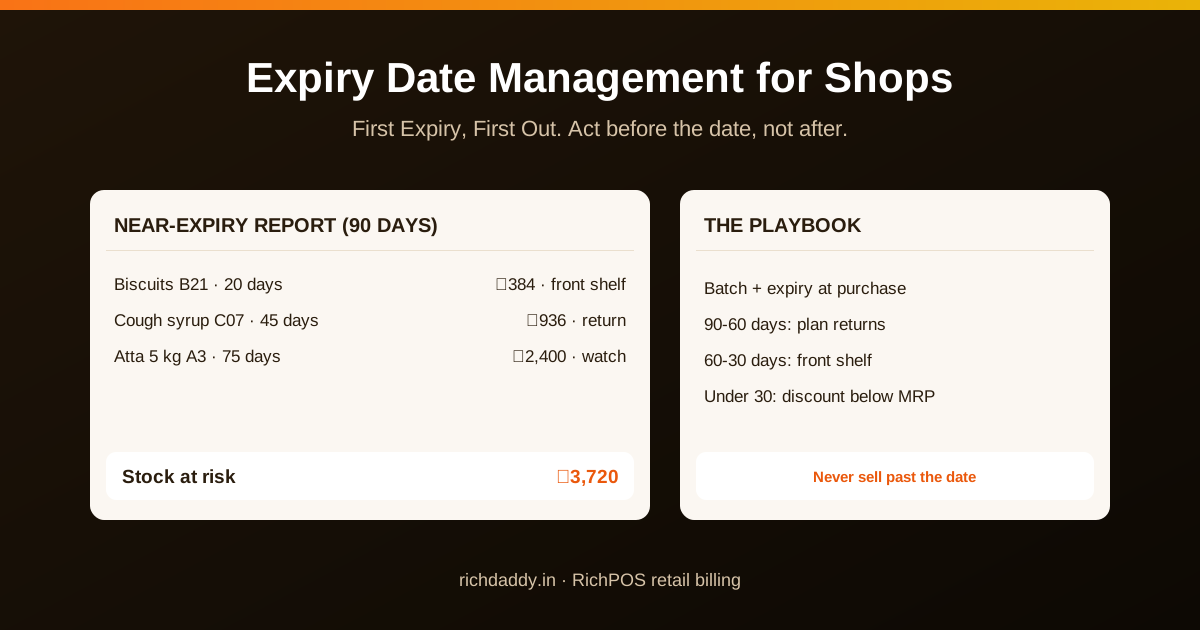
Expiry Date Management for Retail Shops: FEFO GuideHow Indian grocery, pharmacy and FMCG shops can cut expiry losses: FEFO vs FIFO, batch tracking, a near-expiry report, returns, and GST on written-off stock.
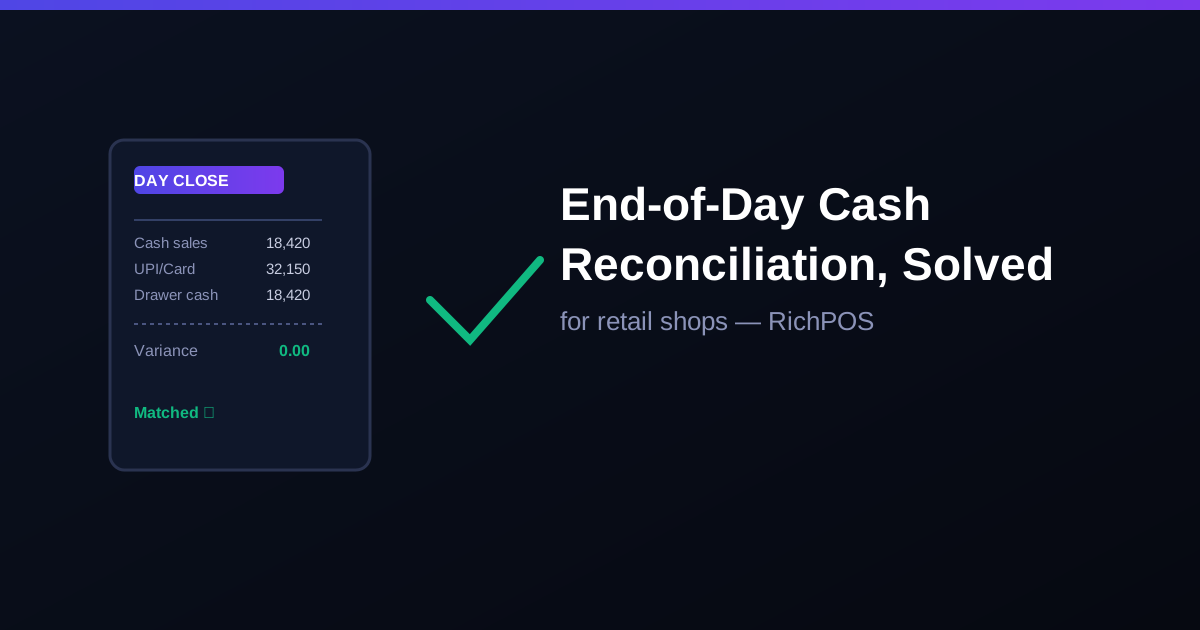
End-of-Day Cash Reconciliation for Retail ShopsCash drawer not matching your sales report? Here's how retail shops in India close the day fast with automatic cash-vs-sales reconciliation in RichPOS.
Low Stock Alerts for Retail Shops in IndiaBestseller out of stock mid-sale? Here is how retail shops in India set low-stock alerts in billing software to reorder before shelves go empty.
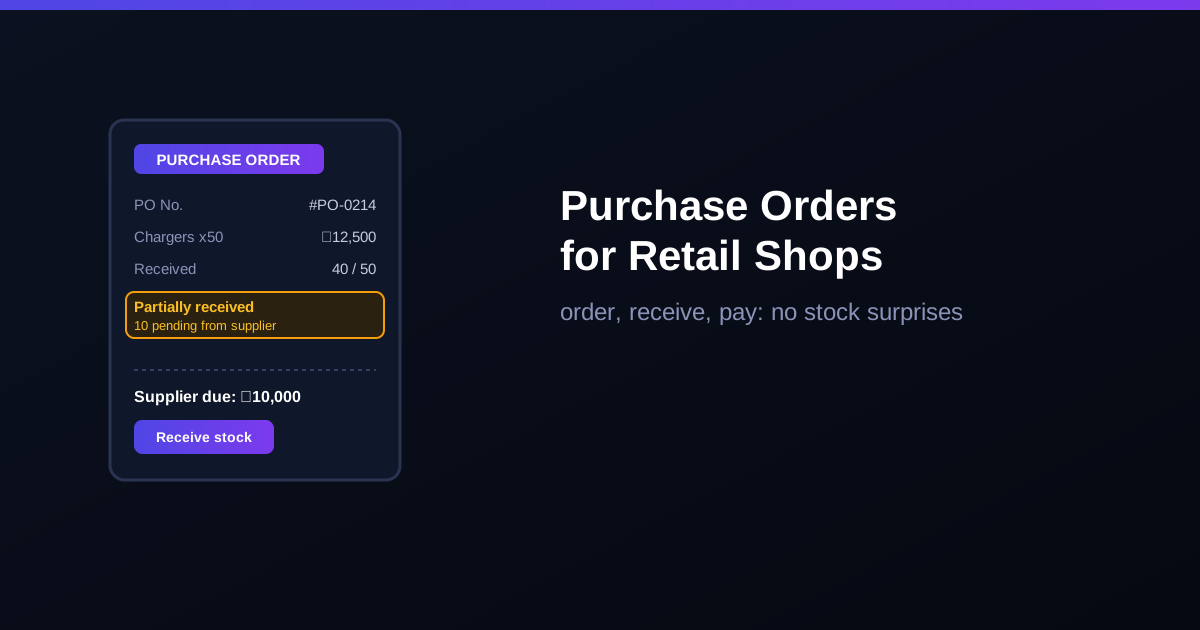
Purchase Order Management for Retail Shops in IndiaA practical guide to purchase orders for Indian retail shops: raising POs, partial receiving, supplier dues and claiming GST input tax credit without errors.
30 din FREE · Billing appthen ₹99/month for 3 monthsTry free