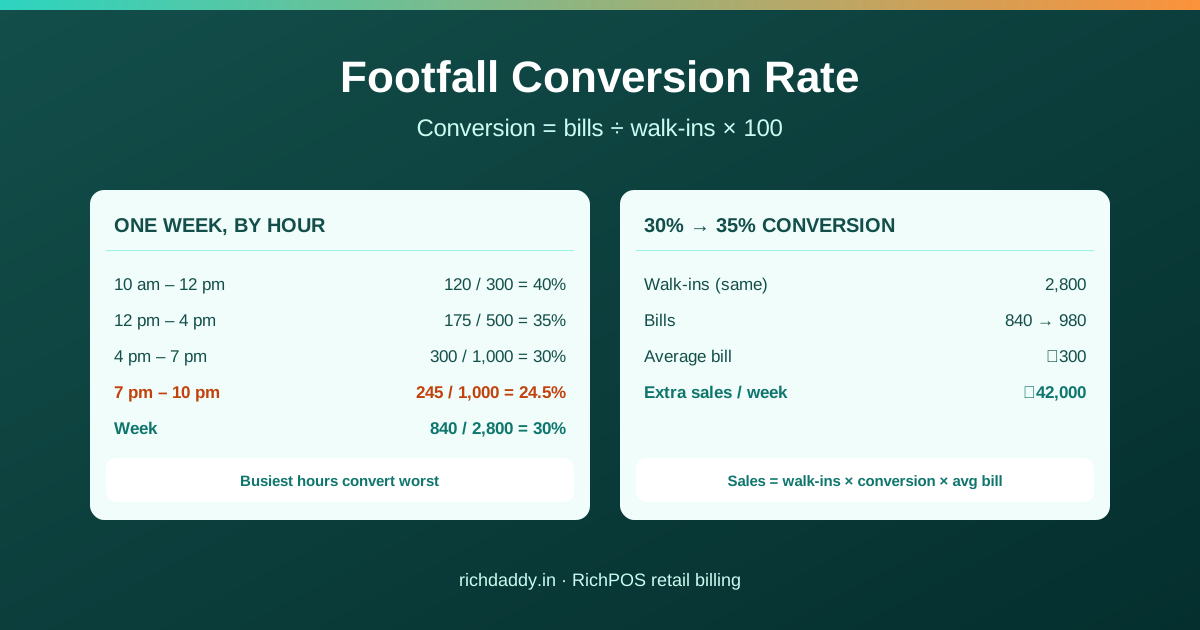
Short answer: Conversion rate = number of bills ÷ number of walk-ins × 100. If 2,800 people walked into your shop this week and you made 840 bills, your conversion rate is 30%. The other 1,960 visitors left without buying.
This guide is for kirana, garment, footwear, mobile, electronics, gift, stationery and other retail shops in India that want to know how many visitors turn into paying customers, and why the rest walk out.
Why conversion rate matters
Most shop owners track sales and maybe the number of bills. Fewer track how many people came in. Without that number, you cannot tell whether a slow day was caused by fewer visitors or by visitors who did not buy. The fixes are very different: fewer visitors needs promotion, while low conversion needs better stock, staff, pricing or a faster counter.
The formula
| Measure | Formula |
|---|---|
| Conversion rate | Bills ÷ walk-ins × 100 |
| Sales | Walk-ins × conversion rate × average bill value |
| Walk-outs | Walk-ins − bills |
Use the number of bills, not the number of items sold. Leave out cancelled bills and full returns. Count a family or group that shops together as one walk-in, because they usually make one bill.
How to count footfall
- Hand tally counter: a staff member at the door clicks once for each person or group that enters. Cheap and good enough for sample days.
- Door register by hour: mark a line for each walk-in on a sheet split into hour slots.
- Door sensor or CCTV people count: useful for busy shops, but check it against a manual count for a day or two.
Leave out staff, delivery people, suppliers and people coming only to collect a repair or pay old udhaar. You do not need to count every day. One full week, repeated once a month and during festivals, gives a clear picture.
Worked example: one week, split by hour
| Time slot | Walk-ins | Bills | Conversion |
|---|---|---|---|
| 10 am – 12 pm | 300 | 120 | 40% |
| 12 pm – 4 pm | 500 | 175 | 35% |
| 4 pm – 7 pm | 1,000 | 300 | 30% |
| 7 pm – 10 pm | 1,000 | 245 | 24.5% |
| Week | 2,800 | 840 | 30% |
The shop is busiest in the evening, but that is when it converts worst. With more visitors and the same staff, customers wait for help, queue at the counter and leave. The morning converts well but has few visitors.
With a ₹300 average bill, weekly sales are 840 × ₹300 = ₹2,52,000. If the shop lifts conversion from 30% to 35% with the same 2,800 walk-ins, it makes 980 bills, 140 more. That is 140 × ₹300 = ₹42,000 more sales in a week, without a single extra visitor.
Why visitors leave without buying
| Reason | What to check | Fix |
|---|---|---|
| Item or size out of stock | Items asked for but not available | Keep a lost-sales note and set low-stock alerts |
| Long billing queue | Wait time in the evening rush | Add a second billing counter, take UPI payments |
| No one free to help | Staff count by hour vs walk-ins | Move staff breaks out of the busy slots |
| Price not marked | Shelf tags and labels | Mark prices clearly with barcode labels |
| Just comparing prices | Items customers ask about most | Check your pricing on those items |
Five ways to raise conversion
- Staff the busy hours. Put your best salespeople on the floor when walk-ins peak, not when the shop is empty.
- Speed up billing. Barcode scanning, a ready UPI QR and a second counter in the rush cut the queue.
- Keep fast sellers in stock. Track what customers ask for but you do not have, and reorder before it runs out.
- Make prices easy to see. Customers who must ask for every price often leave instead.
- Plan festival days. Footfall jumps during festival sales. Extra staff and stock for those days stop conversion from dropping.
Conversion with your other numbers
| Measure | Question it answers |
|---|---|
| Conversion rate | How many visitors buy? |
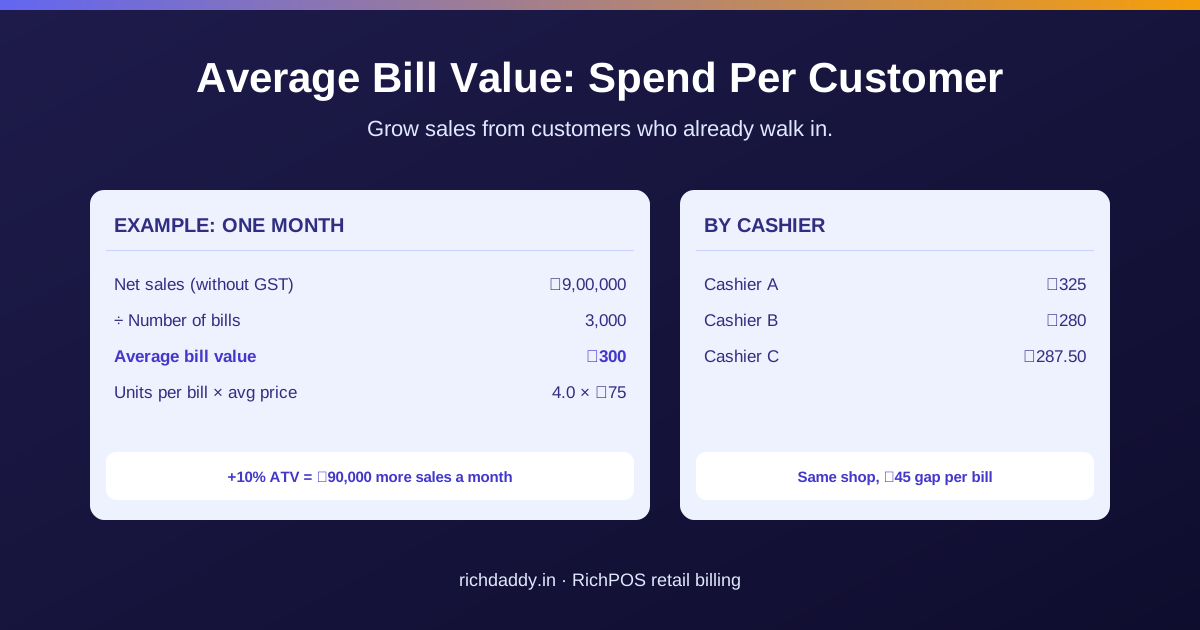
| Average bill value | How much does each buyer spend? |
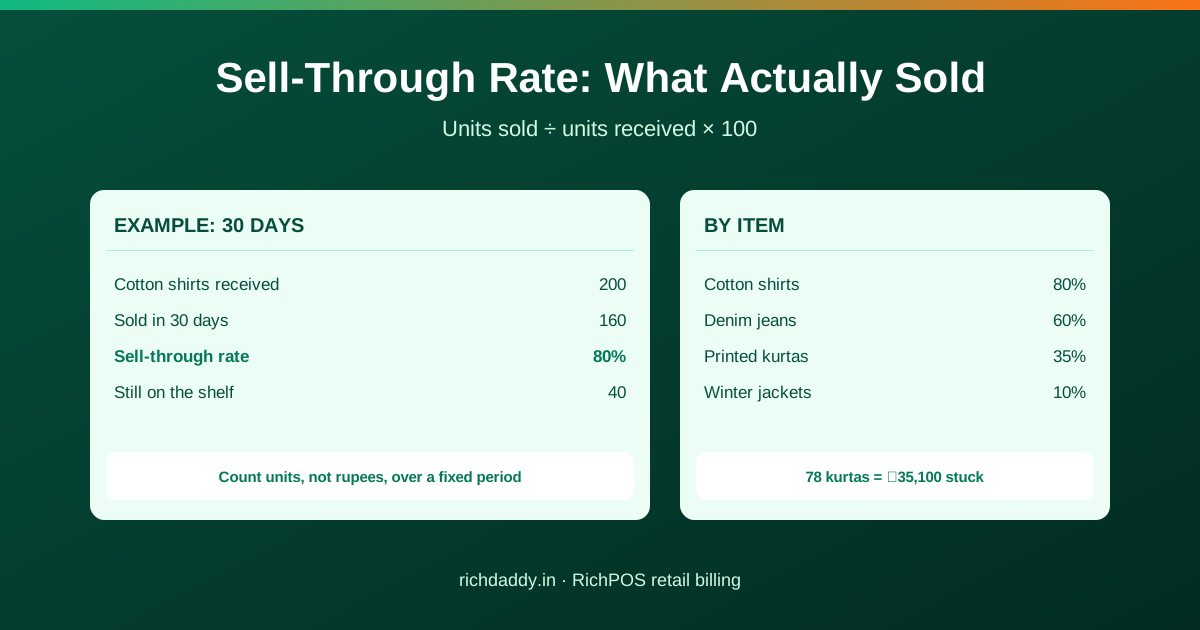
| Sell-through rate | How much of the stock I bought has sold? |
| Profit and loss | Did the shop make money this month? |
Frequently asked questions
- What is footfall conversion rate?
- Footfall conversion rate is the share of people who walk into your shop and buy something. If 2,800 people came in this week and you made 840 bills, your conversion rate for the week is 30%.
- What is the formula for conversion rate in a retail shop?
- Conversion rate = number of bills ÷ number of walk-ins × 100. Count both for the same period, such as one day, one week or one hour slot. Count a family or group that shops together as one walk-in, since they usually make one bill.
- How do I count footfall in a small shop?
- The simplest way is a hand tally counter or a register at the door for a few sample days. Some shops use a door sensor or the people-count feature of their CCTV system. Leave out staff, delivery people and suppliers, and count groups as one.
- How do conversion rate and average bill value work together?
- Sales = walk-ins × conversion rate × average bill value. With 2,800 walk-ins, 30% conversion and a ₹300 average bill, weekly sales are ₹2,52,000. Raising either conversion or the average bill raises sales without needing more walk-ins.
- What is a good conversion rate for a retail shop?
- It depends on the type of shop. A kirana or medical store, where most people come in to buy a known item, converts far more visitors than a garment, furniture or electronics shop, where people often browse and compare. Compare your own shop week to week and hour to hour rather than with other shops.
- Why do customers walk out without buying?
- Common reasons are the item or size being out of stock, a long billing queue, no staff free to help, prices not marked, and the customer only comparing prices. Note walk-outs and their reason for a few days to see which one costs you most.
Bottom line: Conversion rate = bills ÷ walk-ins × 100. Count walk-ins for a sample week, split them by hour, and compare with your bill count to find the hours when visitors leave without buying. RichPOS gives you the bill count and sales for any period, so you only need to count the people at the door. Call +91 90333 31255, or start the 30-day free trial from the pricing page.