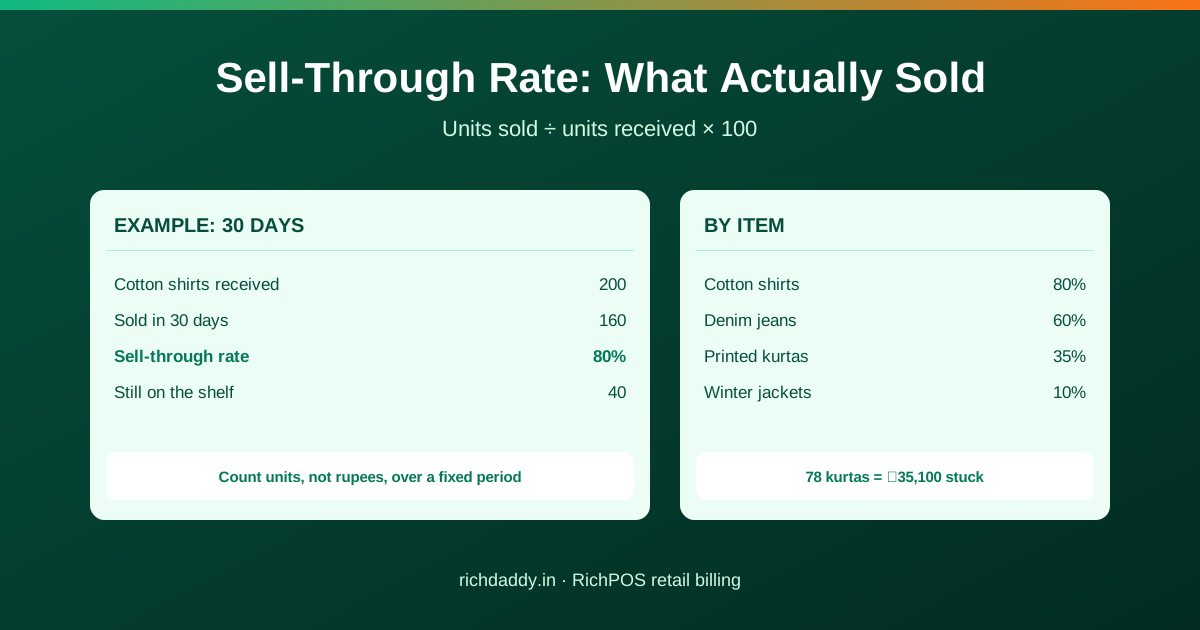
Short answer: Sell-through rate = units sold ÷ units received × 100. If your shop received 200 shirts and sold 160 of them in 30 days, the 30-day sell-through rate is 80%. The other 40 shirts are still on the shelf.
This guide is for garment, footwear, mobile accessory, gift, stationery, kirana and other retail shops in India that want to know which purchases paid off and which ones are stuck on the shelf.
Why sell-through rate matters
Every purchase is a bet. You pay the supplier, then wait for customers to buy. Sell-through rate tells you, item by item, how that bet is going. Items with a low rate lock up cash and shelf space. Items with a very high rate may be running out before the next delivery.
It is most useful for seasonal and fashion stock, such as school uniforms, winter wear, festival gifts and new phone covers, where unsold stock loses value fast.
The formula
| Case | Formula |
|---|---|
| New batch, no old stock | Units sold ÷ units received × 100 |
| With old stock on hand | Units sold ÷ (opening stock + units received) × 100 |
| Units left | Units received − units sold − returns to supplier |
Count units, not rupees, so price changes and discounts do not distort the figure. Treat customer returns as unsold stock: subtract them from units sold. Always state the period, such as 7, 30 or 60 days from arrival.
Worked example: a garment shop, 30 days
| Item | Received | Sold in 30 days | Sell-through | Stock left |
|---|---|---|---|---|
| Cotton shirts | 200 | 160 | 80% | 40 |
| Denim jeans | 150 | 90 | 60% | 60 |
| Printed kurtas | 120 | 42 | 35% | 78 |
| Winter jackets | 80 | 8 | 10% | 72 |
Shirts are selling well. Jackets look weak, but it is early in the season, so judge them again after the first cold month. The kurtas are the real worry: 78 pieces left with no seasonal reason to wait. If each kurta cost you ₹450, that is ₹35,100 of cash sitting on the shelf.
Break it down further
- By size and colour: a shirt may sell 95% in M and L but 30% in XXL. Order the next batch by size, not just by design. See size and colour variants.
- By supplier: compare sell-through across suppliers for the same category before placing the next purchase order.
- By week: look at week 1, week 2 and week 4. A fast start that stops early often means sizes or colours ran out.
- By branch: if you run more than one store, move slow stock to the branch where it sells. See managing multiple stores.
What to do with each result
| Sell-through | What it usually means | Action |
|---|---|---|
| Very high, sold out early | Lost sales after stock ran out | Order more, reorder sooner, check your reorder level |
| Steady, in line with category | Buying matched demand | Repeat the order |
| Low, well below category | Wrong price, place, size or design | Move it, bundle it, reprice it |
| Very low near season end | Becoming dead stock | Clear it or return it to the supplier |
Five ways to raise sell-through
- Buy smaller first lots. Order a trial quantity, check sell-through after one or two weeks, then reorder what works.
- Move slow items to better spots. Eye level, near the entrance or near the billing counter.
- Bundle. Pair a slow item with a fast one, such as a kurta with a dupatta.
- Clear early, not late. A small discount mid-season costs less than a big one after the season. Check that discounts are shown correctly on the GST invoice.
- Use supplier return terms. Agree return or exchange terms for new designs before you buy.
Sell-through with your other numbers
| Measure | Question it answers |
|---|---|
| Sell-through rate | How much of this batch has sold? |
| Inventory turnover | How fast does my whole stock sell over a year? |
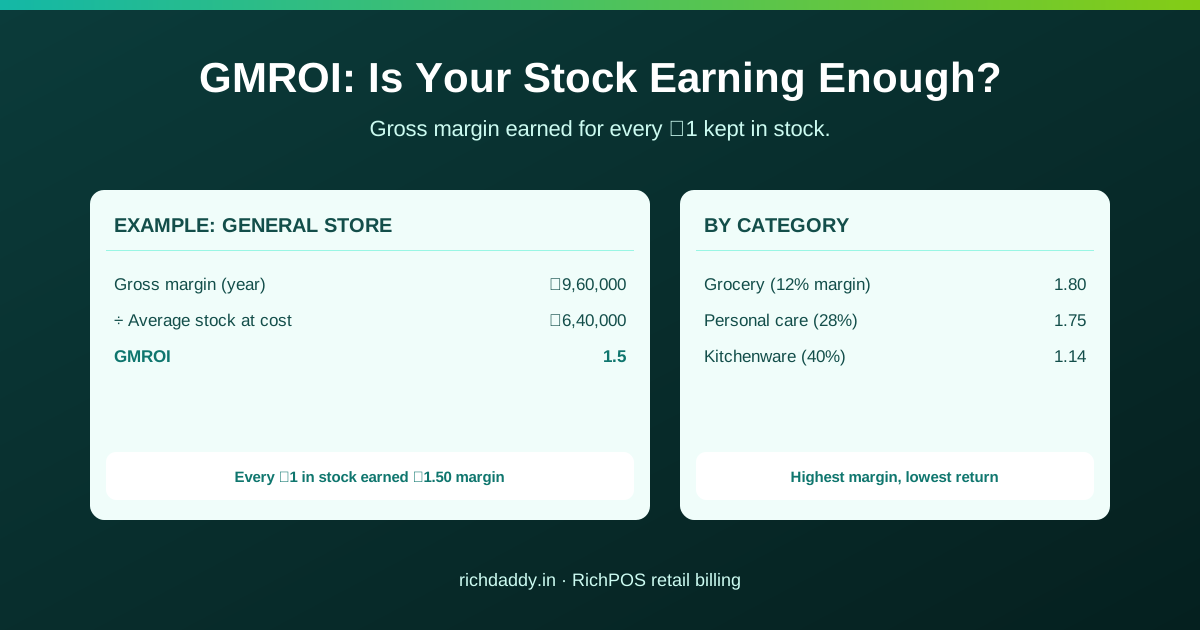
| GMROI | How much margin does each ₹1 of stock earn? |
| ABC analysis | Which items bring most of my sales? |
Frequently asked questions
- What is sell-through rate?
- Sell-through rate is the share of stock received that you have sold in a given period. If you received 200 shirts and sold 160 of them in 30 days, your 30-day sell-through rate is 80%.
- What is the formula for sell-through rate?
- Sell-through rate = units sold ÷ units received × 100. Use units, not rupees, and fix the period, for example 30 days from the date the stock arrived. If you had opening stock, use units sold ÷ (opening stock + units received) × 100.
- How is sell-through rate different from inventory turnover?
- Sell-through rate looks at one batch, item or season and asks how much of it has sold. Inventory turnover looks at the whole shop over a year and asks how many times your average stock was sold. Use sell-through for buying decisions on single items, and turnover for overall stock health.
- What is a good sell-through rate?
- There is no single right number. Fast-moving daily items should sell through quickly, while seasonal garments, footwear and gifts are judged over the full season. Compare items within the same category and the same period, and watch for items that stay far below the rest.
- What should I do with items that have a low sell-through rate?
- Move them to a better shelf spot, bundle them with a fast seller, offer a small clearance discount before the season ends, return them to the supplier if your terms allow it, and order less of that item or size next time.
- Can a sell-through rate be too high?
- Yes. If an item sells 100% in the first few days, you probably ran out of stock and lost sales. For such items, order a little more next time or reorder sooner.
Bottom line: Sell-through rate = units sold ÷ units received × 100. Check it item by item, size by size and week by week, then reorder winners early and clear slow stock before it turns dead. RichPOS records purchases and sales against each item, so you can see what has sold and what is still on the shelf without a spreadsheet. Call +91 90333 31255, or start the 30-day free trial from the pricing page.