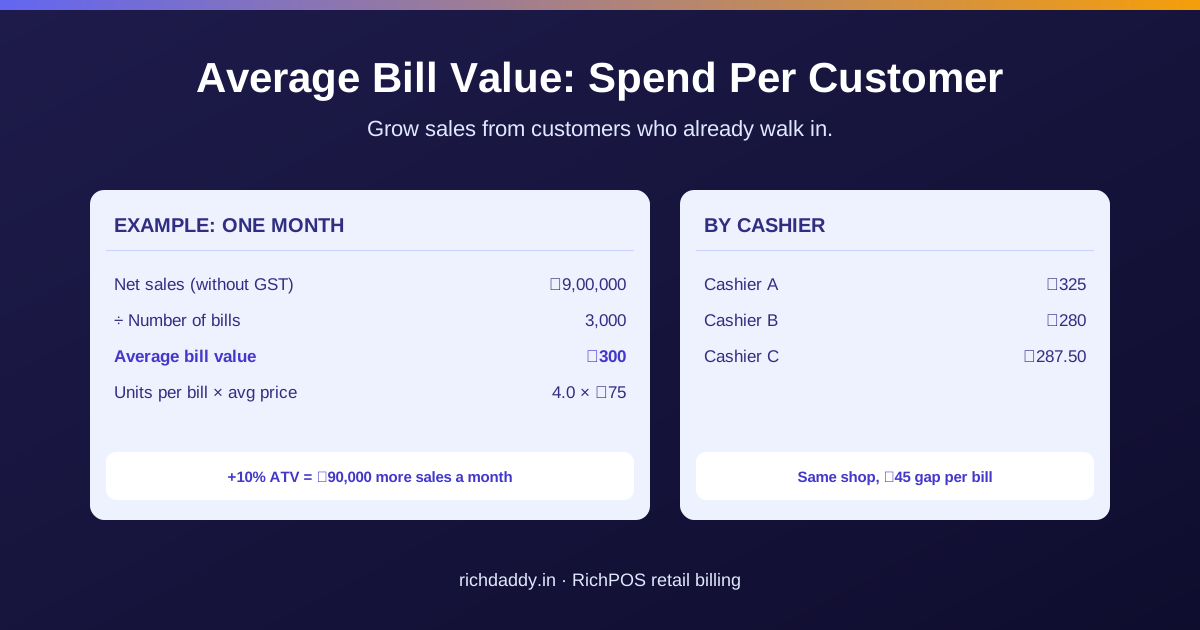
Short answer: Average bill value (ATV) = net sales ÷ number of bills. If your shop made ₹9,00,000 of sales in a month from 3,000 bills, ATV is ₹300. Each customer spent ₹300 per visit on average.
This guide is for kirana, general, pharmacy, garment, footwear, mobile, electronics, hardware and other retail shops in India that want to grow sales from the customers who already walk in.
Why average bill value matters
Your sales come from three things: how many people walk in, how many of them buy, and how much each buyer spends. Getting new customers costs money and time. Raising the amount an existing customer spends on each bill is often the cheapest way to grow.
Sales = footfall × conversion rate × average bill value.
The three formulas
| Measure | Formula | What it tells you |
|---|---|---|
| Average bill value (ATV) | Net sales ÷ number of bills | How much each customer spends per bill |
| Units per bill (UPT) | Units sold ÷ number of bills | How many items each customer buys |
| Average selling price (ASP) | Net sales ÷ units sold | How expensive the average item is |
The three are linked: ATV = UPT × ASP. If ATV falls, check which one moved.
Use net sales after returns and discounts, and leave out cancelled bills. Count a return as a reduction in sales, not as an extra bill.
Worked example: a general store, one month
| Item | Working | Result |
|---|---|---|
| Footfall | 4,000 visitors | |
| Bills | 4,000 × 75% conversion | 3,000 bills |
| Net sales (without GST) | ₹9,00,000 | |
| Units sold | 12,000 | |
| Average bill value | ₹9,00,000 ÷ 3,000 | ₹300 |
| Units per bill | 12,000 ÷ 3,000 | 4.0 |
| Average selling price | ₹9,00,000 ÷ 12,000 | ₹75 |
Check: 4.0 units × ₹75 = ₹300. If this shop raised ATV by 10% to ₹330 with the same 3,000 bills, monthly sales would rise to ₹9,90,000, which is ₹90,000 more. At a 20% gross margin, that is ₹18,000 of extra margin a month without one new customer. See markup vs margin for working out your margin.
Break it down by cashier
The shop-wide figure hides useful detail. Here is the same month split by cashier:
| Cashier | Bills | Net sales | ATV |
|---|---|---|---|
| Cashier A | 1,200 | ₹3,90,000 | ₹325 |
| Cashier B | 1,000 | ₹2,80,000 | ₹280 |
| Cashier C | 800 | ₹2,30,000 | ₹287.50 |
| Total | 3,000 | ₹9,00,000 | ₹300 |
Cashier A sells ₹45 more per bill than Cashier B. Before drawing conclusions, check shift timing, since evening shifts often get bigger family purchases. If shifts are similar, find out what Cashier A does differently and teach it to the others. Separate cashier logins make this report possible.
Other useful splits
- Day of week: weekend ATV is often higher. Plan staff and stock for it.
- Hour of day: a low ATV in the morning rush may only mean quick top-up buys, which is fine.
- Payment mode: compare UPI, card and cash bills. Check your end-of-day totals so the numbers are right.
- Festival vs normal months: compare festival sale ATV with a normal month to see whether offers raised spend or only cut margin.
How to raise average bill value
- Counter add-ons. Keep small, useful items within reach of the billing counter: batteries, chargers, socks, sachets, chocolates.
- Ready combos. Group items people buy together, such as a phone cover with a screen guard, or a school stationery kit.
- Bigger pack sizes. Suggest the 1 kg pack over 500 g when the per-unit price is better for the customer.
- Free-delivery minimum. Set it a little above your current ATV. If ATV is ₹300, a ₹400 minimum nudges many orders upward.
- One suggestion per bill. Train staff to suggest one related item, politely, not a hard sell.
- Watch discounts. A higher ATV bought with heavy discounts can leave you with less profit. Check your profit and loss report as well.
ATV with your other numbers
| Measure | Question it answers |
|---|---|
| Average bill value | How much does each customer spend per visit? |
| Gross margin % | How much do I keep from each sale? |
| Inventory turnover | How fast does my stock sell? |
| GMROI | How much margin does each ₹1 of stock earn? |
Frequently asked questions
- What is average bill value?
- Average bill value, also called average transaction value (ATV) or average basket size, is the amount a customer spends on one bill on average. It tells you how much each sale is worth to your shop.
- What is the formula for average bill value?
- Average bill value = net sales ÷ number of bills. Use the same period for both, for example one day, one week or one month. Do not count cancelled or voided bills.
- Should I include GST in average bill value?
- Pick one method and use it every time. Most owners use sales without GST, because the GST you collect is paid to the government and is not your income. If your bills show prices with GST, calculate the without-GST total for your reports.
- What is units per bill?
- Units per bill, also called units per transaction (UPT), is the number of items sold divided by the number of bills. If ATV is low, UPT tells you whether customers are buying too few items or buying cheaper items.
- What is a good average bill value?
- There is no single right number. It depends on your trade, area and product mix. Compare your own ATV month by month, day by day and cashier by cashier, and look for the trend rather than a fixed target.
- How can I increase average bill value without discounts?
- Keep add-on items near the billing counter, offer ready combos, suggest a bigger pack size, train staff to suggest one related item, and set a free-delivery minimum a little above your current ATV.
Bottom line: Average bill value = net sales ÷ number of bills. Track it by day, by cashier and by month, and use counter add-ons, combos and pack sizes to lift it. RichPOS shows bill counts, sales and cashier-wise reports from your daily billing, so you can see these numbers without a spreadsheet. Call +91 90333 31255, or start the 30-day free trial from the pricing page.