Udhaar is part of how Indian retail works. The kirana owner in Indore, the hardware shop in Coimbatore and the medical store in Patna all give credit to regular customers, and most of them have a notebook full of amounts that are "coming next week". Credit keeps loyal customers coming back, but uncollected udhaar quietly eats the working capital you need to restock. This guide covers how to give credit safely and how to collect it without spoiling the relationship.
Quick answer
Record every credit sale as a proper invoice, give it a clear due date, and send a polite reminder before and after that date. Most unpaid udhaar is not bad intent; the customer simply forgot, and nobody reminded them with an exact amount.
Why udhaar goes unrecovered
- No exact record. A diary entry like "Sharma ji 3,000" is easy to dispute. An invoice with date, items and amount is not.
- No due date. "Pay whenever" becomes "pay never" surprisingly often.
- Asking feels awkward. Many owners avoid asking face to face, so reminders simply do not happen.
- No overview. Without a list of who owes what and for how long, old dues are forgotten first.
Five steps to give credit safely
- Decide who gets credit. Regular customers with a known address and phone number. Walk-in or first-time customers pay at the counter.
- Set a personal limit. Decide the maximum you are comfortable being owed by each customer, and stop further credit until they clear it.
- Bill every credit sale. Create the invoice as usual and mark it unpaid, instead of writing it in a separate notebook.
- Agree the due date at the counter. "Pay by the 5th" is clearer than "next month". Mention it when you hand over the bill.
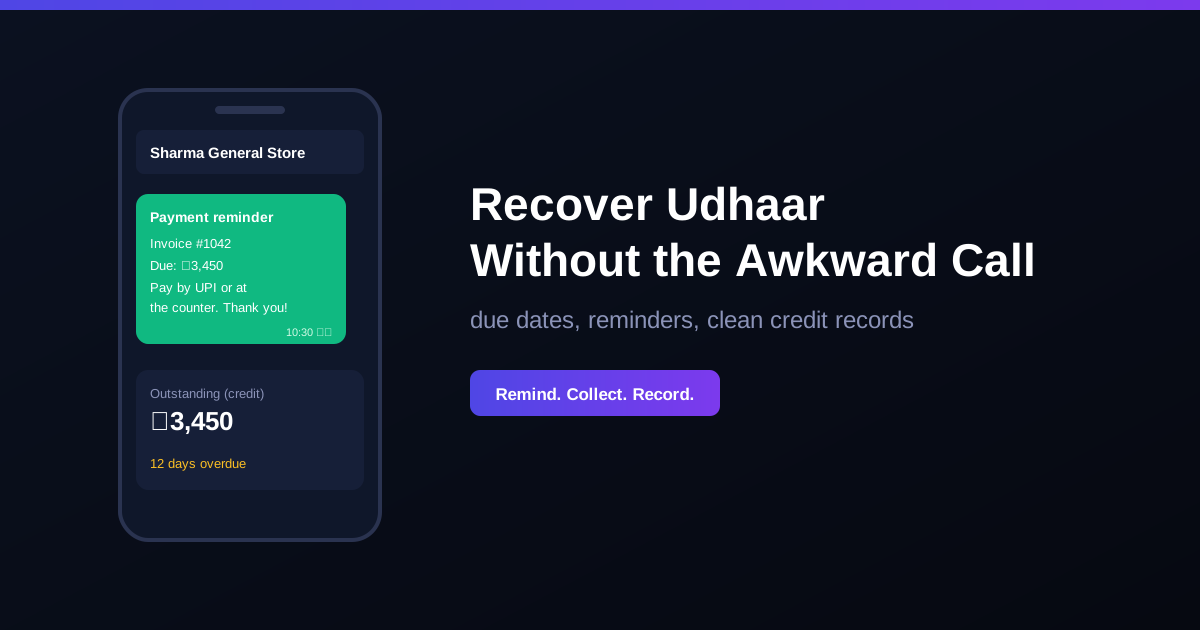
- Accept partial payments. ₹1,000 today against ₹3,450 is progress. Record it against the invoice so the balance stays exact.
A reminder schedule that works
| When | What to send | Tone |
|---|---|---|
| At the time of sale | Bill on WhatsApp or SMS with amount and due date | Thank-you note |
| 2 days before due | Friendly reminder with invoice number and amount | Light, helpful |
| On the due date | Reminder with UPI payment option | Polite, clear |
| 7 days overdue | Second reminder with the balance outstanding | Firm but respectful |
| 30 days overdue | Personal call or visit; pause further credit | Direct conversation |
A sample message: "Namaste, this is a reminder from Sharma General Store. Invoice #1042 for ₹3,450 was due on 5th. You can pay by UPI or at the counter. Thank you!" Short, specific and easy to act on.
Make paying easy
The fewer steps between the reminder and the payment, the faster udhaar comes in. Mention UPI in every reminder, keep your shop QR code at the counter, and accept part-payments. Our guide to accepting UPI payments covers the setup.
Keep the records clean
Every credit sale should be a numbered invoice, and every payment should be recorded against it. That gives you an exact balance per customer, avoids disputes, and keeps your sales figures and GST records complete, because a credit sale is still a sale. At the end of each day, check cash received against sales, including credit collected; see our end-of-day cash reconciliation guide.
How RichPOS helps you collect dues
In RichPOS every sale, including a credit sale, is a proper invoice, and payments by cash, card, UPI or a split of these are recorded against it. Bills can be sent on WhatsApp, SMS or email straight from the billing screen, and you can schedule automatic payment reminders for due invoices so they go out without you remembering. Per-message delivery status shows which reminders actually reached the customer. See SMS, email & WhatsApp, Billing & POS and Accounts & cash for details.
Frequently asked questions
- Should a small shop give udhaar at all?
- For regular, known customers, yes. Credit builds loyalty and keeps neighbourhood customers from switching shops. The risk is not credit itself but untracked credit: no due date, no record, and no follow-up.
- How many days of credit should I give?
- Many kirana and retail shops settle regular customers weekly or monthly, often around salary dates. Pick one standard period, write the due date on the bill, and apply it consistently so no one feels singled out.
- Is it okay to send payment reminders on WhatsApp?
- Yes. A short, polite message with the invoice number, amount and due date is normal practice and far less awkward than asking at the counter. Send it only to customers who shared their number with you, and keep the tone friendly.
- Can RichPOS send payment reminders automatically?
- Yes. RichPOS can send bills and schedule automatic payment reminders for due invoices over SMS, email and WhatsApp, and shows the delivery status of each message.
Bottom line: udhaar is recovered by records and reminders, not by awkward conversations. RichPOS gives you invoices for every credit sale and scheduled WhatsApp, SMS and email reminders from ₹199/month, with a 30-day free trial. See pricing or call +91 90333 31255.
General business guidance for Indian retailers as of 2026; for disputes over large unpaid amounts, consult a legal professional.