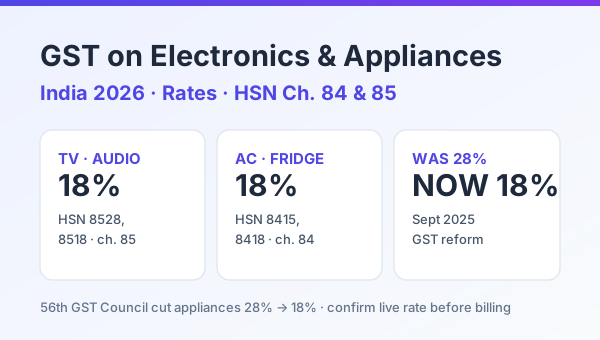
In India, GST on electronics and appliances is 18% in 2026 — including televisions, air conditioners, refrigerators, washing machines and most home appliances. This is after the September 2025 GST reform, which cut the big-ticket appliances that used to sit at 28% down to 18%. Electronics fall under HSN chapters 84 and 85. If you run an electronics or appliance store, this guide covers the 2026 rates, the HSN codes, what changed in the reform, and how to bill correctly.
GST rate on electronics & appliances (2026)
| Product | HSN code | GST rate |
|---|---|---|
| Television sets & monitors | 8528 | 18% |
| Air conditioners | 8415 | 18% |
| Refrigerators & freezers | 8418 | 18% |
| Washing machines | 8450 | 18% |
| Dishwashers | 8422 | 18% |
| Mobile phones | 8517 | 18% |
| Laptops & computers | 8471 | 18% |
| Audio systems & speakers | 8518 | 18% |
| Fans, mixers & small appliances | 8414 / 8509 | 18% |
Rates can change with GST Council notifications, so always confirm the current rate before you bill. See our guide to finding the right HSN code.
HSN codes for electronics
Electronics and appliances split across two HSN chapters:
- Chapter 84 — machinery and mechanical appliances: air conditioners (8415), refrigerators (8418), washing machines (8450), dishwashers (8422), fans (8414), computers and laptops (8471).
- Chapter 85 — electrical machinery and equipment: televisions and monitors (8528), mobile phones (8517), audio systems and speakers (8518), small electrical appliances like mixers and grinders (8509), electric water heaters (8516).
The HSN code decides the classification; almost every consumer electronic and appliance now lands at the single 18% rate.
What changed in the September 2025 GST reform
At its 56th meeting the GST Council rationalised the rate structure to two main slabs — 5% and 18% — effective from 22 September 2025. The biggest change for electronics retailers was that large appliances moved from 28% to 18%. Televisions (including larger screen sizes that were at 28%), air conditioners, refrigerators, dishwashers and washing machines all dropped to 18%. Smaller electronics and mobile phones were already at 18%, so they stay the same. The net effect: big-ticket appliances now ring up cheaper for the customer, and the whole category sits at one rate, which makes billing simpler.
How to bill electronics correctly
A compliant sale invoice should carry your shop's GSTIN, the product description, the HSN code, the taxable value, and the CGST + SGST (or IGST for inter-state) split. For an in-state sale at 18% that is 9% CGST + 9% SGST; for an inter-state sale it is 18% IGST. Read our GST invoice format guide for the full field list, and if your turnover crosses the threshold see when e-invoicing becomes mandatory.
Input tax credit for electronics retailers
If you are GST-registered, the GST you pay your distributor on stock is input tax credit you can set off against the GST you collect on sales. Buy only against a proper GST tax invoice showing the supplier's GSTIN, make sure the purchase appears in your GSTR-2B, and keep purchase and sales records reconciled so no credit is lost. Since electronics carry high value per unit, a single missed invoice is a large credit lost — reconcile every month.
How RichPOS helps electronics & appliance shops
RichPOS is built for exactly this kind of retail — it stores the HSN code and GST rate against each item, so an 18% rate is applied automatically at the point of sale. It handles serial-number and IMEI tracking for high-value stock, prints a compliant GST invoice, tracks stock by model and variant, and keeps purchase and sales data ready for your returns. See our retail inventory guide or see pricing.
FAQ
What is the GST rate on electronics in India in 2026?
Most electronics and appliances are taxed at 18% GST in 2026, including televisions, air conditioners, refrigerators, washing machines, mobile phones, laptops and audio equipment. Large appliances that were at 28% dropped to 18% in the September 2025 GST reform.
What is the GST on air conditioners and refrigerators?
Air conditioners (HSN 8415) and refrigerators (HSN 8418) are taxed at 18% GST in 2026. Both used to be at 28% before the September 2025 reform, which cut large appliances to 18%.
What is the HSN code for a television?
Televisions and monitors fall under HSN code 8528 and are taxed at 18% GST. This includes larger screen sizes that were previously taxed at 28% before the 2025 reform.
Did GST on appliances go down in 2025?
Yes. The 56th GST Council meeting, effective 22 September 2025, cut large appliances — air conditioners, refrigerators, dishwashers, washing machines and large televisions — from 28% to 18%, so the whole electronics category now sits at 18%.
Can an electronics shop claim input tax credit?
Yes. A GST-registered electronics retailer can claim the GST paid on stock purchases as input tax credit and set it off against GST collected on sales, provided the purchase is on a valid tax invoice and appears in GSTR-2B.
Bottom line
Electronics and appliances in India are taxed at 18% GST in 2026, under HSN chapters 84 and 85, after the September 2025 reform cut large appliances from 28% to 18%. Register the correct HSN and 18% rate against each item, bill on a proper GST invoice, and reconcile purchases so you keep your input tax credit. See how RichPOS works or check pricing to bill your electronics shop the right way.
Sources: GST Council 56th meeting rate rationalisation (effective 22 September 2025), CBIC HSN classification, 2026. Rates can change by notification — confirm the current rate before billing.