Missing the GSTR-3B due date costs a shop twice: a late fee for every day of delay and interest on the tax paid late. Neither is huge in the first week, but both add up, and a missed month blocks the next one. This guide explains how the late fee and interest work, the caps that apply, and how to work out what you owe, with an example.
Quick answer
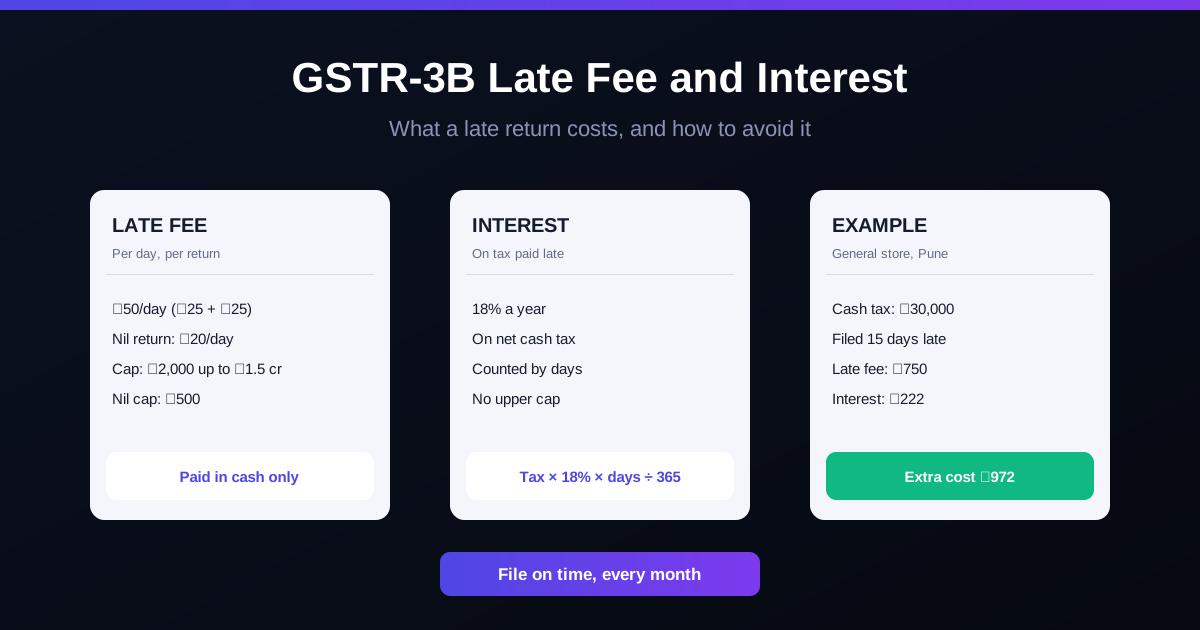
A late GSTR-3B attracts a late fee of ₹50 per day (₹20 for a nil return), capped at ₹500 for nil returns and ₹2,000, ₹5,000 or ₹10,000 by turnover. On top of that, interest at 18% a year runs on the tax paid from your cash ledger after the due date. Both are paid in cash; input tax credit cannot be used.
Late fee rates and caps
| Your situation | Late fee per day | Maximum per return |
|---|---|---|
| Nil return (no sales, no tax) | ₹20 (₹10 CGST + ₹10 SGST) | ₹500 |
| Turnover up to ₹1.5 crore | ₹50 (₹25 + ₹25) | ₹2,000 |
| Turnover ₹1.5 crore to ₹5 crore | ₹50 (₹25 + ₹25) | ₹5,000 |
| Turnover above ₹5 crore | ₹50 (₹25 + ₹25) | ₹10,000 |
Turnover here means your aggregate turnover in the previous financial year. For inter-state businesses the fee shows under IGST instead of the CGST and SGST split. The portal calculates the late fee automatically when you file, and it is added to the amount you must pay.
How interest works
Interest is charged at 18% a year on tax that is paid after the due date. Three points matter for a shop:
- It is on net cash tax. Interest applies to the part of your tax paid through the cash ledger, not the part set off with input tax credit.
- It is counted by days. From the day after the due date until the day you pay: tax × 18% × days ÷ 365.
- It has no cap. Unlike the late fee, interest keeps running until you pay.
The portal shows a system-computed interest figure, but check it yourself, especially when part of the tax was paid on time.
A worked example: a shop in Pune
A general store in Pune with ₹80 lakh turnover files monthly. For one month, its output GST is ₹75,000, input tax credit is ₹45,000, so ₹30,000 must be paid in cash. The return is due on the 20th.
| Delay | Late fee | Interest on ₹30,000 | Extra cost |
|---|---|---|---|
| 15 days | 15 × ₹50 = ₹750 | ₹30,000 × 18% × 15 ÷ 365 = ₹222 | ₹972 |
| 60 days | 60 × ₹50 = ₹3,000, capped at ₹2,000 | ₹30,000 × 18% × 60 ÷ 365 = ₹888 | ₹2,888 |
If the store had nothing to report that month and filed a nil return 30 days late, the fee would be 30 × ₹20 = ₹600, capped at ₹500. The store and figures are illustrative.
Why delays snowball
- Returns go in sequence. You cannot file next month's GSTR-3B until the pending one is filed, so one missed month can hold up several.
- Each return has its own fee. Three pending months means three late fees, each growing daily until its cap.
- GSTR-1 has a late fee too. A late GSTR-1 carries the same per-day fee and caps, and your buyers may not see their credit on time.
- Long gaps have bigger costs. Repeated non-filing can lead to notices and, in time, cancellation of registration, and returns cannot be filed once the time limit after the due date has passed.
How to avoid late fees
- Record every sale and purchase as it happens, so the month's figures are ready on the 1st, not the 19th.
- Check your GSTR-2B for supplier invoices early in the month and follow up on missing ones.
- Send sales and purchase reports to your CA in the first week of the month.
- Keep cash aside for the tax you will owe, so the return is not held back for lack of funds.
- File a nil return on time even in a month with no sales.
If you are small and find monthly filing hard, the composition scheme or quarterly filing may suit you; discuss it with your CA.
How RichPOS helps
- GST reports on sales and purchases by HSN/SAC, built from your live bills, so the month's numbers are ready without re-keying. See GST & reports.
- One-click export to Excel, CSV or PDF to hand figures to your CA early in the month.
- Cash and bank ledger with deposits and transfers, so you know the cash available for the tax payment. See Accounts & cash.
RichPOS costs ₹199/month (₹2,000/year) with a 30-day free trial. See pricing.
Frequently asked questions
- What is the late fee for filing GSTR-3B late?
- The late fee is ₹50 per day of delay (₹25 CGST + ₹25 SGST), or ₹20 per day (₹10 + ₹10) for a nil return. It is capped by turnover: ₹500 for nil returns, ₹2,000 for turnover up to ₹1.5 crore, ₹5,000 for ₹1.5 to ₹5 crore, and ₹10,000 above ₹5 crore.
- How is interest on late GSTR-3B calculated?
- Interest is 18% a year on the tax you pay late, counted from the day after the due date to the day you pay. It applies to the net tax paid from your cash ledger, not the tax covered by input tax credit. The formula is tax × 18% × days late ÷ 365.
- Can I pay the GST late fee using input tax credit?
- No. The late fee and interest must be paid in cash through the electronic cash ledger. Input tax credit can only be used against tax, not against fees or interest.
- Is there a late fee on a nil GSTR-3B?
- Yes, but it is lower: ₹20 per day, capped at ₹500 per return. You can file a nil GSTR-3B by SMS or on the portal, so filing it on time is quick.
- Can I file next month's GSTR-3B if the previous one is pending?
- No. The portal lets you file GSTR-3B only in sequence, so a missed month blocks the following months until it is filed, and the late fee keeps growing on each pending return.
Bottom line: a late GSTR-3B costs ₹50 a day (₹20 for nil), capped by turnover, plus 18% interest on the cash tax paid late, and neither can be paid with ITC. Want your GST figures ready at the start of every month? Call +91 90333 31255 for a demo, or start the 30-day free trial from the pricing page.
This is general guidance, not tax advice. Late fee caps, due dates and interest rules change by notification; confirm with your CA and the GST portal for your business.