GSTR-9 is the GST annual return. It pulls together a full financial year of sales, purchases, tax paid and input tax credit into one statement for each GSTIN. For most retail shops it is built from the GSTR-1 and GSTR-3B returns you already filed, but numbers that do not match can raise questions later. This guide explains who has to file, the due date, the late fee and how to prepare.
Quick answer
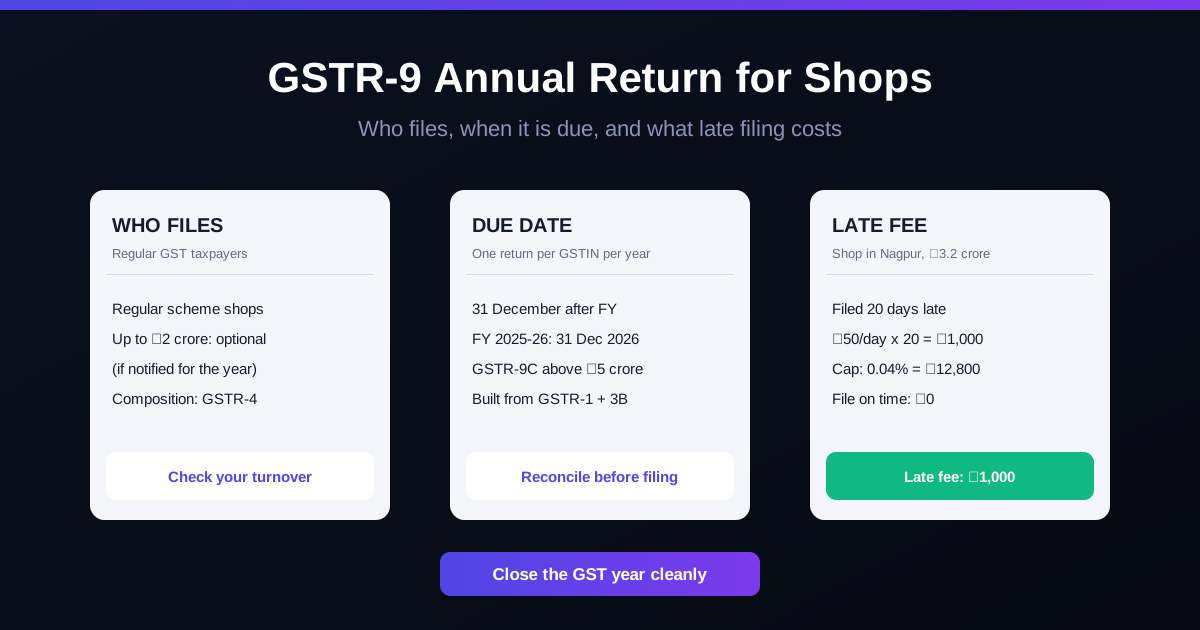
Every regular GST-registered shop files GSTR-9 once a year by 31 December after the financial year ends (31 December 2026 for FY 2025-26). Shops with turnover up to ₹2 crore have been allowed to skip it in recent years, but only when CBIC notifies that relief for the year. Composition dealers file GSTR-4 instead. Shops above ₹5 crore also file the GSTR-9C reconciliation statement. Late filing costs ₹50 a day for turnover up to ₹5 crore, capped at 0.04% of turnover.
Who files what
| Type of shop | Annual return | Notes |
|---|---|---|
| Regular scheme, turnover up to ₹2 crore | GSTR-9 (optional if notified for the year) | Many small shops still file to keep a clean record |
| Regular scheme, ₹2 crore to ₹5 crore | GSTR-9 | No GSTR-9C |
| Regular scheme, above ₹5 crore | GSTR-9 + GSTR-9C | 9C is self-certified |
| Composition scheme | GSTR-4 | Not GSTR-9 |
What goes into GSTR-9
- Outward supplies: taxable sales, exempt and nil-rated sales, credit and debit notes, and tax on them. This comes from your GSTR-1 and GSTR-3B. See GSTR-1 vs GSTR-3B.
- Input tax credit: ITC claimed in GSTR-3B, split by inputs, capital goods and services, and ITC reversed. See input tax credit for shops.
- Tax paid: tax payable and paid through cash and credit for the year.
- HSN summary: sales and purchases grouped by HSN code.
- Previous-year items: changes for the year that were reported in the next year's returns.
A worked example: a shop in Nagpur
A furniture shop in Nagpur had aggregate turnover of ₹3.2 crore in FY 2025-26. It must file GSTR-9 (above ₹2 crore) but not GSTR-9C (below ₹5 crore).
| Item | Amount |
|---|---|
| Due date | 31 December 2026 |
| Filed on | 20 January 2027 (20 days late) |
| Late fee: ₹50 × 20 days | ₹1,000 (₹500 CGST + ₹500 SGST) |
| Maximum late fee: 0.04% of ₹3.2 crore | ₹12,800 |
While preparing, the shop finds ₹18,000 of sales that were in its books but missed from GSTR-1 and GSTR-3B. The GST on them has to be paid through form DRC-03 with interest; GSTR-9 only reports it. The shop, figures and dates are illustrative.
Checklist before you file
- Match your sales register to GSTR-1 month by month, including credit notes.
- Match GSTR-1 to GSTR-3B so tax declared equals tax paid.
- Match your purchase register to GSTR-2B and to the ITC claimed in GSTR-3B.
- Prepare an HSN-wise summary of sales and purchases.
- Pay any shortfall through DRC-03 before filing, and keep the challan.
- File on time. Late fees and interest are avoidable, and returns cannot be filed once three years have passed from the due date.
Monthly habits make this much easier. See GSTR-3B late fee and interest for the monthly side.
How RichPOS helps
- GST-ready sales and purchase reports by HSN/SAC, exported to Excel, CSV or PDF for you or your CA. See GST & reports.
- Every bill recorded with GST at the counter, including returns, so your sales register and GSTR-1 start from the same data. See Billing & POS.
- Purchase bills entered against suppliers, ready to match with GSTR-2B. See Purchases & suppliers.
RichPOS costs ₹199/month (₹2,000/year) with a 30-day free trial. See pricing.
Frequently asked questions
- Who has to file GSTR-9?
- Every regular GST taxpayer files GSTR-9 once a year for each GSTIN. Composition dealers file GSTR-4 instead, and casual taxpayers, non-resident taxpayers, input service distributors and TDS/TCS deductors do not file GSTR-9.
- Is GSTR-9 optional for small shops?
- For recent years, CBIC has made GSTR-9 optional for taxpayers with aggregate annual turnover up to ₹2 crore. This relief is given by notification for each financial year, so check that it has been notified for the year you are closing before you skip the return.
- What is the due date for GSTR-9?
- 31 December after the end of the financial year. For FY 2025-26 (April 2025 to March 2026), the due date is 31 December 2026, unless the government extends it.
- What is the late fee for GSTR-9?
- For turnover up to ₹5 crore, ₹50 a day (₹25 CGST + ₹25 SGST), capped at 0.04% of turnover in the state. For ₹5 crore to ₹20 crore, ₹100 a day, capped at 0.04%. Above ₹20 crore, ₹200 a day, capped at 0.5%.
- What is GSTR-9C and does my shop need it?
- GSTR-9C is a reconciliation statement between your GSTR-9 and your audited financial statements. It is required when aggregate turnover is above ₹5 crore, and it is self-certified by the taxpayer.
- Can I correct mistakes in GSTR-1 or GSTR-3B through GSTR-9?
- No new claims can be made through GSTR-9. It reports what happened in the year. Any extra tax you find must be paid through DRC-03, and missed input tax credit must have been claimed within the time limit in your monthly returns.
Bottom line: GSTR-9 is a year-end summary of returns you have already filed, so the work is reconciliation, not new data entry. Keep your sales and purchase registers clean every month and year-end becomes a short job. Want GST-ready reports from your billing counter? Call +91 90333 31255 for a demo, or start the 30-day free trial from the pricing page.
This is general guidance, not tax advice. Due dates, exemptions and late fees are set by CBIC notifications and can change; confirm with your CA for your business.