Short answer: To cut expiry losses, record the batch and expiry date of every item you buy, sell the batch that expires first (FEFO), and check a near-expiry report every week. Return stock to the distributor while the return window is open, push slow batches with shelf placement or a discount, and write off what cannot be sold, reversing any input tax credit claimed on it.
This guide is for grocery and kirana stores, medical stores, cosmetics shops and any retailer selling goods with a shelf life.
FIFO vs FEFO: which one to follow
| FIFO | FEFO | |
|---|---|---|
| Meaning | First In, First Out | First Expiry, First Out |
| What decides the order | Date the stock arrived | Expiry date on the batch |
| Best for | Goods with no expiry, such as hardware or garments | Food, medicines, cosmetics, batteries, baby products |
| Risk | A later delivery with a shorter expiry gets left behind | Needs batch and expiry recorded for every purchase |
FIFO and FEFO usually give the same order, but not always. A distributor can send a fresh delivery that expires sooner than stock already on your shelf. FEFO catches that case.
Step 1: record batch and expiry at purchase
Expiry control starts at the purchase entry, not at the shelf. For every item with a shelf life, note the batch number, the expiry or use-by date, the quantity and the cost. Packaged food and medicines already carry these details on the label, so it is a matter of entering them when you receive the goods. Without this step, there is no reliable way to know what is about to expire.
Step 2: run a near-expiry report every week
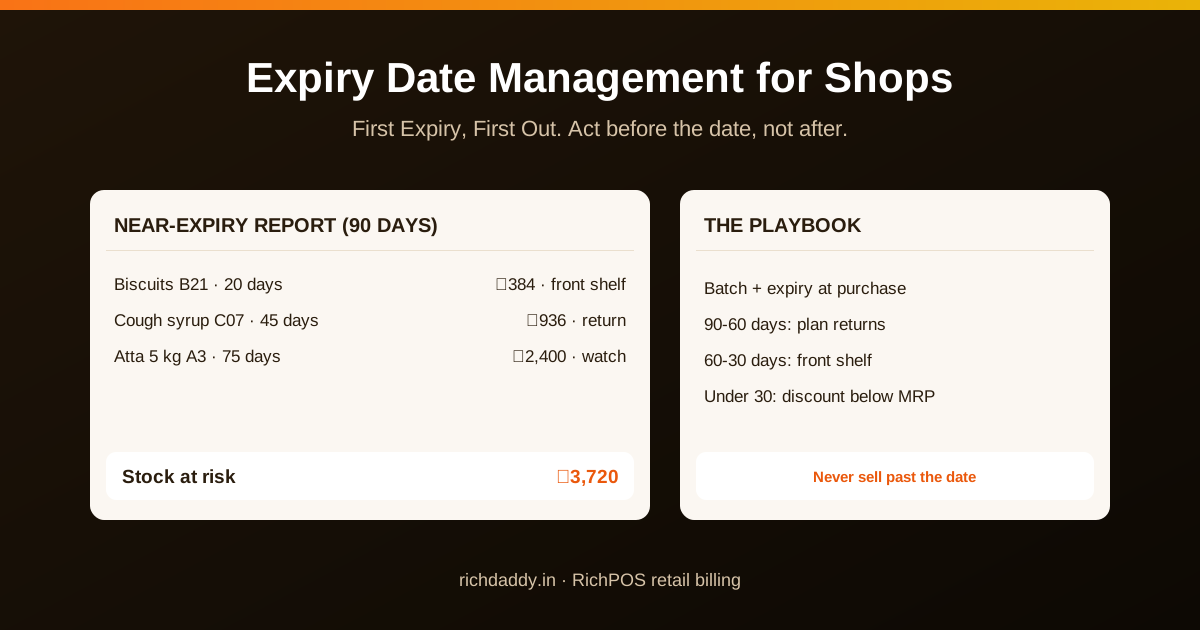
Pull a list of all batches expiring in the next 90 days, sorted by expiry date. Here is a sample from a small grocery-cum-pharmacy:
| Item | Batch | Expires in | Qty | Cost value | Action |
|---|---|---|---|---|---|
| Glucose biscuits | B21 | 20 days | 48 packs × ₹8 | ₹384 | Front shelf, combo offer |
| Cough syrup | C07 | 45 days | 12 bottles × ₹78 | ₹936 | Return to distributor |
| Atta 5 kg | A3 | 75 days | 10 bags × ₹240 | ₹2,400 | Move forward, watch |
| Stock at risk | ₹3,720 | ||||
Without the report, ₹3,720 of stock quietly heads towards the bin. With it, each batch gets a decision while there is still time to act.
Step 3: pick the right action for each batch
- 90 to 60 days left: check your distributor's expiry return policy and plan returns now. Many distributors accept returns only within a fixed window.
- 60 to 30 days left: move the batch to the front, place it at eye level or near the counter, and stop ordering more of that item until it clears.
- Under 30 days: offer a discount or a combo. Selling below MRP is allowed; selling above it is not. See our guide on MRP rules for shops.
- Past expiry: take it off the shelf the same day, keep it in a marked area, and return or dispose of it. Do not sell it.
Expiry returns to distributors
Medical stores in particular rely on expiry returns. The distributor usually adjusts the value through a credit note against your next purchase. Keep the return slip and match the credit note in your supplier ledger so the adjustment is not missed.
GST on expired stock you write off
If expired goods cannot be returned and are destroyed or written off, Section 17(5)(h) of the CGST Act blocks input tax credit on them. So if you claimed ITC when you bought those goods, the credit is generally reversed. For example, if goods with a cost of ₹1,000 carried ₹180 of GST that you claimed as ITC, that ₹180 is reversed when the goods are written off. Record the write-off with a stock adjustment entry and confirm the reversal with your CA. Our input tax credit guide covers how ITC works in general.
Common mistakes
- Stacking a new delivery in front of older stock, so customers pick the fresh batch and the old one expires.
- Recording quantity but not batch and expiry at purchase.
- Reordering an item that already has a slow batch sitting on the shelf.
- Missing the distributor's return window and ending up with a full write-off.
- Keeping expired stock mixed with saleable stock, where it can be billed by mistake.
Expiry losses are a form of dead stock. A regular physical stock count also helps catch batches that the system and the shelf disagree on.
Frequently asked questions
- What is FEFO in a retail shop?
- FEFO means First Expiry, First Out. The batch that expires first is sold first, even if it arrived later than another batch. For food, medicines and cosmetics it works better than FIFO because the expiry date, not the arrival date, decides when stock becomes unsellable.
- How many days before expiry should a shop act?
- A simple rule is to review stock expiring in the next 90 days every week. Plan returns at 90 to 60 days, push sales with shelf placement or offers at 60 to 30 days, and pull anything you cannot sell before the date. Check your distributor's return window, because many accept expiry returns only within a set period.
- Can I sell near-expiry goods at a discount?
- Yes. Selling below MRP is allowed, so a discount on near-expiry stock is fine as long as the goods are still within their expiry or use-by date. Selling above MRP is not allowed, and goods past their expiry or use-by date should not be sold.
- What should a medical store do with expired medicines?
- Expired medicines should be separated from saleable stock, marked clearly, and returned to the distributor or disposed of as per the rules that apply to your licence. Most pharmacies get expiry returns adjusted through a credit note from the distributor.
- Do I need to reverse GST input tax credit on expired stock that is destroyed?
- Generally yes. Under Section 17(5)(h) of the CGST Act, input tax credit is not available on goods that are written off or destroyed. If you claimed ITC when you bought them, that credit is usually reversed when you write them off. Confirm the entry with your CA.
- How does billing software help with expiry tracking?
- Billing software that records batch number and expiry date at purchase can show a near-expiry report, suggest the earliest-expiring batch at billing, and keep a record of returns and write-offs, so you do not depend on checking shelves by hand.
Bottom line: Enter batch and expiry at purchase, sell by FEFO, and act on a weekly 90-day near-expiry report. Return early, discount late, and never sell past the date. RichPOS tracks stock, purchases and GST billing for shops across India. See how it fits a pharmacy or a kirana store, call +91 90333 31255, or start the 30-day free trial from the pricing page.