If your shop has a cash credit (CC) limit from a bank, a ₹10 lakh sanction does not mean you can always use ₹10 lakh. What you can actually draw depends on the stock statement you submit every month. A late, inflated or careless statement can cut your drawing power just when you need to pay suppliers before Diwali. This guide explains what the statement contains, how drawing power is worked out, and how to prepare it from your billing records.
Quick answer
A stock statement is a monthly report to your bank showing stock on hand, unpaid creditors and debtors as on the last day of the month. The bank deducts unpaid creditors from stock, leaves out old debtors (commonly those above 90 days), applies a margin (often about 25%), and the result is your drawing power. You can use the lower of drawing power and the sanctioned limit. Value stock at the lower of cost and net realisable value, never at selling price.
What a stock statement contains
Each bank has its own format, printed in the sanction letter or given by the branch, but most ask for the same things:
| Section | What to fill in |
|---|---|
| Borrower details | Name of the business, account number, sanctioned limit, and the date the statement is made up to |
| Stock | Raw material, work in progress and finished goods for a manufacturer; for a shop, mostly trading stock. Value and location of each |
| Sundry creditors | What you owe suppliers for goods, since stock you have not paid for is not yours to borrow against |
| Sundry debtors | What customers owe you, split by age, for example up to 90 days and above 90 days |
| Drawing power | Worked out using the margins in your sanction letter |
| Declaration | That the stock is yours, fully insured and not pledged elsewhere, signed with the date |
How drawing power is calculated
The most common method looks like this:
- Paid stock = stock value − unpaid creditors for goods
- Stock DP = paid stock × (100% − margin on stock)
- Eligible debtors = total debtors − debtors older than the bank's cut-off (often 90 days)
- Debtors DP = eligible debtors × (100% − margin on debtors)
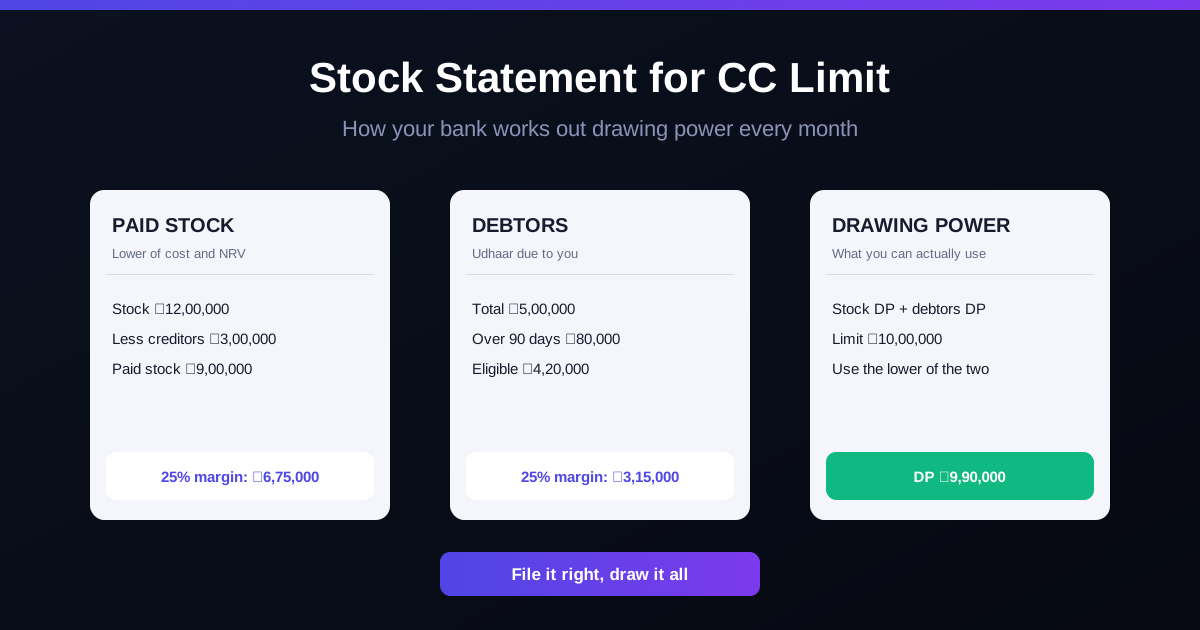
- Drawing power = stock DP + debtors DP, and you may use the lower of this and the sanctioned limit
Margins of about 25% on stock and 25% to 40% on debtors are common, but the exact figures, the debtor cut-off and what counts as eligible are set in your sanction letter. Read it, or ask your branch.
A worked example: a wholesale kirana trader in Indore
A trader in Indore has a sanctioned CC limit of ₹10,00,000. The statement for 31 August shows:
| Item | Amount |
|---|---|
| Stock at the lower of cost and net realisable value | ₹12,00,000 |
| Less: unpaid creditors for goods | − ₹3,00,000 |
| Paid stock | ₹9,00,000 |
| Stock DP after 25% margin | ₹6,75,000 |
| Total debtors | ₹5,00,000 |
| Less: debtors above 90 days | − ₹80,000 |
| Eligible debtors | ₹4,20,000 |
| Debtors DP after 25% margin | ₹3,15,000 |
| Drawing power | ₹9,90,000 |
The trader can use up to ₹9,90,000, a little under the ₹10 lakh limit. The ₹80,000 of old dues adds nothing to drawing power; collecting it before month end would have brought in cash and cut the CC balance instead. The trader, city and figures are illustrative.
How to value stock for the statement
- Lower of cost and net realisable value. Use purchase cost, and if goods will sell for less than cost after selling expenses, use that lower figure.
- Not selling price. MRP or your counter price includes your margin, which the bank will not lend against.
- Write down dead, damaged and expired stock. See reducing dead stock.
- Match the books. Stock in the statement should match your stock register and the stock in your balance sheet at year end. A recent physical stock count makes this easy.
- Count every location. If you have a godown and a shop, or more than one branch, show each. See managing multiple retail stores.
Common mistakes to avoid
- Inflating stock to raise drawing power. The bank's stock audit will compare your figures with physical stock and your books, and a mismatch is treated seriously.
- Forgetting unpaid creditors. Goods bought on credit are not paid stock. Keep your supplier ledger current.
- Showing old udhaar as debtors. Dues above the bank's cut-off usually do not count. Recovering udhaar on time helps both cash and drawing power.
- Submitting late. Many banks reduce or freeze drawing power, or charge penal interest, when the statement is overdue.
- Different numbers in different places. The stock statement, GST returns and year-end accounts should tell the same story. Your CA and the bank will both notice if they do not.
How RichPOS helps
- Stock valuation report: stock on hand and its value from your purchase and sales records, ready for the statement. See GST & reports.
- Export to Excel, CSV or PDF: hand the figures to your CA or copy them into the bank's format.
- Stock per location: godown and each shop shown separately and in total. See Multi-store & Warehouse.
- Stock adjustments logged with reason and user: damaged or expired goods written off with a record, so the book stock stays honest. See Inventory & Barcode.
- Profit and loss report for the same period. See reading your P&L.
RichPOS costs ₹199/month with a 30-day free trial. See pricing.
Frequently asked questions
- What is a stock statement for a bank?
- It is a statement, usually monthly, that a business with a cash credit (CC) or overdraft limit against stock and debtors submits to its bank. It shows the value of stock on hand, what is owed to suppliers, and what customers owe you on a given date. The bank uses it to work out your drawing power, the amount you can actually use from the sanctioned limit.
- How is drawing power calculated?
- A common method is: (stock minus unpaid creditors) less the bank's margin on stock, plus eligible debtors less the margin on debtors. Margins of about 25% are common, and debtors older than about 90 days are usually left out. You can draw the lower of this figure and your sanctioned limit. Margins and rules differ by bank and by sanction letter, so check yours.
- How often must a stock statement be submitted?
- Most banks ask for it every month, usually within the first few days or weeks of the next month, as written in your sanction letter. Under RBI guidance, banks should not rely on a stock statement older than three months to fix drawing power, and a late statement can freeze or reduce your drawing power.
- At what value should stock be shown in the statement?
- The usual accounting rule is the lower of cost and net realisable value, which is roughly what the goods would sell for, less the cost of selling them. Dead, damaged or expired stock should be written down or left out. Do not show stock at selling price.
- Does the bank check the stock statement?
- Yes. Banks carry out periodic stock inspections or stock audits and compare the physical stock and your books with the statements you filed. Large gaps can lead to penal interest, a lower limit or a closer review of the account, so the statement should match what is actually in the shop and godown.
Bottom line: your drawing power is only as good as your stock statement. Value stock at the lower of cost and net realisable value, deduct unpaid creditors, leave out old debtors, and submit on time. Want stock valuation you can export in a few clicks? Call +91 90333 31255 for a demo, or start the 30-day free trial from the pricing page.
This is general guidance, not financial, legal or tax advice. Margins, debtor limits, formats and due dates are set by your bank's sanction letter and change from bank to bank; confirm with your bank and CA.