Short answer: Inventory shrinkage is stock you have paid for that is no longer in the shop: book stock minus physical stock, valued at cost. It comes from theft, billing and entry mistakes, short supply, damage and expiry. Measure it item by item, find which cause is behind it, fix that cause, and reverse GST input tax credit on goods that were lost or stolen.
This guide is for kirana, general, pharmacy, cosmetics, garment, mobile, hardware and other retail shops in India.
How to calculate shrinkage
| Measure | Formula |
|---|---|
| Book stock | Opening stock + purchases − cost of goods billed |
| Shrinkage (₹) | Book stock − stock found on physical count |
| Shrinkage % of stock | Shrinkage ÷ book stock × 100 |
| Shrinkage % of sales | Shrinkage ÷ net sales for the period × 100 |
Value both sides at purchase cost, not MRP. Our guide on closing stock valuation explains how.
Worked example: a general store for one year
| Item | Amount (at cost) |
|---|---|
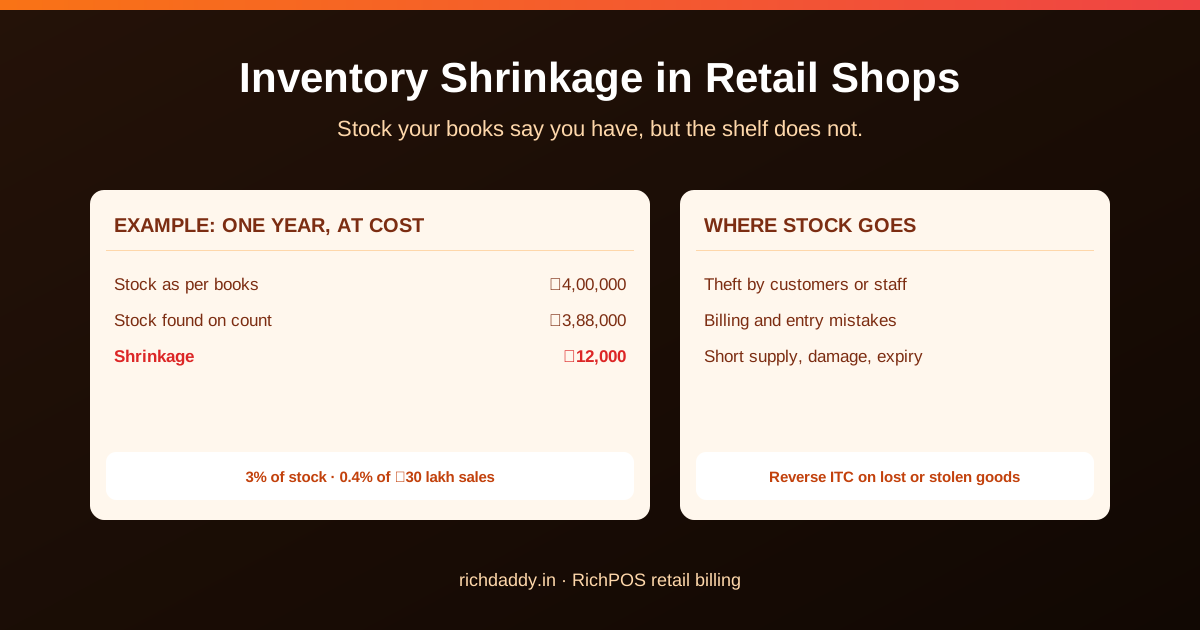
| Stock as per books on 31 March | ₹4,00,000 |
| Stock found on physical count | ₹3,88,000 |
| Shrinkage | ₹12,000 |
| Shrinkage % of stock (12,000 ÷ 4,00,000) | 3% |
| Net sales for the year | ₹30,00,000 |
| Shrinkage % of sales (12,000 ÷ 30,00,000) | 0.4% |
₹12,000 may look small next to ₹30 lakh of sales. But it comes straight out of profit. If the shop earns a 10% net margin, it has to sell ₹1,20,000 of extra goods just to earn back the ₹12,000 it lost.
Where the stock actually goes
| Cause | What it looks like | How to check |
|---|---|---|
| Shoplifting | Small, costly items missing: cosmetics, batteries, chargers, chocolates | Count those items weekly; compare with sales |
| Staff theft | Goods leave without a bill, or bills are cancelled after the customer pays | Review cancelled bills, discounts and returns by cashier |
| Billing mistakes | Wrong item, size or quantity billed; loose items keyed in under a different code | Scan barcodes instead of typing; spot-check bills |
| Entry mistakes | Purchase not entered, entered twice, or entered in the wrong unit (box vs piece) | Match purchase entries with supplier invoices each week |
| Short supply | Supplier invoice shows 50 units, carton has 48 | Count and check every delivery against the purchase order before signing |
| Damage and expiry | Broken, leaking or expired goods thrown out without a record | Record every write-off with a reason |
Shrinkage that keeps showing up on the same few items usually points to theft. Shrinkage spread thinly across many items usually points to billing or entry mistakes.
The GST side
Section 17(5)(h) of the CGST Act blocks input tax credit on goods that are lost, stolen, destroyed or written off. If you claimed ITC when you bought those goods, reverse it in your return for the period in which you find the loss. In the example, if the ₹12,000 of missing goods carried 12% GST, about ₹1,440 of credit has to be reversed. Read more on input tax credit for retail shops, and confirm the period and the entry with your CA.
How to cut shrinkage
- Count often, in small parts: a weekly physical stock count of the top items finds a gap while you can still trace it. ABC analysis tells you which items to count first.
- Bill everything by barcode: barcode billing removes most wrong-item and wrong-price mistakes.
- Limit what each cashier can do: separate logins with permissions for cancelling bills, giving discounts and taking returns, so every change has a name on it.
- Close the counter every day: end-of-day cash reconciliation shows whether cash in the drawer matches the bills.
- Check deliveries against the order: count each delivery against your purchase order before you sign the challan.
- Record damage and expiry: write off broken and expired stock in the system with a reason, so it does not show up later as a mystery gap.
- Keep costly items in sight: place small, high-value items near the counter or in a locked display.
Common mistakes
- Counting only once a year, when it is too late to find out what happened.
- Adjusting stock to match the count without noting a reason, which hides the pattern.
- Blaming theft first, when most gaps turn out to be entry or billing mistakes.
- Forgetting to reverse ITC on goods that were lost or stolen.
Frequently asked questions
- What is inventory shrinkage?
- Inventory shrinkage is the difference between the stock your records say you should have and the stock you actually find when you count it. If the books show ₹4,00,000 of stock and the count finds ₹3,88,000, the shrinkage is ₹12,000.
- How do I calculate shrinkage percentage?
- Shrinkage = book stock − physical stock, both at purchase cost. Shrinkage % of stock = shrinkage ÷ book stock × 100. Many shops also track it as a share of sales: shrinkage ÷ net sales for the same period × 100, which makes it easy to compare month to month.
- What are the main causes of shrinkage in a retail shop?
- The usual causes are shoplifting, theft by staff, items given out without a bill, wrong items or quantities billed, purchases not entered or entered twice, suppliers delivering less than the challan, and goods that are damaged or expire and are thrown away without being recorded.
- Do I have to reverse GST input tax credit on stolen or lost goods?
- Yes. Under Section 17(5)(h) of the CGST Act, input tax credit is not available on goods that are lost, stolen, destroyed, written off or given away as free samples. If you already claimed it on purchase, reverse it in your GST return. Confirm the period and method with your CA.
- Is shrinkage the same as dead stock?
- No. Dead stock is still on your shelf but is not selling. Shrinkage is stock that is no longer there at all, or that is there in a lower quantity than your records show.
- How often should I check for shrinkage?
- Count your highest-value and most-stolen items every week, the rest in rotation every month or quarter, and do a full count at least once a year before closing the books. Frequent small counts catch a problem while you can still trace it.
Bottom line: Shrinkage = book stock − counted stock, at cost. Track it monthly as a share of sales, look at which items it comes from, and fix the cause: theft, billing, entry, supply or damage. RichPOS keeps purchases, sales, returns and stock by item, with separate logins for each cashier, so a gap can be traced to the item and the day. Read the inventory management guide next, call +91 90333 31255, or start the 30-day free trial from the pricing page.