Updated 17 October 2026 · By Ashok Sachdev · GST rates read from Notification No. 9/2025-Central Tax (Rate)
Quick answer
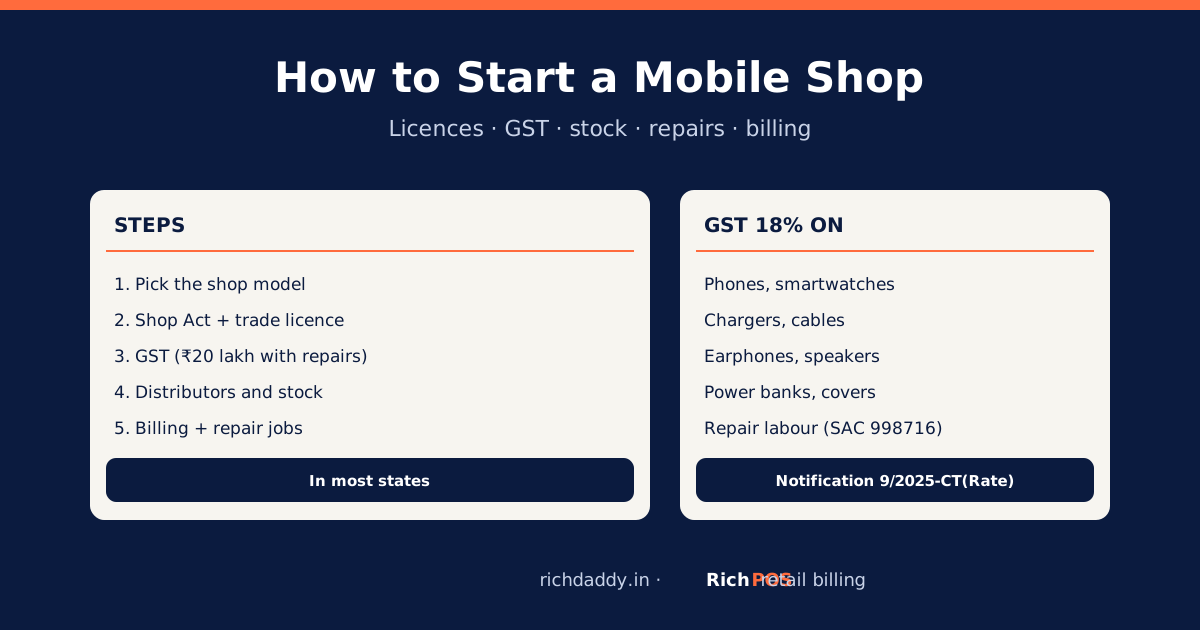
To start a mobile shop in India, pick a busy location, register under your state's Shops and Establishments Act and get a municipal trade licence, take GST registration (needed above ₹40 lakh turnover for goods only, or ₹20 lakh if you also do repairs, in most states), tie up with distributors for phones and accessories, and set up billing that handles 18% GST, barcode stock and repair jobs. Phones, chargers, earphones, power banks, covers and repair labour are all taxed at 18% GST in 2026.
A mobile shop has three income streams that behave very differently: new phones (high value, thin margin, fast-changing models), accessories (low value, better margin, hundreds of small items) and repairs (service income, parts from stock). Planning all three from day one decides whether the shop makes money. Here are the steps in order.
Step 1: decide what kind of mobile shop
| Model | What you sell | Watch out for |
|---|
| Multi-brand phone shop | New phones from several brands plus accessories | Large stock value per phone; old models lose value fast |
| Accessories-first shop | Covers, screen guards, chargers, cables, earphones, power banks | Hundreds of small items; needs barcode stock control |
| Repair + accessories | Repairs, spare parts, accessories | Job tracking, parts stock, GST on services |
| Second-hand phones | Buy and resell used phones | Proof of purchase from sellers; GST margin scheme |
Most neighbourhood shops combine accessories and repairs, with a small range of new phones.
Step 2: licences and registrations
| Registration | Who needs it | Issued by |
|---|
| Shop and Establishment registration | Almost every shop with a physical address | State labour department |
| Trade licence | Almost always; permission to trade at that address | Municipal corporation or panchayat |
| GST registration | Above ₹40 lakh turnover if you sell goods only, ₹20 lakh if you also do repairs (most states); any inter-state selling | GST portal (free) |
| Udyam (MSME) | Optional, free and useful for loans | Udyam portal |
| Current account | To collect card and UPI payments cleanly | Your bank |
Fees and portals differ by state and city; details in retail shop licences and registrations and GST registration limit for shops. Most brand distributors ask for a GSTIN before they supply on credit, so many mobile shops register from day one.
Step 3: understand GST on what you sell
Rates from Notification 9/2025-Central Tax (Rate), Schedule II. Used phones bought from individuals can use the margin scheme; see GST on second-hand mobile phones. Repairs: GST on mobile repair services.
Because nearly everything is 18%, GST is simple to bill. The bigger task is stock: hundreds of accessories in many models and colours.
Step 4: stock, suppliers and the counter
- Distributors: start with two or three for phones and one or two for accessories; agree credit days and return terms for slow models in writing.
- Accessories by model: covers and screen guards are model-specific. Stock the models most used in your area, and reorder by what sells.
- Barcodes: scan the maker's barcode; print your own labels for loose accessories with the free barcode label generator.
- Payments: take UPI, card and cash; phones are often paid in two modes on one bill.
- Display and security: keep phones and costly accessories in locked display; count high-value stock every day.
Step 5: set up billing and repairs
Pick software that handles fast accessory billing by barcode, split payments, low-stock alerts, supplier purchase orders, and repair job cards with status and parts from stock. RichPOS has a mobile repair module: log each job with the device and reported issue, move it from received to delivered, use parts from inventory, and set reminders for pending pickups. It runs in the browser and on an Android app.
Be aware: RichPOS does not track phones by IMEI in stock or on sold items; the IMEI can be written as a free-text note on the bill line and on the repair job card. If IMEI-wise stock tracking is essential for you, check this in any software you consider. See RichPOS for mobile shops, RichPOS for repair shops and the best billing software for mobile shops.
First-month checklist
- Shop and Establishment registration, trade licence, GST (if needed), current account.
- Distributor agreements with credit days and return terms.
- Item list in Excel with model, colour, barcode, HSN, rate, MRP and sale price; import into billing software.
- Repair price list and job card format; a pickup reminder routine.
- Daily cash and UPI tally, and a weekly count of phones and costly accessories.
Bottom line
A mobile shop is simple on GST (almost everything is 18%) and hard on stock (many small, model-specific items). Get the licences done, pick distributors with fair return terms, and run billing and repairs from one system from day one. Start the RichPOS free trial or see pricing.
FAQ
Frequently asked questions
What licences do I need to open a mobile shop in India?
Usually a Shop and Establishment registration from your state labour department and a trade licence from the municipal body. GST registration is needed above ₹40 lakh turnover for goods only, or ₹20 lakh if you also do repairs, in most states, and for any inter-state sale. Udyam registration is optional and free.
What is the GST rate on mobile phones and accessories?
18%. Mobile phones, smartwatches, chargers, cables, earphones, Bluetooth speakers, power banks, covers, screen guards and memory cards are all in the 18% schedule of Notification 9/2025-Central Tax (Rate). Phone repair labour is also 18%.
Does a mobile repair shop need GST registration at ₹20 lakh or ₹40 lakh?
At ₹20 lakh in most states, because repairs are a service. The ₹40 lakh limit applies only to businesses that supply goods alone. Some special-category states have lower limits.
Which billing software is good for a mobile shop?
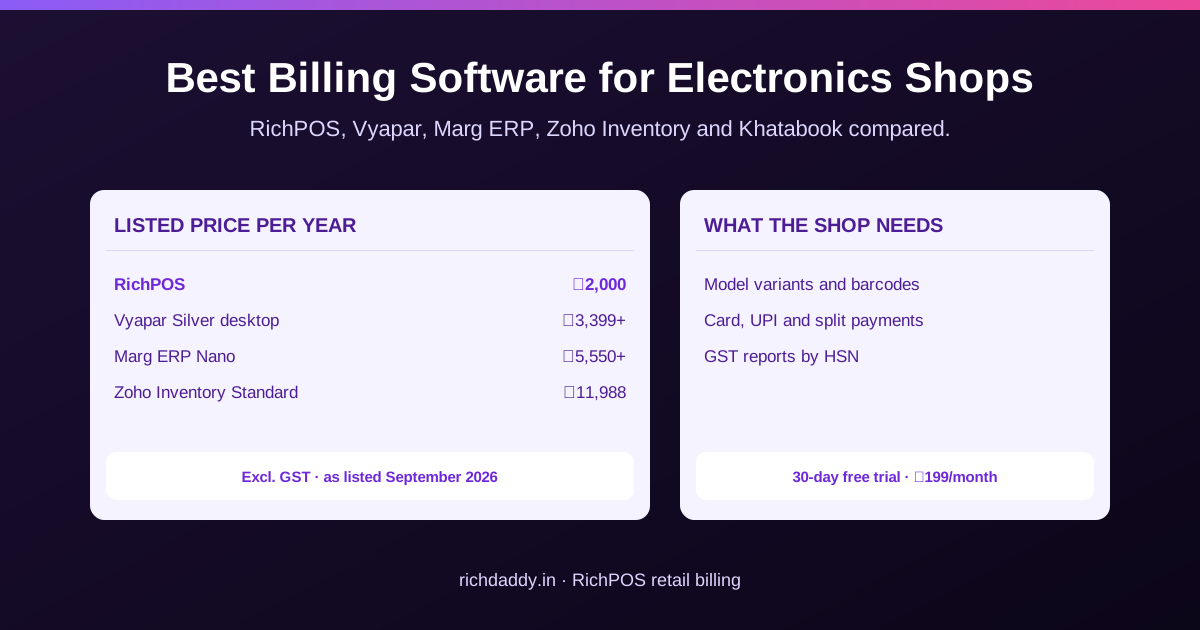
One with fast barcode billing for accessories, split payments, low-stock alerts and repair job tracking. RichPOS has these with a repair module, from ₹99/month for the first 3 months, then ₹199/month or ₹2,000/year. It does not track IMEI in stock; IMEI can be noted on the bill line and job card.
Can I sell second-hand phones from my shop?
Yes. Keep proof of purchase from each seller. If you buy used phones from individuals and resell them without claiming input tax credit, the GST margin scheme lets you pay GST only on your margin; confirm the conditions with your CA.