Updated 17 October 2026 · By Ashok Sachdev · GST rates read from Notification No. 9/2025-Central Tax (Rate)
Quick answer
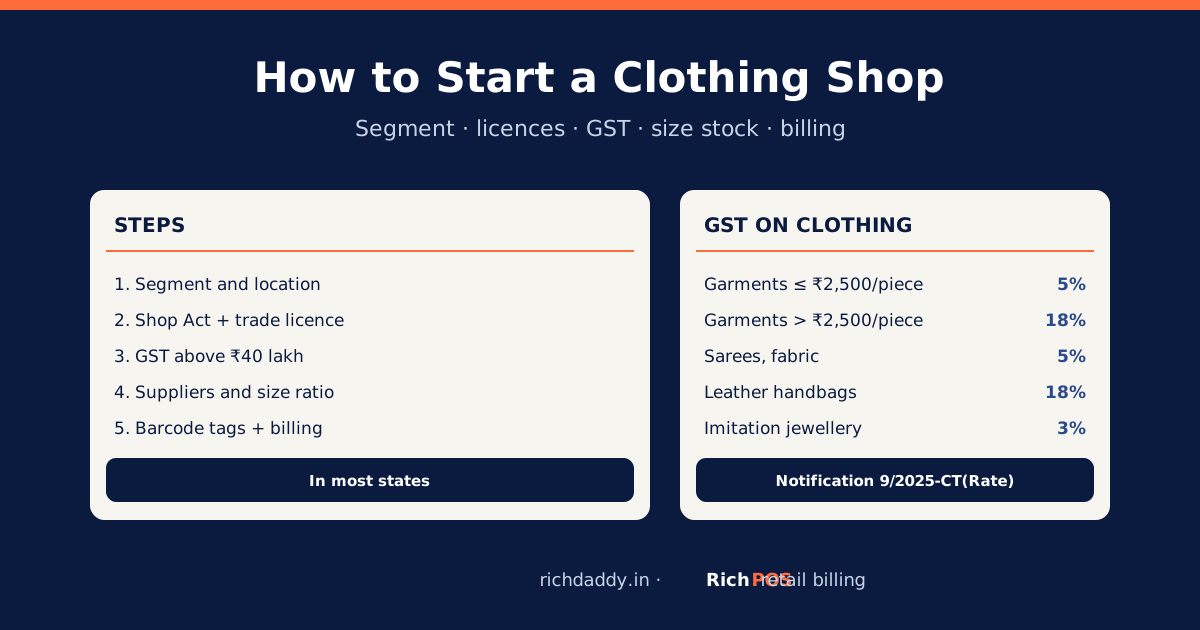
To start a clothing shop in India, choose your segment (menswear, womenswear, kids, sarees or a family store), register under your state's Shops and Establishments Act, get a municipal trade licence, take GST registration (needed above ₹40 lakh turnover for goods in most states, and earlier if you sell online or to other states), source from 3–5 wholesalers or manufacturers, and set up billing that tracks size and colour stock. Readymade garments are taxed at 5% GST up to ₹2,500 a piece and 18% above that.
Clothing is one of the most common first businesses in Indian retail, and one of the most stock-heavy. A single shirt design in 4 sizes and 3 colours is 12 stock lines, and season-end stock you could not sell is where profit disappears. This guide walks through the steps in order, with the GST rules and the stock system that keeps a garment shop healthy.
Step 1: pick a segment and a location
| Segment | What sells | Watch out for |
|---|
| Family store | Men, women, kids, basics | Wide stock; needs more capital |
| Womenswear / ethnic | Kurtis, suits, sarees, dress material | Fast design turnover; festival peaks |
| Menswear | Shirts, trousers, jeans, T-shirts | Size ratios matter more than designs |
| Kidswear | Age-wise sizes, school seasons | Many sizes per design |
| Saree / fabric store | Sarees, unstitched dress material | Fabric GST and metre-wise selling |
Pick the location for footfall of your target buyer, then the segment. A busy market lane suits fast basics; a residential area suits a family store with regular customers.
Step 2: licences and registrations
| Registration | Who needs it | Issued by |
|---|
| Shop and Establishment registration | Almost every shop with a physical address | State labour department |
| Trade licence | Almost always | Municipal corporation or panchayat |
| GST registration | Above ₹40 lakh turnover (goods only, most states); any inter-state or online selling | GST portal (free) |
| Udyam (MSME) | Optional, free | Udyam portal |
Fees differ by state and city: see retail shop licences and GST registration limit. Small shops below ₹1.5 crore can consider the composition scheme.
Step 3: GST on clothing in 2026
| Item | HSN | GST |
|---|
| Readymade garments, kurtis, jeans, T-shirts, innerwear, socks | 61, 62 | 5% up to ₹2,500 a piece; 18% above |
| Sarees and unstitched fabric (cotton, silk, man-made) | 50–55, 60 | 5% |
| Towels, bedsheets, curtains | 6302, 6303 | 5% up to ₹2,500 a piece; 18% above |
| Leather or plastic handbags, wallets | 4202 | 18% (cotton and jute bags 5%) |
| Imitation jewellery | 7117 | 3% |
Source: Notification 9/2025-Central Tax (Rate), Schedules I, II and IV. The ₹2,500 test applies to the sale value of each piece, not the bill total. Full details: GST on clothes in 2026.
Step 4: sourcing and stock planning
- Suppliers: start with 3–5 wholesalers or manufacturers; agree credit days and whether unsold stock can be exchanged at season end, in writing.
- Size ratio: buy each design in a size ratio that matches your area, not equal quantities of every size.
- Seasons: plan wedding, festival and school seasons in advance; clear the previous season's stock before the next one arrives.
- Tags: put a barcode tag on every piece so billing picks the exact size, colour and price.
- Reorder by size: reorder the sizes that sell, not the whole design. See reducing dead stock.
Step 5: billing, exchanges and offers
Clothing billing needs size and colour variants with their own stock, barcode tags, exchanges that put the returned piece back into stock, season offers and loyalty for repeat customers. In RichPOS, a design is one product with a variant per size and colour, each with its own stock, price and barcode; exchanges go through sales returns with a credit note option; automatic offers (bill % off, buy X get Y), loyalty points and gift vouchers apply at billing; and discount limits by staff role keep salespeople within policy. See RichPOS for clothing shops, size and colour variants and the best billing software for clothing shops.
Opening checklist
- Shop and Establishment registration, trade licence, GST (if needed), current account.
- Supplier terms for credit days and season-end exchange.
- Item list in Excel: design, size, colour, barcode, HSN, rate, MRP, sale price; import into billing software.
- Barcode tags on every piece; trial room and exchange policy displayed.
- Daily cash and UPI tally; monthly stock count by size.
Bottom line
A clothing shop succeeds on the right size ratio, clean exchanges and clearing each season's stock. Get the licences in order, price GST by the ₹2,500 per-piece rule, and run stock by size from day one: start the RichPOS free trial or see pricing.
FAQ
Frequently asked questions
What licences are needed to open a clothing shop in India?
Usually a Shop and Establishment registration from the state labour department and a trade licence from the municipal body. GST registration is needed above ₹40 lakh turnover for goods in most states, and for any inter-state or online selling. Udyam registration is optional and free.
What is the GST rate on readymade clothes?
From 22 September 2025, readymade garments are taxed at 5% when the sale value is up to ₹2,500 a piece and 18% above that, under Notification 9/2025-Central Tax (Rate). Sarees and unstitched fabric are 5%.
How should a clothing shop manage size and colour stock?
Create each design once and add every size and colour as a variant with its own stock, price and barcode, then bill by scanning the tag. This shows exactly which sizes to reorder and which are slow.
How do I handle exchanges in a clothing shop?
Take the returned piece as a sales return against the original bill so it goes back into stock, then bill the new size and collect or refund the difference. You can also give a credit note that the customer uses on the next purchase.
Which billing software is good for a new clothing shop?
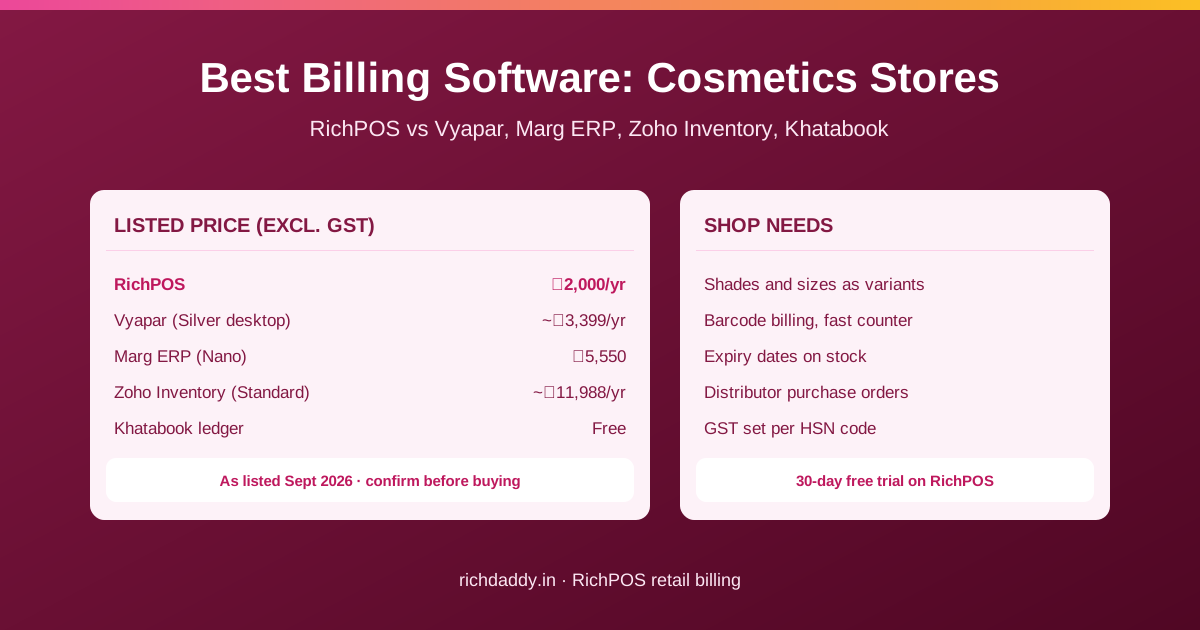
One with size and colour variants, barcode tags, exchanges, offers and staff discount limits. RichPOS covers these from ₹99/month for the first 3 months, then ₹199/month or ₹2,000/year, after a 30-day free trial.