On this page · 7 sections
- Tax invoice, bill of supply, cash memo, estimate: what is the difference?
- Is a kachcha bill legal?
- When is a cash memo enough?
- Why customers ask for a kachcha bill, and what to say
- How to stop using the estimate pad
- Frequently asked questions
- Bottom line
Updated 17 October 2026 · By Ashok Sachdev · Sources: Sections 31 and 122 of the CGST Act, Rule 46 of the CGST Rules (CBIC)
Quick answer
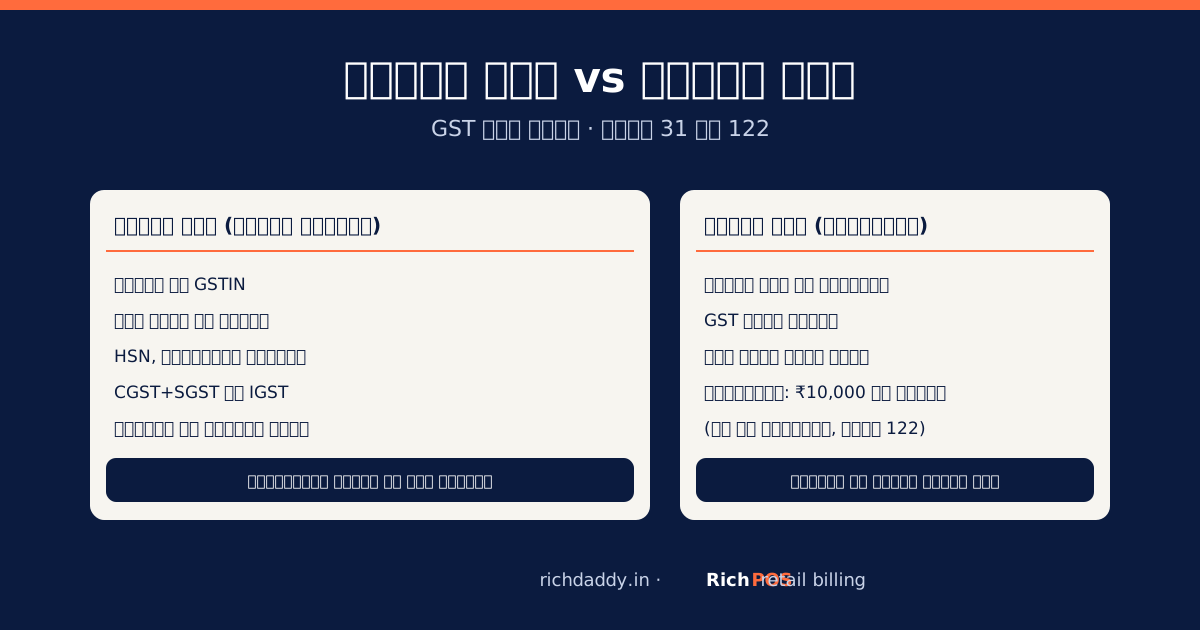
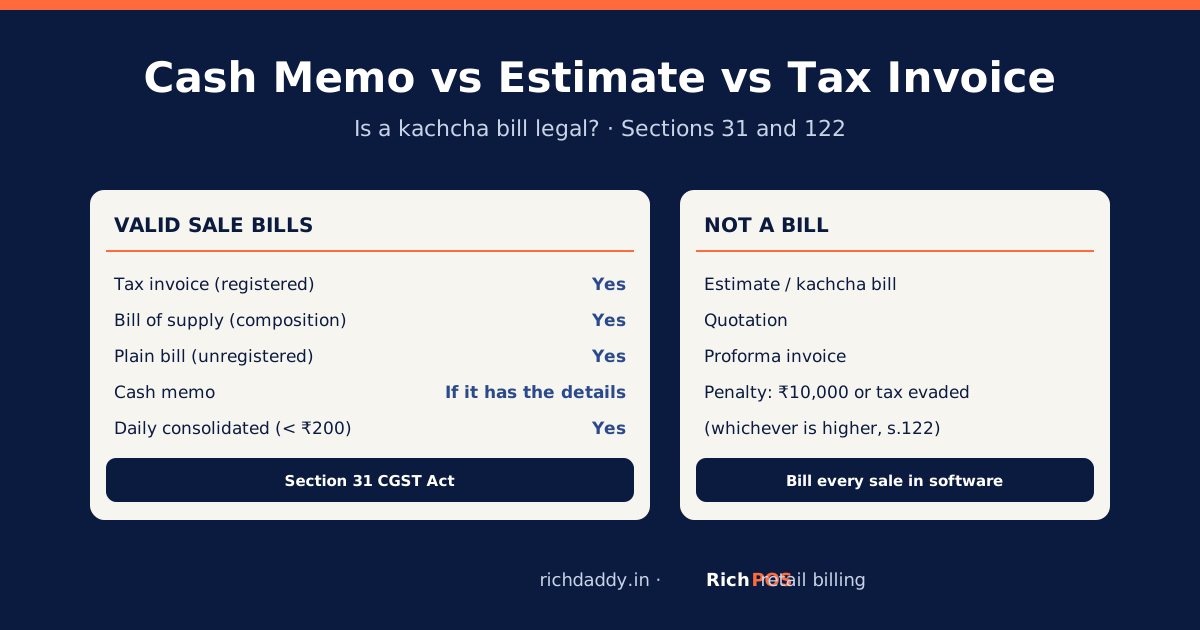
A tax invoice is the GST bill a registered shop must issue for a taxable sale; a cash memo is just a retail bill for a cash sale, and an estimate (the "kachcha bill") is only a price quote that is not a bill at all. A GST-registered shop that hands over an estimate or kachcha bill instead of a tax invoice for a completed sale is supplying "without issue of any invoice", which Section 122 of the CGST Act penalises with ₹10,000 or the tax evaded, whichever is higher.
Customers still ask "pakka bill chahiye ya kachcha?", and many shops still keep an estimate pad next to the counter. This guide explains what each document is, when a shop can legally use it, and how to replace the estimate habit without slowing the counter down.
Tax invoice, bill of supply, cash memo, estimate: what is the difference?
| Document | What it is | Who issues it | Shows GST? | Valid as a sale bill under GST? |
|---|
| Tax invoice | Bill for a taxable sale with all Rule 46 details | GST-registered shop (regular scheme) | Yes | Yes |
| Bill of supply | Bill without GST shown | Composition dealers, and registered shops selling exempt goods | No | Yes |
| Cash memo | Everyday name for a retail bill for a cash sale | Any shop | Only if it is in fact a tax invoice | Only if it carries the tax invoice (or bill of supply) details |
| Plain bill | Bill from a shop not registered under GST | Shops below the registration limit | No, must not charge GST | Yes, for an unregistered shop |
| Estimate / quotation / kachcha bill | Price quote before a sale | Anyone | No | No; it is not a bill |
| Proforma invoice | Advance quote in invoice layout, often for payment in advance | Anyone | Usually shows expected tax | No; the tax invoice follows the sale |
For quotes and proforma invoices in detail, read quotation vs proforma invoice vs tax invoice. For composition shops, see bill of supply vs tax invoice.
Is a kachcha bill legal?
An estimate given before a sale is legal; it is just a quote. The problem is using it as the bill. Under Section 31, a registered person supplying taxable goods must issue a tax invoice at or before delivery. Section 122(1)(i) covers a taxable person who "supplies any goods or services or both without issue of any invoice or issues an incorrect or false invoice". The penalty is ₹10,000 or the tax evaded, whichever is higher, on top of the tax and interest.
The one relief is for small sales. Under Section 31(3)(b), a sale under ₹200 to an unregistered customer who does not ask for a bill can go into one consolidated tax invoice at the end of the day. That is a consolidated tax invoice, not an estimate.
When is a cash memo enough?
- Your shop is not GST-registered: a plain bill or cash memo is fine, and you must not charge or show GST. See bills without a GST number.
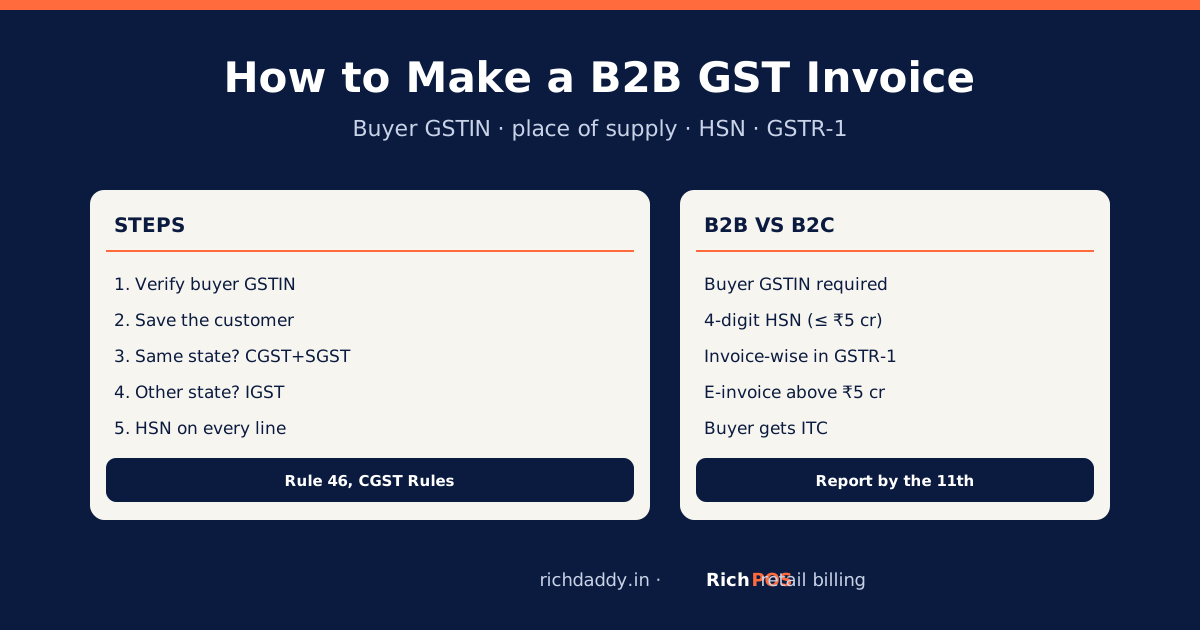
- You are registered: the "cash memo" must carry the tax invoice details: your GSTIN, serial number, date, HSN, taxable value, rate and tax, and signature. In practice, a cash memo printed by billing software is a tax invoice.
- You are under composition: the cash memo must be a bill of supply with the composition declaration.
Why customers ask for a kachcha bill, and what to say
| Customer says | What is really going on | Honest answer |
|---|
| "Kachcha bill do, GST mat lagao" | Wants a lower price | "GST is part of the price; we can give a discount, and GST is charged on the discounted price." |
| "Pehle estimate de do" | Comparing prices | Give a quotation; issue the tax invoice when they buy |
| "Bill company ke naam pe chahiye" | Needs input tax credit | Take their GSTIN and issue a B2B tax invoice |
A discount shown on the invoice lowers the taxable value, so GST really does fall with it. See GST on discounts.
How to stop using the estimate pad
- Bill every sale in software, even small cash sales; the bill number, GST and HSN fill in automatically.
- Keep a separate quotation series for price quotes, and convert a quotation into a bill when the customer buys.
- For regular customers who pay later, bill on credit (udhaar) instead of writing an estimate.
- Close the day with a cash count so cash sales and bills match.
RichPOS converts a quotation into a bill in one step, records credit sales against the customer with WhatsApp reminders, and has day close with a cash count. Try it in the 30-day free trial or see pricing.
Bottom line
An estimate is a quote, a cash memo is a name, and a tax invoice is the legal bill for a GST-registered shop. If you are registered, every completed sale needs a tax invoice (or a daily consolidated one for small B2C sales under ₹200). Billing software makes that the default at the counter.
FAQ
Frequently asked questions
What is the difference between a cash memo and a tax invoice?
A cash memo is an everyday name for a retail bill for a cash sale. A tax invoice is the GST document a registered shop must issue, with GSTIN, serial number, date, HSN, taxable value, tax rate and amount, and signature. For a GST-registered shop, its cash memo must carry these details, so in practice it is a tax invoice.
Is it legal to give a kachcha bill or estimate instead of a GST bill?
No, not for a completed sale by a GST-registered shop. An estimate is only a quote. Section 31 requires a tax invoice for a taxable supply, and Section 122 penalises supplying without an invoice with ₹10,000 or the tax evaded, whichever is higher.
Can an unregistered shop give a bill?
Yes. A shop below the GST registration limit gives a plain bill or cash memo, but it must not charge or show GST and cannot issue a tax invoice.
Is an estimate the same as a proforma invoice?
Both are quotes, not bills. A proforma invoice is a more formal quote in invoice layout, often used to collect an advance. Neither replaces the tax invoice, which is issued when the goods are supplied.
Do I need to give a GST bill for a sale under ₹200?
Not a separate one, if the customer is unregistered and does not ask for a bill. Section 31(3)(b) lets you record such sales in one consolidated tax invoice at the end of the day.
Need a quick figure? Use the free GST calculator to add or remove GST.
Free tool: use the Excel templates for a stock register, udhaar khata, cash book or GST purchase register. Free; enter your WhatsApp number to download.
ASWritten by Ashok SachdevFounder, RichPOS Software, Ahmedabad. We build RichPOS for Indian shops and write these guides from what shop owners ask us every day. Facts on tax rates and prices are dated; confirm GST matters with your CA. Questions? WhatsApp us.
Make GST bills in seconds with RichPOS
Billing, stock, WhatsApp bills and GST reports in one app. Free 30-day trial with no card, then ₹99/month for 3 months and ₹199/month after.