On this page · 5 sections
- Kirana item list by category, with GST rate
- How to use this list when opening a kirana store
- Setting up the item list in billing software
- Frequently asked questions
- Bottom line
Updated 17 October 2026 · By Ashok Sachdev · GST rates read from Notification No. 9/2025 and No. 10/2025-Central Tax (Rate), in force from 22 September 2025
Quick answer
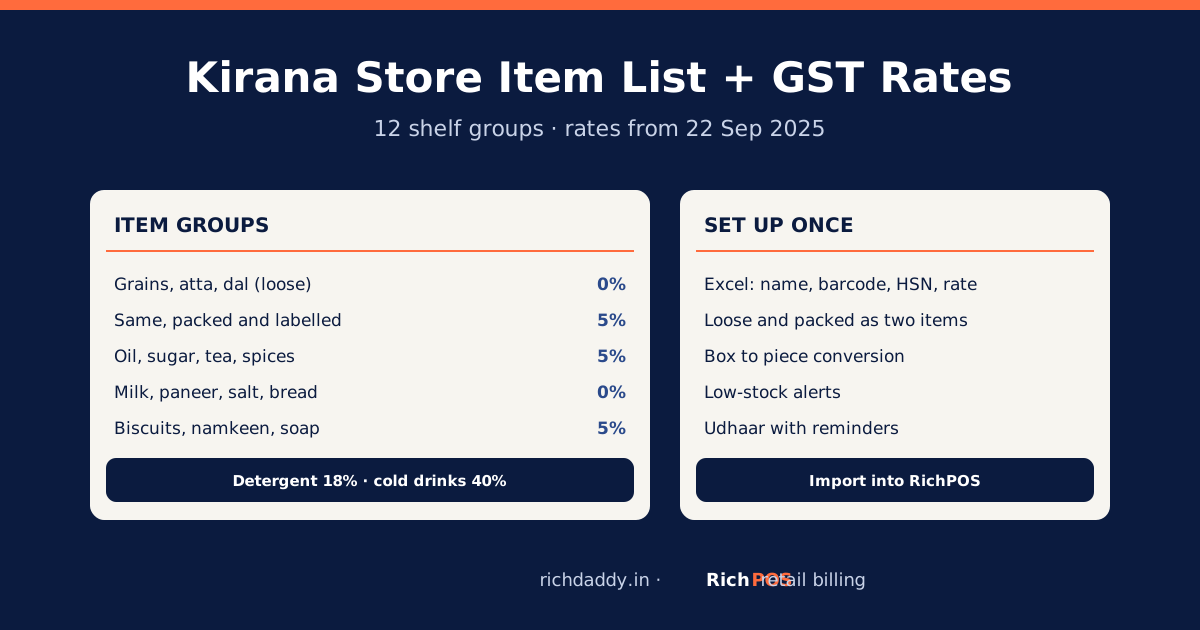
A kirana store item list covers about 12 groups: grains and flour, dal and pulses, edible oil and ghee, sugar, salt and jaggery, spices and masala, tea and coffee, dry fruits, dairy, packaged food and snacks, drinks, personal care, and cleaning and household goods. Most of these carry 0% or 5% GST in 2026; the exceptions are detergents and cleaning products at 18% and aerated cold drinks at 40%.
Whether you are opening a new kirana shop or cleaning up the item list in your billing software, it helps to work from one checklist that also shows the GST rate for each group. The list below is grouped the way shelves are usually arranged, with the rate and a link to the exact HSN entry. Use it to plan opening stock, set up items once in your software, and avoid the most common rate mistakes.
Kirana item list by category, with GST rate
1. Grains, flour and rice
| Items | GST loose | GST pre-packaged and labelled |
|---|
| Rice (regular, basmati, kolam, sona masoori) | 0% | 5% |
| Wheat; jowar, bajra, ragi | 0% | 5% |
| Atta, maida, suji, rava, dalia, besan | 0% | 5% |
| Poha, murmura; sabudana | 0% (sabudana 5%) | 5% |
2. Dal and pulses
3. Edible oil, ghee and butter
4. Sugar, salt and jaggery
| Items | GST |
|---|
| Sugar (white, brown, cubes) | 5% |
| Salt, loose or packed | 0% |
| Jaggery (gur) | 0% loose, 5% pre-packaged and labelled |
| Honey | 0% loose, 5% pre-packaged and labelled |
5. Spices and masala
| Items | GST |
|---|
| Haldi, red chilli, jeera, saunf, black pepper, elaichi, laung, dalchini (dried) | 5% |
| Mixed masala (garam masala, chhole, sambar masala), hing | 5% |
6. Tea and coffee
7. Dry fruits
8. Dairy
9. Packaged food, bakery and snacks
| Items | GST |
|---|
| Bread, khakhra, roti, paratha, papad | 0% |
| Biscuits, cakes, rusk, cornflakes | 5% |
| Noodles, pasta, vermicelli | 5% |
| Chips, namkeen, bhujia | 5% |
| Chocolates, toffee, candy | 5% |
| Sauce, ketchup, jam, pickle, soup powder | 5% |
| Health drink powder, baby cereal | 5% |
10. Drinks and water
11. Personal care
| Items | GST |
|---|
| Bathing soap, shampoo, hair oil, toothpaste, toothbrush, talcum powder, shaving cream | 5% |
| Sanitary pads | 0% |
| Diapers | 5% |
| Face cream, deodorant, hair colour, mouthwash, liquid hand wash | 18% |
12. Cleaning, puja and household
Rates are the full GST rate (CGST + SGST within a state). Sources: Notification 9/2025-CT(Rate) and Notification 10/2025-CT(Rate). Each linked page shows the exact schedule entry. "Pre-packaged and labelled" means a retail pack of up to 25 kg or 25 litres that must carry Legal Metrology declarations; see GST on grocery items for the loose vs packed rule.
How to use this list when opening a kirana store
- Start with daily needs. Grains, flour, dal, oil, sugar, salt, tea, milk, bread, soap and detergent sell every day. Stock these first and widest.
- Ask nearby customers what they buy. Local brands, regional staples and pack sizes vary by area. Note what neighbours ask for in the first weeks and add it.
- Keep slow lines narrow. Dry fruits, imported snacks and personal care brands tie up money. Start with a few fast sizes and add only on demand.
- Plan by distributor. Group the list by the distributor who supplies it, so purchase orders and payments stay simple. See supplier payments.
- Set reorder levels. Give each fast item a minimum quantity so you reorder before it runs out. See reorder level and safety stock.
For licences, space and the rest of the start-up checklist, read how to start a grocery store in India.
Setting up the item list in billing software
- Put the list in Excel with columns for item name, barcode, unit, purchase price, sale price, MRP, HSN and GST rate.
- Make separate items for loose and packed versions of the same staple (for example "Rice loose per kg" at 0% and "Rice 5 kg pack" at 5%).
- Import the sheet. In RichPOS you can import items, then bill by barcode scan or keyboard search.
- Set box to piece unit conversion for goods bought by the carton and sold loose, such as biscuits or soap.
- Turn on low-stock alerts, and send the reorder list to suppliers on WhatsApp.
- Give regular customers credit (udhaar) with WhatsApp reminders and an optional credit limit.
RichPOS does not connect to a weighing scale, so weigh loose goods first and enter the quantity. Read more on RichPOS for kirana and grocery stores, or download the free stock register from the Excel templates page.
Bottom line
A good kirana item list is grouped by shelf, split into loose and packed where the rate differs, and saved once in billing software with the right HSN and GST. Try it with your own list: start the RichPOS free trial, or see pricing.
FAQ
Frequently asked questions
What items should a kirana store keep?
Start with daily needs: rice, atta, dal, edible oil, sugar, salt, tea, spices, milk and bread, biscuits and snacks, soap, toothpaste and detergent. Add dry fruits, personal care brands, drinks and household goods as customers ask for them. Stock depends on the area, so note what neighbours request in the first weeks.
What is the GST rate on kirana items?
Most kirana items are 0% or 5% from 22 September 2025. Loose grains, flour and dal are 0%, and 5% when pre-packaged and labelled. Milk, paneer, salt, eggs and bread are 0%. Oil, sugar, tea, spices, ghee, biscuits, namkeen and soap are 5%. Detergents are 18% and aerated cold drinks are 40%.
Is GST charged on loose dal and rice?
No. Dal, rice, atta and other staples sold loose, or not pre-packaged and labelled, are nil-rated under Notification 10/2025-Central Tax (Rate). They are 5% when sold in pre-packaged, labelled retail packs of up to 25 kg.
Which kirana items have 18% GST?
Detergent powder and liquid, laundry and dishwash bars, liquid hand wash, tissue paper, face creams, deodorants, mosquito repellents and plastic buckets are 18%. Aerated and energy drinks are 40%.
How do I add a kirana item list to billing software?
Prepare an Excel sheet with item name, barcode, unit, prices, HSN and GST rate, with separate rows for loose and packed versions of staples. Import it into the software, then set unit conversions, low-stock levels and customer credit. RichPOS supports item import and has a free 30-day trial.
Need a quick figure? Use the free GST calculator to add or remove GST.
ASWritten by Ashok SachdevFounder, RichPOS Software, Ahmedabad. We build RichPOS for Indian shops and write these guides from what shop owners ask us every day. Facts on tax rates and prices are dated; confirm GST matters with your CA. Questions? WhatsApp us.
Make GST bills in seconds with RichPOS
Billing, stock, WhatsApp bills and GST reports in one app. Free 30-day trial with no card, then ₹99/month for 3 months and ₹199/month after.