Updated 17 October 2026 · By Ashok Sachdev · Sources: CGST Rule 46 and Rule 48 on the CBIC tax information portal
Quick answer
To make a GST bill on your mobile, install a GST billing app, enter your shop name, address and GSTIN once, add each item with its HSN code and GST rate, then pick the items, add the customer (with their GSTIN for a B2B sale) and save. The app works out CGST + SGST or IGST and numbers the bill; you share it on WhatsApp as a PDF or print it on a Bluetooth thermal printer.
A phone bill is a valid GST tax invoice as long as it carries the details listed in Rule 46 of the CGST Rules. The law does not care whether the bill came from a phone, a computer or a carbon-copy bill book. This guide shows the steps, what must be on the bill and the mistakes that make a phone bill wrong.
Can you make a GST bill on a mobile phone?
Yes. A GST invoice can be made on any device. What makes it valid is its content: your GSTIN, a unique serial number, the date, item details with HSN, taxable value, the tax rate and tax amount, and your signature or digital signature. A billing app on the phone fills most of these from your settings and item list, so the cashier only picks items and the customer.
Phone billing suits small counters, home businesses, a second counter in a busy season, and owners who want to bill while away from the main computer. A shop with a long queue usually still bills faster on a computer with a barcode scanner. See mobile vs computer billing software for that choice.
What must a GST bill made on mobile show?
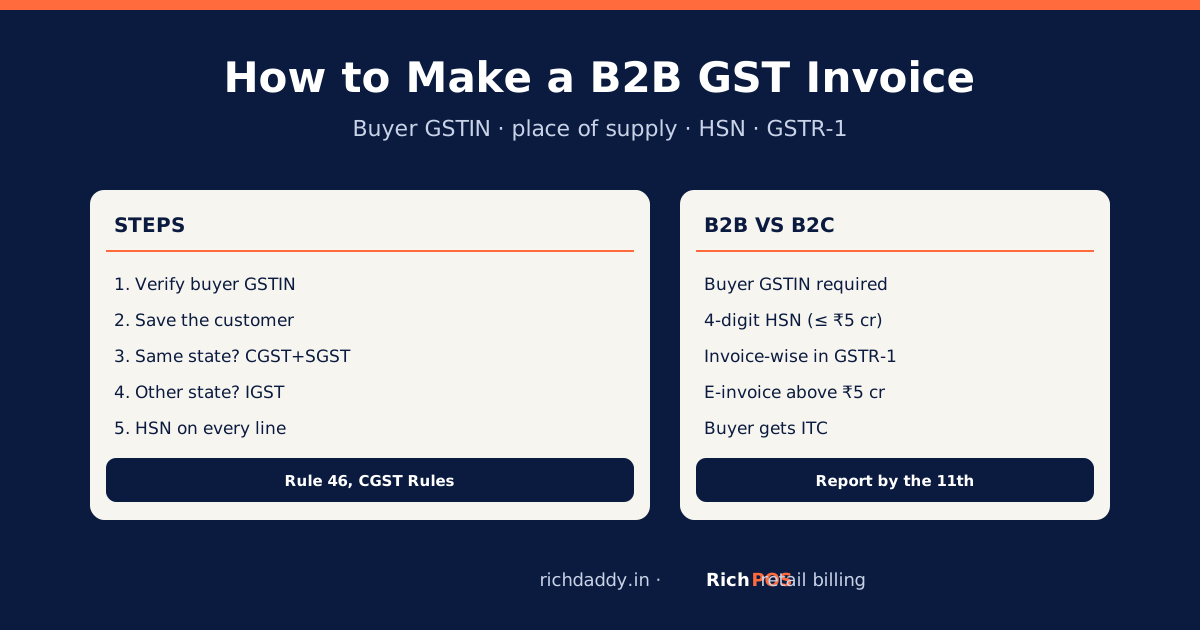
Rule 46 lists the particulars of a tax invoice. These are the ones a retail shop deals with every day:
| Field | What to enter | Set once or per bill? |
|---|---|---|
| Your name, address, GSTIN | As on your GST registration certificate | Once, in shop settings |
| Invoice number | Consecutive serial number, up to 16 characters, unique in the financial year | Automatic |
| Date of issue | The date of the sale | Automatic |
| Buyer name, address, GSTIN | Required when the buyer is GST-registered (B2B) | Per bill (save the customer once) |
| Buyer name and delivery address for a B2C bill | Required when the buyer is unregistered and the taxable value is ₹50,000 or more; below that only if the buyer asks | Per bill |
| HSN code | 4 digits for B2B if turnover is up to ₹5 crore; 6 digits on all bills above ₹5 crore | Once, on each item |
| Description, quantity, unit | Item name and how many | Per bill |
| Taxable value | Value after any discount | Automatic |
| GST rate and amount | CGST + SGST for a sale within your state; IGST for a sale to another state | Rate once on the item; split automatic |
| Place of supply | State name, needed for an inter-state sale | Per bill when it applies |
| Signature | Physical or digital signature of the supplier or an authorised person | Once (on the print layout) |
If you are under the composition scheme, you do not issue a tax invoice. You issue a bill of supply without GST shown separately. Most billing apps have a setting for this.
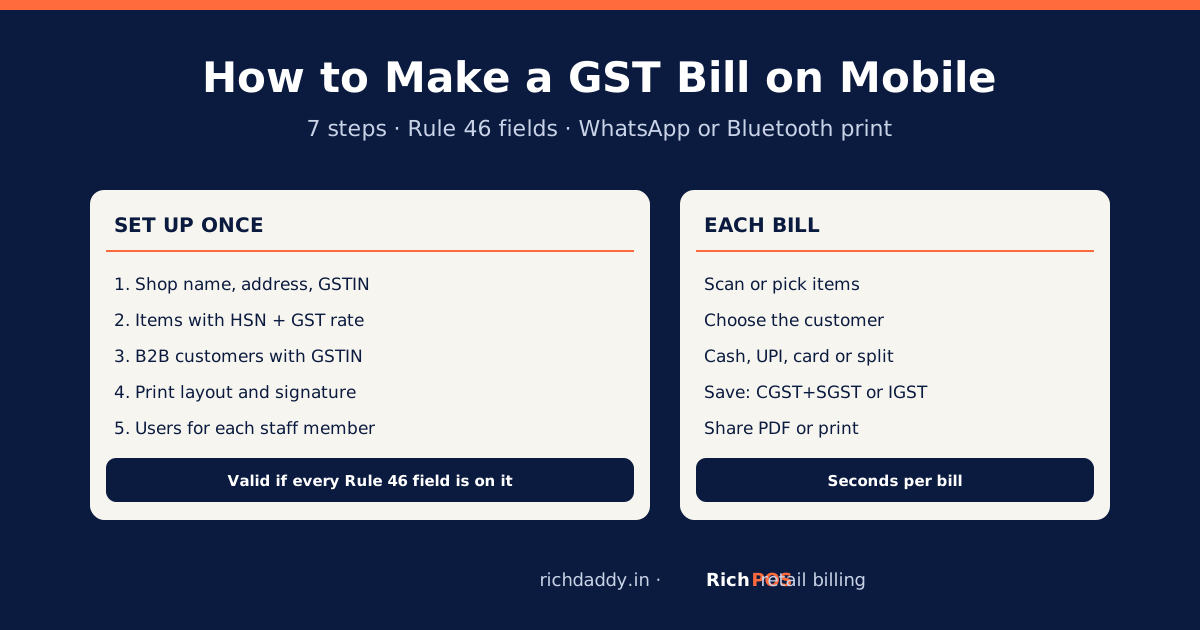
How to make a GST bill on mobile: step by step
The menus differ from app to app, but the order of work is the same. Here it is with RichPOS, which runs in your phone's browser and as an Android app on the same account.
- Create your account. Start the free 30-day trial at app.richdaddy.in/register. No card is needed.
- Enter your shop details. Add the shop name, address, phone and GSTIN exactly as on your GST certificate. These print at the top of every bill.
- Add your items. For each item enter the name, sale price, HSN code and GST rate. If you have many items, import them from Excel or scan barcodes instead of typing. Not sure of a rate? Look it up in the HSN and GST rate finder.
- Save regular customers. For business buyers, save their name, address and GSTIN once. RichPOS prints the buyer's GSTIN on the bill when it is saved on the customer.
- Make the bill. Open billing, search or scan items, change the quantity, and pick the customer. Walk-in buyers can stay as a cash customer.
- Take payment. Record cash, card, UPI or a split of these on the same bill. If the customer will pay later, leave it on credit (udhaar) against their name.
- Save, then share or print. Save the bill. From the Android app, print on a thermal printer over Bluetooth or the shop network, or share the bill as a PDF on WhatsApp.
That is the whole job at the counter: steps 1 to 4 are done once, steps 5 to 7 take seconds per bill.
CGST + SGST or IGST: which does the app charge?
It depends on where the goods are supplied, not on what you sell. A walk-in sale in your shop is within your state, so the bill shows CGST and SGST, each at half the rate. An 18% item becomes 9% CGST + 9% SGST. When you send goods to a buyer in another state, the bill shows IGST at the full rate. A good app chooses the split from your state and the customer's state. Read more in intra-state vs inter-state GST.