On this page · 8 sections
- Step 1: pick your format and location
- Step 2: licences and registrations
- Step 3: GST on cosmetics and personal care in 2026
- Step 4: sourcing without fakes
- Step 5: expiry, shades and repeat customers
- Step 6: billing that fits a cosmetic counter
- Opening checklist
- Frequently asked questions
Updated 26 October 2026 · By Ashok Sachdev · GST rates read from Notifications No. 9/2025 and 10/2025-Central Tax (Rate), in force from 22 September 2025; licensing from the Drugs and Cosmetics Act, 1940 and the Cosmetics Rules, 2020. Not legal or tax advice; confirm with your CA and local authorities.
Quick answer
To start a cosmetic shop in India, choose your format (daily-use beauty and personal care, makeup and skincare, or a bridal and salon-supply store), register under your state's Shops and Establishments Act, get a municipal trade licence, and take GST registration above ₹40 lakh turnover in most states (earlier if you sell to other states). Retail sale of cosmetics needs no separate drug or cosmetic licence, but medicated products that are legally drugs do. Since 22 September 2025, soap bars, shampoo, hair oil, toothpaste and talcum powder are taxed at 5%, while creams, lipstick, makeup and perfume stay at 18%.
Hinglish mein: cosmetic dukaan ke liye Shop Act, trade licence aur zarurat ho to GST number kaafi hai; cosmetics bechne ke liye alag licence nahi lagta, par dawai wale (medicated) products ke liye drug licence chahiye. Expiry wala maal pehle becho aur har item ka sahi GST rate save karo, kyunki ab sabun-shampoo 5% aur makeup 18% hai.
Cosmetics look like an easy, high-margin business: small items, steady demand, and a festival and wedding season every year. The traps are less obvious. Products expire, shades and sizes multiply fast, two items on the same shelf can carry different GST rates, and fake or grey-import stock can land you in trouble. This guide walks through the steps in order.
| Format | What sells | Watch out for |
|---|
| Daily-use beauty and personal care | Soap, shampoo, hair oil, creams, deo, kajal, bindi | Thin margins on big brands; fast reordering |
| Makeup and skincare | Lipstick, foundation, serums, sunscreen, nail polish | Shade-wise stock, testers, expiry |
| Bridal and salon supply | Professional kits, hair colour, salon consumables, imitation jewellery | Bulk buyers on credit; seasonal peaks |
| Cosmetics with general store | Personal care next to grocery or gifts | Keeping expiry and GST rates right across very different items |
A daily-use store depends on footfall and repeat customers, so a residential market works well. Makeup and bridal stores draw buyers from further away and do better near other women's-wear, salon and jewellery shops. Before signing a lease, spend two evenings watching who walks past and what they carry.
Step 2: licences and registrations
| Registration | Who needs it | Where |
|---|
| Shop and Establishment registration | Almost every shop with a physical address | State labour department portal |
| Trade licence | Almost always | Municipal corporation, municipality or panchayat |
| GST registration | Above ₹40 lakh turnover for goods in most states (₹20 lakh or ₹10 lakh in some states); any inter-state sale | GST portal (no government fee) |
| Drug licence | Only if you sell products that are legally drugs, such as medicated creams or shampoos with prescription ingredients | State drugs control department |
| Udyam (MSME) | Optional and free | Udyam portal |
Under the Drugs and Cosmetics Act and the Cosmetics Rules, 2020, licences and registrations are required for manufacturing and importing cosmetics, not for selling them in a shop. The catch is the line between a cosmetic and a drug. A shampoo or cream that contains a medicinal ingredient and makes treatment claims can be a drug, and selling drugs needs a drug licence. If you plan to stock such items, ask your state drugs control office first. More on the general list: licences for a retail shop and the GST registration limit.
Step 3: GST on cosmetics and personal care in 2026
The GST rate change of 22 September 2025 split this category. Your billing must use the right rate on each item, not one rate for the whole shelf.
| Item | HSN | GST |
|---|
| Toilet soap bars | 3401 | 5% (liquid hand wash and body wash 18%) |
| Shampoo and hair oil | 3305 | 5% |
| Hair colour, gel, conditioner | 3305 | 18% |
| Toothpaste and tooth powder | 3306 | 5% |
| Talcum and face powder | 3304 | 5% |
| Creams, lotions, lipstick, nail polish, makeup | 3304 | 18% |
| Perfume, body spray, deodorant | 3303, 3307 | 18% |
| Kajal (not pencil sticks), kumkum, bindi, sindoor, alta | 3304 | Nil (kajal pencil sticks 18%) |
| Combs and hair clips | 9615 | 5% |
| Imitation jewellery | 7117 | 3% |
Source: CBIC GST rates, Notification 9/2025-Central Tax (Rate), Schedules I, II and IV, and Notification 10/2025 for nil-rated items. A single bill for soap, a lipstick and a bindi carries three rates. Full list: GST on cosmetics and beauty products.
Step 4: sourcing without fakes
- Buy from authorised distributors. Take a GST invoice for every purchase. A low rate with no bill is how fake stock enters a shop.
- Check the label. Packaged cosmetics must show the MRP, net quantity, manufacturer or importer name and address, and a use-before or expiry date. Imported products should show the importer's details. Do not stock packs with missing or stickered-over labels.
- Never sell above MRP. Under Legal Metrology rules the printed MRP is the ceiling, including tax. See selling above MRP: the rules.
- Agree return terms. Ask each distributor in writing whether near-expiry and damaged stock can be returned or replaced.
- Start with fewer shades. Stock the top shades of each product first and add more once you see what your customers ask for.
Step 5: expiry, shades and repeat customers
Expiry is where a cosmetic shop quietly loses money. Note the batch and expiry date when stock comes in, put the earliest-expiring packs at the front of the shelf, and check a near-expiry list every month so you can run an offer or return the stock to the distributor in time. See expiry management with FEFO.
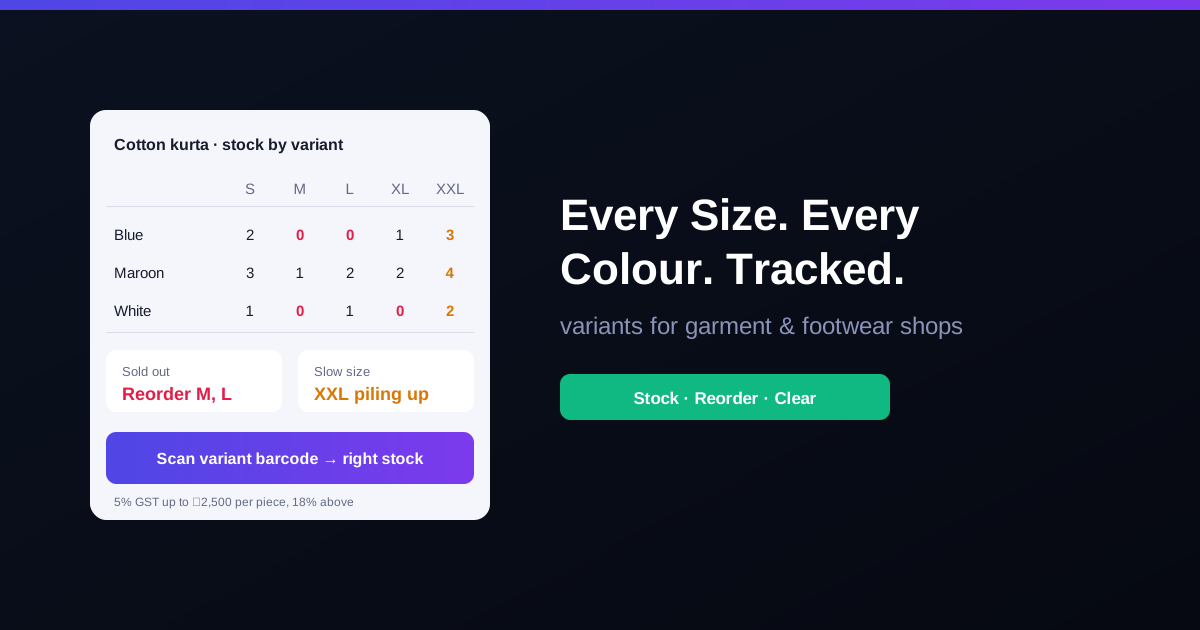
Shades and sizes need the same care. Treat every shade and pack size as its own stock line with its own barcode, or you will never know which lipstick shade is actually out of stock. Repeat customers are the other half of the business: a simple loyalty scheme, festival offers and a reminder when a customer's usual product is back tend to bring people back more than discounts alone.
Opening budget worksheet
EXAMPLE format only. Fill in your own figures.
| Head | What to include | Your figure |
|---|
| Rent and deposit | Advance rent, deposit, agreement | ₹ ____ |
| Fit-out | Glass shelves, lighting, mirror, tester counter, signboard | ₹ ____ |
| Opening stock | First purchase across your chosen brands and shades | ₹ ____ |
| Counter setup | Computer or tablet, printer, barcode scanner, billing software | ₹ ____ |
| Working capital | 2 to 3 months of rent, salary and reorders | ₹ ____ |
Step 6: billing that fits a cosmetic counter
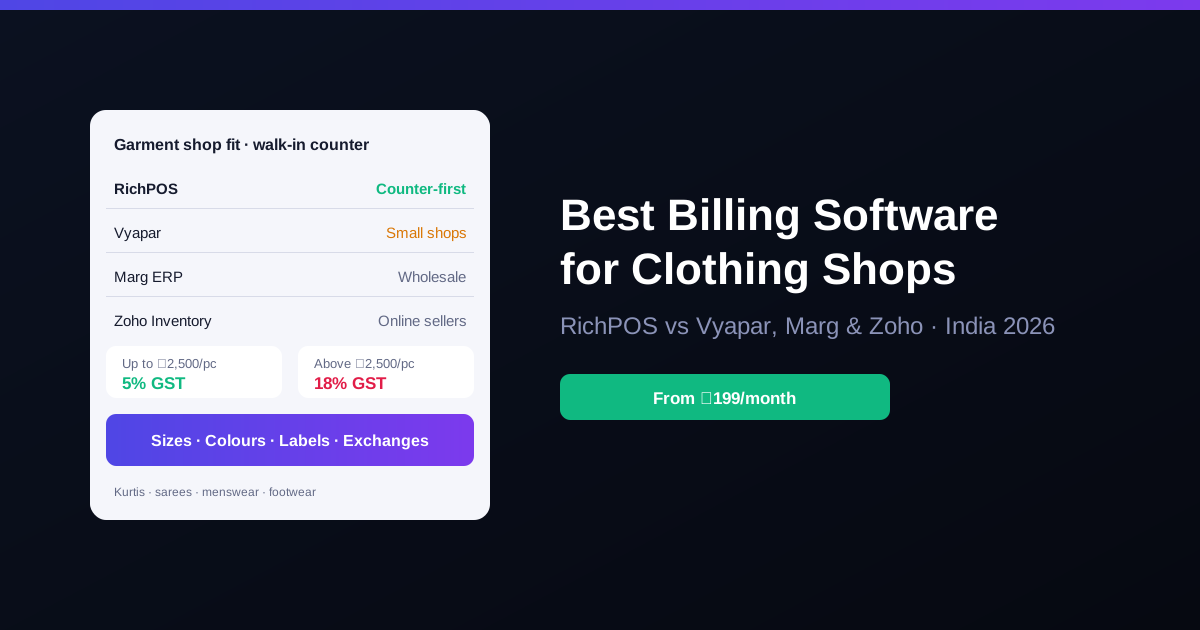
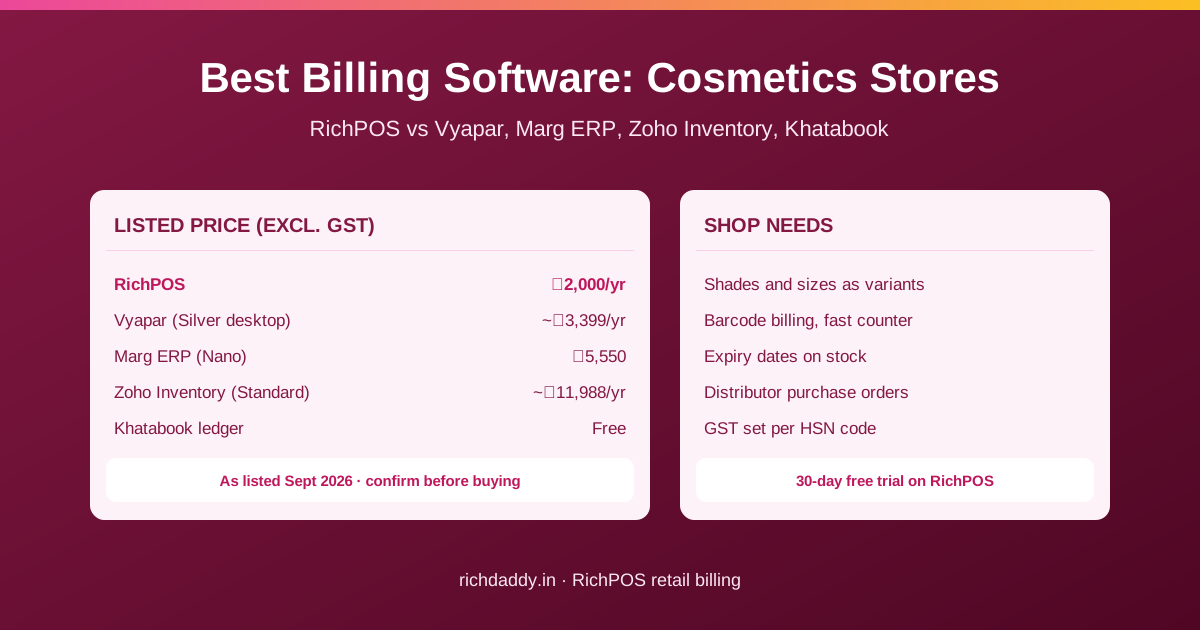
A cosmetic counter needs barcode billing, batch and expiry on stock, a different GST rate per item and loyalty for regulars. RichPOS covers these: batch and expiry are recorded on purchase and the earliest-expiring batch is sold first; the HSN code and GST rate are saved on each item and applied on every bill; shades and sizes can be variants with their own stock and barcode; and loyalty points, automatic offers and gift vouchers work at billing. Bills print on 58/80 mm thermal or A4 printers or go on WhatsApp. There is a free 30-day trial, then ₹99/month for the first 3 months and ₹199/month after, or ₹2,000/year. It needs internet; there is no offline mode. See RichPOS for cosmetic shops, batch and expiry tracking, loyalty points and offers and the free cosmetic shop bill format. To compare options, read best billing software for cosmetic stores.
Opening checklist
- Shop and Establishment registration, trade licence, GST (if needed) and a current account.
- Decide whether you will stock any medicated products; if yes, sort out the drug licence first.
- Distributor accounts with written return terms for near-expiry and damaged stock.
- Item list in Excel: name, brand, shade, size, HSN, GST rate, MRP, sale price, barcode.
- Batch and expiry recorded on every purchase; a monthly near-expiry check.
- Loyalty or repeat-customer scheme ready before the first festival or wedding season.
FAQ
Frequently asked questions
Do I need a licence to sell cosmetics in India?
A shop selling cosmetics needs the usual Shop and Establishment registration, a trade licence and GST registration when required. The Drugs and Cosmetics Act and the Cosmetics Rules, 2020 require licences for manufacturing and importing cosmetics, not for retail sale. Products that are legally drugs, such as some medicated creams and shampoos, need a drug licence to sell.
What is the GST rate on cosmetics in 2026?
Creams, lotions, lipstick, nail polish, makeup, perfume and deodorant are taxed at 18%. Soap bars, shampoo, hair oil, toothpaste, talcum powder and face powder are at 5% since 22 September 2025. Kajal (other than pencil sticks), kumkum, bindi, sindoor and alta are nil-rated. Imitation jewellery is 3%.
Is GST registration compulsory for a cosmetic shop?
Only above the turnover limit, which is ₹40 lakh for goods in most states and lower in some, or if you sell to other states. Many shops register earlier so they can claim input credit on their purchases.
How do I avoid fake cosmetics in my shop?
Buy only from authorised distributors with a GST invoice, check that every pack shows MRP, net quantity, manufacturer or importer details and an expiry date, and avoid stock offered far below the usual dealer rate.
How do I handle expired cosmetics?
Do not sell them. Record the expiry date on purchase, sell the earliest-expiring stock first and check a near-expiry list every month, so you can run an offer or return the stock to the distributor before it expires.
Can I sell cosmetics online from my shop?
Yes, but marketplace selling has its own GST rules. Inter-state sales need GST registration whatever your turnover, and small sellers can sell inside their own state through a marketplace only under a special procedure. Check the details with your CA and the marketplace's category rules for beauty products.
ASWritten by Ashok SachdevFounder, RichPOS Software, Ahmedabad. We build RichPOS for Indian shops and write these guides from what shop owners ask us every day. Facts on tax rates and prices are dated; confirm GST matters with your CA. Questions? WhatsApp us.
Make GST bills in seconds with RichPOS
Billing, stock, WhatsApp bills and GST reports in one app. Free 30-day trial with no card, then ₹99/month for 3 months and ₹199/month after.